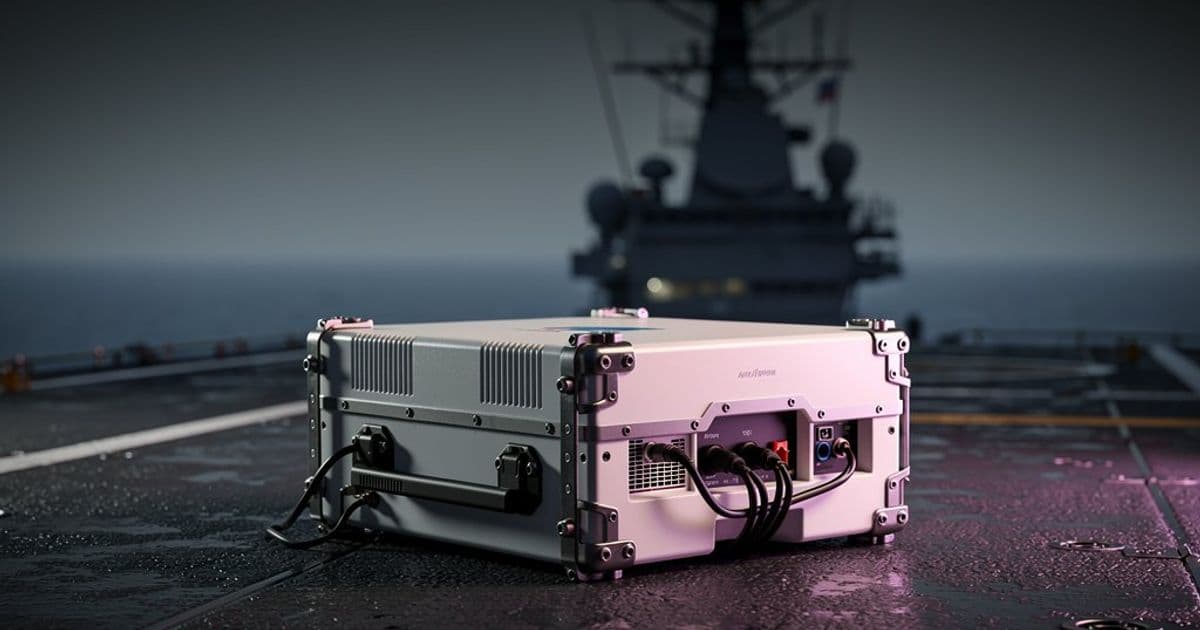
The Royal Navy has deployed Oracle's ruggedized edge cloud platform aboard the HMS Prince of Wales aircraft carrier, enabling AI-driven decision-making and operational learning during an eight-month mission across multiple oceans. The system, developed by Whitespace, represents a significant step in bringing cloud-native AI capabilities to naval operations where connectivity is limited and security is paramount.
The Royal Navy's flagship aircraft carrier, HMS Prince of Wales, has completed an eight-month deployment across the Mediterranean, Middle East, and Indo-Pacific with an unusual passenger: Oracle's Roving Edge Infrastructure. This military-grade, ruggedized enclosure houses a locally hosted version of Oracle's cloud platform, enabling AI-driven defense systems to operate at sea without relying on continuous satellite connectivity.
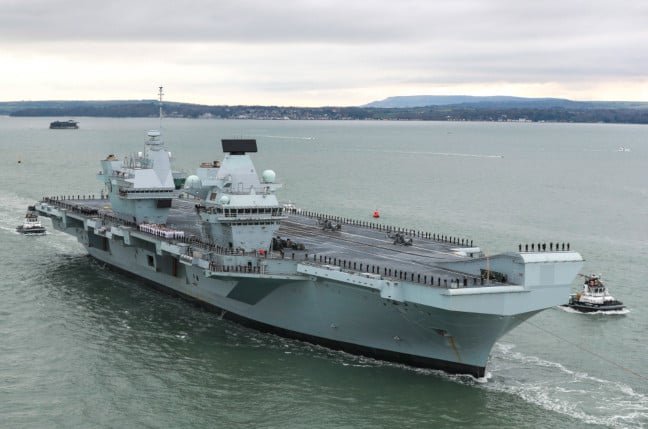
The deployment represents a practical application of edge computing for naval operations. Oracle's Roving Edge Infrastructure, first launched in 2021, allows customers to run workloads including machine learning and analytics in remote or disconnected environments. For the Royal Navy, this means maintaining AI capabilities even when far from shore-based data centers or when satellite links are compromised—a realistic scenario in modern naval warfare.
The Saga Platform: AI for Naval Operations
The AI system aboard HMS Prince of Wales is powered by Whitespace, a Belfast-based defense technology company. Their Saga platform is described as "an AI tool designed to accelerate how defense organizations capture, manage, and exploit institutional knowledge." During Operation Highmast, the system provided the crew with AI support for decision-making and operational learning, transforming mission data into "actionable understanding."
The platform features an app-like interface that allows Royal Navy personnel to:
- Capture operational lessons in real-time
- Review mission data with AI-assisted analysis
- Access AI support for tactical decisions
- Build institutional knowledge across deployments
First Sea Lord Sir Gwyn Jenkins emphasized the strategic importance: "Using AI solutions across the entire operations of the Royal Navy is critical to the UK's defensive capabilities." This statement reflects a broader trend where military organizations are increasingly viewing AI not as experimental technology but as essential infrastructure.
Technical Architecture: Sovereign Cloud at Sea
The Roving Edge Infrastructure deployment addresses several critical requirements for naval AI operations:
Physical Security: The hardware sits within a military-grade, ruggedized enclosure designed to withstand the harsh conditions of naval operations—vibration, humidity, temperature extremes, and potential electromagnetic interference.
Data Sovereignty: By keeping data processing aboard the ship, the Royal Navy maintains control over sensitive operational information. This "sovereign AI capability" means classified data doesn't need to traverse potentially vulnerable satellite links to reach commercial cloud datacenters.
Latency Reduction: Edge processing eliminates the round-trip delay to distant datacenters, crucial for time-sensitive tactical decisions where milliseconds matter.
Operational Resilience: The system continues functioning even if satellite connectivity is lost due to weather, equipment failure, or deliberate jamming.
Performance and Limitations
While Oracle promotes the benefits of AI at sea, practical deployment reveals challenges that mirror enterprise AI adoption:
Human Oversight Requirements: As many businesses have discovered, AI doesn't automatically improve productivity. Naval personnel likely spend significant time verifying AI outputs for accuracy, potentially offsetting time savings from automation.
Hallucination Risks: AI models remain prone to generating false information. In a military context, where decisions can have life-or-death consequences, the risk of AI hallucinations presents serious concerns. Oracle's own AI-enhanced support portal was recently found to have made service worse than the system it replaced, highlighting that even experienced AI vendors face quality control issues.
Training Data Limitations: Naval operations generate unique data patterns. The effectiveness of Whitespace's Saga platform depends on the quality and relevance of training data, which may be limited for novel scenarios.
Broader Context: Oracle's AI Strategy
This deployment aligns with Oracle's aggressive AI investment strategy. The company has spent billions on datacenter infrastructure to attract developers and enterprise customers, while simultaneously taking on substantial debt. The Royal Navy contract represents a high-profile validation of Oracle's edge computing capabilities in the defense sector.
Oracle's Roving Edge Infrastructure is part of a broader trend toward distributed cloud architectures. Unlike traditional cloud computing that centralizes processing in massive datacenters, edge computing pushes compute resources closer to where data is generated—whether that's a factory floor, oil rig, or aircraft carrier.
Industry Implications
The Royal Navy deployment could influence other defense organizations considering AI at the edge. Key considerations for potential adopters include:
Hardware Requirements: Military-grade edge infrastructure requires specialized enclosures and components, increasing costs compared to commercial datacenter equipment.
Integration Complexity: Connecting edge AI systems with existing naval command-and-control infrastructure demands careful system integration and testing.
Maintenance and Updates: Deploying software updates to edge devices across a fleet of ships presents logistical challenges, particularly when vessels are deployed for extended periods.
Security Posture: Edge devices in contested environments require robust security measures, including physical security, network segmentation, and regular security audits.
Future Developments
The eight-month Operation Highmast deployment provides Oracle and Whitespace with valuable operational data. Future iterations of the system may include:
- Enhanced AI models trained on actual naval operation data
- Improved hardware for better performance-per-watt ratios
- Tighter integration with other shipboard systems
- Automated data synchronization when connectivity is restored
As naval operations become increasingly data-driven, the ability to process information locally while maintaining connections to broader networks will remain essential. The Royal Navy's deployment of Oracle's Roving Edge Infrastructure represents a practical step toward that future, though the true test will come in subsequent deployments and across the broader fleet.
The balance between AI automation and human judgment remains the critical factor. Naval operations require both the speed of machine processing and the contextual understanding of experienced personnel. Systems like Saga must augment rather than replace human decision-making, particularly in high-stakes environments where the consequences of errors are severe.
For organizations considering similar deployments, the Royal Navy's experience offers a real-world case study in bringing cloud-native AI capabilities to disconnected, high-security environments. The technical challenges are significant, but the potential benefits for operational efficiency and decision support make edge AI an increasingly compelling proposition for defense and other critical industries.
Related Resources:
Comments
Please log in or register to join the discussion