
Pi-hole, the widely used DNS-based ad-blocker, disclosed a data breach exposing donor names and email addresses due to a flaw in the GiveWP WordPress plugin. The vulnerability made sensitive information publicly accessible in webpage source code, impacting nearly 30,000 contributors despite no financial data compromise.
Pi-hole Security Breach: When Trust in Third-Party Plugins Backfires

Pi-hole—the open-source, network-level ad-blocking tool trusted by sysadmins and privacy-conscious users worldwide—has disclosed a significant data breach stemming not from its own code, but from a critical vulnerability in a WordPress plugin handling donations. The incident highlights the escalating risks of supply chain dependencies in even the most security-focused projects.
The Anatomy of the Breach
The breach occurred through GiveWP, a popular WordPress donation plugin used on Pi-hole's website. A security flaw allowed donor names and email addresses to be exposed in the public HTML source code of the donation page—accessible to anyone with basic browser inspection skills. No authentication or advanced hacking techniques were required.
Pi-hole confirmed it learned of the issue on July 28th after donors reported suspicious emails. Forensic analysis revealed:
- Exposed Data: Names and email addresses of donors
- No Financial Compromise: Payment processing via Stripe/PayPal remained secure
- Impact Scale: Nearly 30,000 donors affected (per Have I Been Pwned)
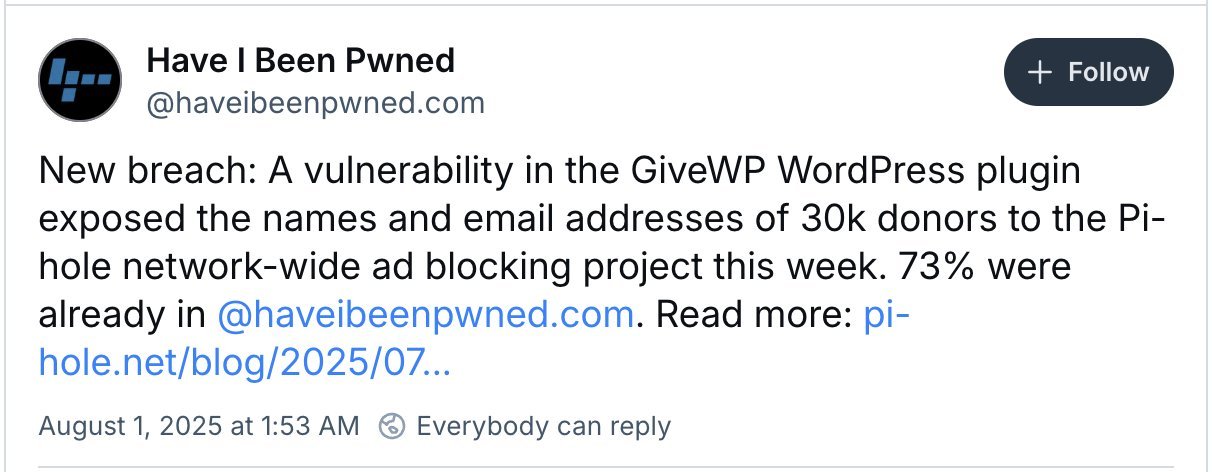 Have I Been Pwned added the breach, noting 73% of exposed records were already in its database.
A Delayed Response Chain
While GiveWP patched the flaw within hours of its disclosure on GitHub, Pi-hole criticized the plugin maintainers for a 17.5-hour delay in notifying users and downplaying the severity. This lag left donor data exposed longer than necessary.
In a detailed post-mortem, Pi-hole stated:
"We take full responsibility for the software we deploy. We placed our trust in a widely-used plugin, and that trust was broken."
The team emphasized that Pi-hole’s core ad-blocking software remained unaffected, requiring no user action.
The Unavoidable Supply Chain Risk
This incident underscores a harsh reality: security tools aren’t immune to third-party risks. Key takeaways for developers and organizations:
- Plugin Vetting Isn’t Optional: Even "trusted" plugins require rigorous security audits
- Data Minimization Matters: Pi-hole noted donors could use pseudonyms—a practice limiting exposure
- Incident Response Timelines Are Critical: Delayed notifications compound breach impacts
As supply chain attacks escalate, this breach serves as a stark reminder that every external dependency is a potential attack vector—especially for projects handling sensitive user data.
Comments
Please log in or register to join the discussion