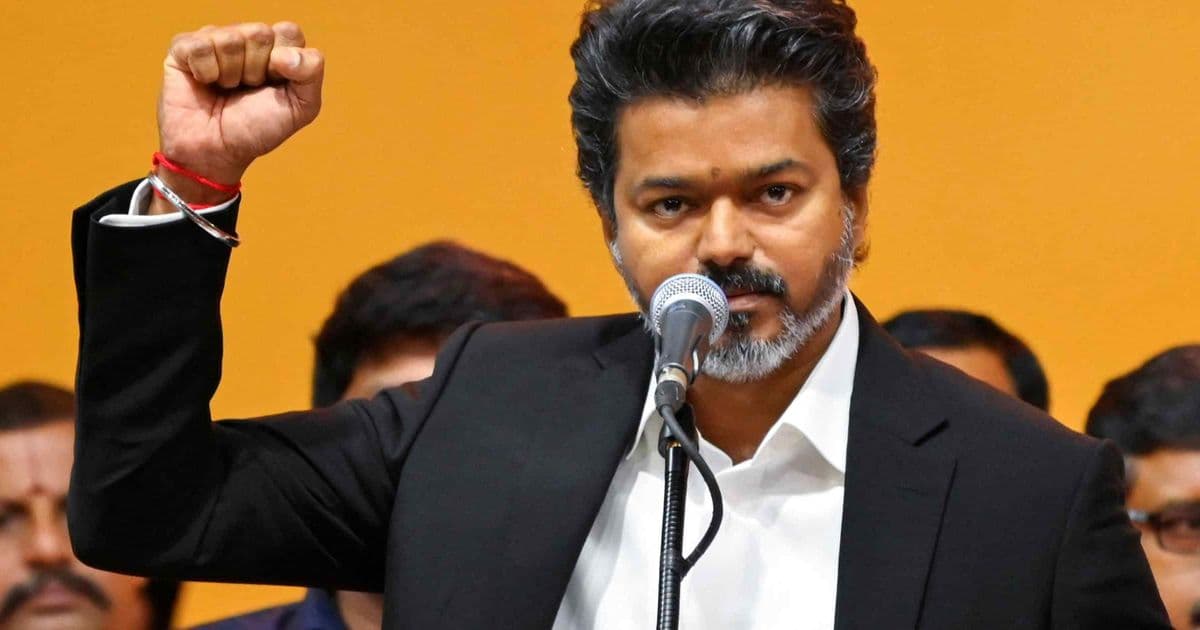
The election of actor-turned-politician C. Joseph Vijay as Chief Minister of India's Tamil Nadu state has created ripples across the Palk Strait, with Sri Lanka's political leaders from different ethnic groups showing contrasting reactions to this significant regional development.
The swearing-in ceremony of C. Joseph Vijay as Chief Minister of Tamil Nadu on May 10, 2026, marked not just a political transition in India's southern state but also created diplomatic tremors across the Palk Strait in Sri Lanka. The victory of Vijay's nascent political party in the recent elections has positioned him as a key figure in regional politics, with potential implications for Sri Lanka's delicate ethnic balance.
Tamil Nadu's political landscape has undergone a significant transformation with Vijay's ascent to power. Unlike his predecessors who often emphasized Tamil identity and regional autonomy, Vijay appears to be charting a more pragmatic course, balancing local interests with broader national considerations. This shift comes at a critical time when Sri Lanka is attempting to navigate its post-civil war reconciliation efforts while maintaining stability among its Sinhalese majority and Tamil minority populations.
Sri Lankan political analysts note that reactions to Vijay's election have been markedly divided along ethnic lines. Sinhalese political leaders have expressed cautious optimism, viewing Tamil Nadu's new leadership as potentially more aligned with New Delhi's central government, which could lead to more cooperative cross-border policies. In contrast, Tamil political figures in Sri Lanka have adopted a wait-and-approach stance, uncertain whether Vijay will continue to advocate for the rights of Sri Lankan Tamils as strongly as his predecessors.
The economic dimension of this political shift cannot be overlooked. Tamil Nadu accounts for approximately 8% of India's GDP, with a robust manufacturing sector, particularly in automobiles and textiles. The state's trade relationship with Sri Lanka, valued at approximately $4.2 billion annually, encompasses everything from machinery to consumer goods. Vijay's economic policies could significantly impact these trade dynamics, potentially creating new opportunities or challenges for Sri Lankan businesses. According to the Tamil Nadu Industrial Development Corporation, the state has been focusing on strengthening its manufacturing base while expanding trade relationships with neighboring countries.
Historically, Tamil Nadu's political leaders have often championed the cause of Sri Lankan Tamils, particularly during the civil war that ended in 2009. However, geopolitical analysts suggest that Vijay's approach may differ from his predecessors. Unlike the fiery rhetoric of leaders from the 1970s who frequently challenged central government authority, Vijay appears more inclined to work within established constitutional frameworks while still advocating for regional interests.
The strategic implications of this political shift extend beyond economic considerations. Tamil Nadu's proximity to northern Sri Lanka means that any changes in state-level policies could affect cross-border security cooperation, fishing rights disputes, and infrastructure development projects. The $1.8 billion Sethusamudram Shipping Canal Project, which aims to create a shipping route between India and Sri Lanka, remains a point of contention that could be influenced by Tamil Nadu's new leadership.
Political observers note that Vijay's background as a film star has given him significant popularity across Tamil Nadu, with his films often distributed in Sri Lanka's Tamil-speaking regions. This cultural connection could potentially translate into diplomatic influence, though the extent remains uncertain. The entertainment industry between Tamil Nadu and Sri Lanka's Tamil regions generates approximately $150 million annually, creating another avenue for economic and cultural exchange.
As Sri Lanka continues its post-war recovery efforts, with foreign direct investment reaching $850 million in 2025, the relationship with Tamil Nadu becomes increasingly important. The state's ports, particularly Chennai and Ennore, serve as critical trade gateways for Sri Lanka, handling approximately 35% of the island nation's container traffic. Any policy shifts under Vijay's leadership could significantly impact these logistics networks.
The diplomatic calculus becomes even more complex when considering China's growing influence in the region. Sri Lanka's strategic location in the Indian Ocean has made it a focal point for geopolitical competition between India and China. With China investing approximately $5 billion in Sri Lankan infrastructure projects, Tamil Nadu's new leadership will need to balance regional interests with national foreign policy objectives.
In the realm of technology and digital governance, Vijay's administration may bring new approaches. Tamil Nadu has been at the forefront of India's digital transformation, with the state's IT sector generating $22 billion in revenue annually. If Vijay continues this emphasis on technological advancement, it could create opportunities for digital collaboration with Sri Lanka, particularly in areas such as e-governance and digital infrastructure. The Tamil Nadu e-Governance Agency has been implementing various digital initiatives that could serve as models for cross-border cooperation.
As Vijay settles into his new role, the coming months will reveal the direction of Tamil Nadu's policies toward Sri Lanka. The early indications suggest a pragmatic approach that balances regional identity with broader national interests, potentially creating new opportunities for cooperation while navigating longstanding issues. For Sri Lanka, the challenge will be to engage with this new leadership in a manner that advances its own interests while maintaining stability in a complex regional environment.
The political landscape of southern India has shifted significantly with Vijay's rise, and the implications for Sri Lanka's ethnic and economic relations are only beginning to unfold. As both regions navigate this new dynamic, the coming years will likely see a recalibration of diplomatic, economic, and cultural ties that have evolved over decades. The Ministry of External Affairs of India will be closely monitoring these developments as they impact India's broader regional strategy.
Comments
Please log in or register to join the discussion