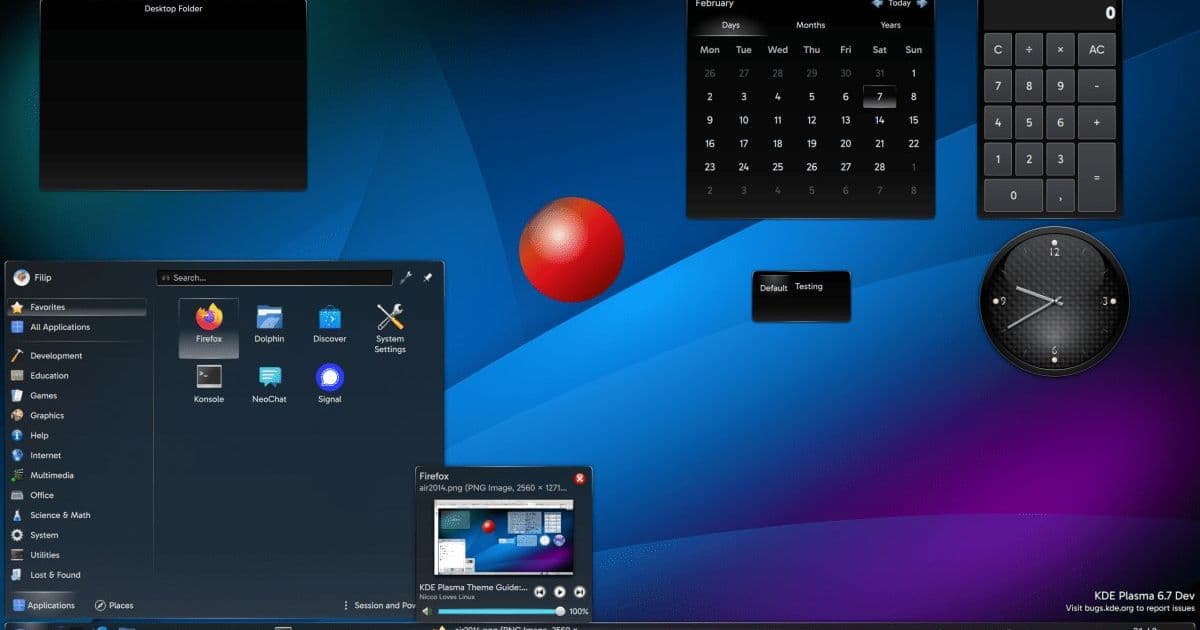
A deep dive into the ongoing effort to restore and modernize KDE's classic Oxygen and Air desktop themes for Plasma 6.7, exploring the technical challenges, design philosophy, and cultural significance of maintaining these iconic visual elements.
The evolution of desktop aesthetics often follows a ruthless pattern: minimalism arrives like a wrecking ball, sweeping away established designs in favor of what's perceived as modern and fresh. This phenomenon, which gained momentum around 2013, delivered a terminal diagnosis to many beloved visual themes—including KDE's Oxygen, which had reigned supreme throughout the KDE Plasma era.
For users who began their KDE journey during the later releases of its fourth generation, Oxygen represented more than just a visual style. It was a comprehensive design language encompassing icons, desktop themes, application appearances, and window decorations—a complete package that defined the KDE 4 experience. Yet as with many design paradigms that fall out of fashion, Oxygen faced an inevitable decline. Anyone aspiring to demonstrate they were building something new and modern had to close the door on older designs.
Interestingly, while Oxygen often dominates discussions about KDE 4's visual identity, there was another significant player: the Air theme. Air actually served as the default theme for the majority of KDE 4 releases, with Oxygen functioning as its sidekick. Both themes survived the major transition from KDE 4 to Plasma 5 and remained part of official KDE packages. However, the move to Plasma 6 marked a turning point—while desktop themes stopped being shipped alongside Breeze, Oxygen was relocated to the optional oxygen repository, and Air was left out entirely.
This relegation feels particularly undeserved for a theme that played such a significant role in the KDE 4 era and offered a complementary lighter experience to Oxygen's darker aesthetic. This very concern has sparked work underway on Air's comeback in Plasma 6.7, but the revival raises more serious questions about the state and future of both themes.
Both Air and Oxygen have seen only sparse maintenance for well over a decade, with Oxygen surprisingly exhibiting more issues than its lighter counterpart. To understand the scope of the challenge, it's instructive to compare how these themes appeared in their KDE 4 heyday versus their current state.
When examining screenshots from Kubuntu 14.04 alongside modern implementations, several observations emerge. First, both Oxygen and Air were using headers and footers in applet dialogs well before these elements were added to Breeze—a design choice that predates current trends by many years. This raises interesting questions about whether these elements should be reintroduced today, especially given that they're technically straightforward to implement.
The second notable difference is that present-day Oxygen looks distinctly different from its original incarnation. The Windows Vista-like glossy and gradient-heavy panel has disappeared, and tasks in the panel no longer have framed boxes with pronounced blue glows on hover and press. The exact reasons for these divergences remain unclear, but the hypothesis is that these changes represent a conscious restoration of Oxygen's much older design—pre-KDE 4.2. Stylistic decisions also led to changes in text input fields and buttons, shifting from light to dark variants.
In contrast, the Air theme remains closer to its original design, though it still exhibits some issues. Certain elements lack proper padding, and widgets should be more transparent to better match the light and airy feel the theme originally aspired to achieve. Additionally, many icons are missing entirely. This isn't something the desktop theme can address directly, as Plasma 6 themes can't use their own icons—users must pair these old themes with an icon theme of their choice. When using the Oxygen icon theme, users encounter mismatched symbolic and colored icons along with missing icons, indicating work is needed to restore the full icon experience.
Several critical bugs and glitches have been identified in Oxygen, primarily affecting legibility due to insufficient contrast between elements. Fortunately, these issues should be resolved by the time Plasma 6.6 releases. Additional improvements include restoring Oxygen's original action button design and adding support for newer tooltips found in some desktop locations—changes that will land in 6.7 as they're not strictly bug fixes.
The path forward involves three main steps: First, cleaning up existing files by removing unused SVGs, cleaning up internal structures (removing unused layers, adjusting document margins, improving documentation), and generally organizing the codebase. Second, improving the visual appearance while making the themes more closely resemble the good parts of KDE 4. This involves parallel processes of tracking Plasma 6 glitches while examining KDE 4 versions to identify what looked better then and what could be improved today. It's important to note that some things are structurally different in Plasma 6, and the desktop theme alone cannot solve all issues—menus and some tooltips aren't styled by the theme, and icons are provided by the icon theme. Third, adding new graphics involves testing with all Plasma 6 components to identify what needs to be added to complete the theme, raising interesting questions like whether headers and footers should be implemented. For instance, both Air and Oxygen need new SVGs to give them their own designs for switches.
The question of why preserve these themes at all deserves serious consideration. We don't typically knock down impressive old buildings simply because they're no longer trendy, nor do we cast aside good artwork just because it's fallen out of fashion. While leaving old code behind is often perfectly reasonable—code has little inherent value beyond the utility it provides—design is fundamentally different. Artwork such as Oxygen carries genuine artistic value. Even if we might approach certain aspects differently today, it's still hard not to admire the beauty of the details found throughout its many parts. Moreover, as the main theme in KDE 4, Oxygen carries significant historic value.
Thankfully, this old theme has survived because there has always been someone in the KDE community willing to step in and patch it up. Many users, including myself, are deeply grateful to those people. However, despite their efforts, the theme has effectively been on life support. We can admire and appreciate it, but if we don't do what we can to keep it functioning properly, someone may eventually reach for the deprecation axe when Plasma 7 arrives.
From a technical and cost-benefit perspective, continuing to support themes that are no longer part of the default offering means spending energy on maintenance with diminishing returns. As dismissive and neglectful as that viewpoint may be of artistic and historic considerations, it becomes much harder to argue against if the porting candidate is in poor shape.
The goal being put forward is straightforward: Air and Oxygen should look their best when users update to Plasma 6.7. For those who would like to contribute, help would be greatly appreciated. The original creator, Nuno Pinheiro, has even expressed a desire to join the effort, adding significant credibility and expertise to the project.
This preservation effort represents more than just maintaining old code—it's about honoring design heritage, preserving artistic achievement, and maintaining continuity in user experience. As desktop environments continue to evolve, having the option to use these classic themes provides users with choice and connects them to the rich history of KDE's visual design language. The revival of Air and the continued maintenance of Oxygen demonstrate that good design, even when it falls out of fashion, deserves respect and preservation rather than abandonment.
The work being done for Plasma 6.7 represents a crucial moment for these themes. If successful, it could establish a model for how open-source projects can maintain and modernize their design heritage while continuing to innovate. The next time this topic is discussed, the hope is to report meaningful progress toward ensuring that these classic themes not only survive but thrive in the modern KDE ecosystem.
Comments
Please log in or register to join the discussion