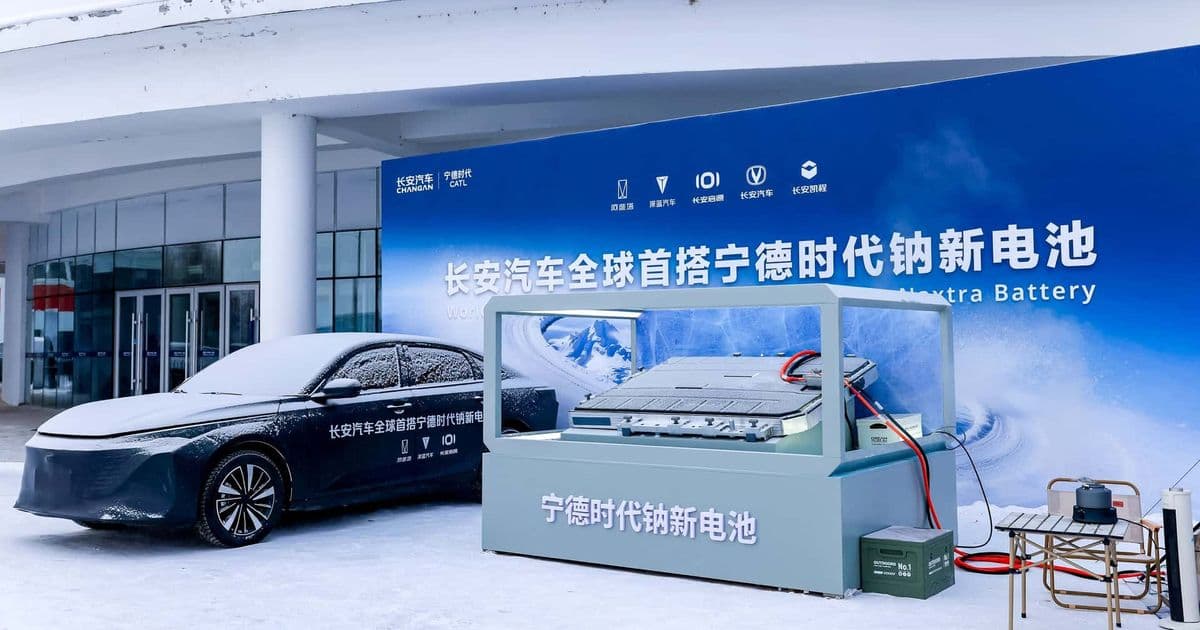
CATL and Changan Automobile are launching the world's first mass-produced sodium-ion battery EV, the Changan Nevo A06, which promises exceptional cold-weather performance and could usher in a 'dual chemistry era' for electric vehicles.
Chinese battery giant CATL and automaker Changan Automobile are preparing to put the world's first passenger car powered by sodium-ion batteries on public roads by mid-2026. And if the launch is successful, it could usher in an era where electric vehicles present less of a fire risk and can better handle extreme temperatures.
The CATL Naxtra sodium-ion battery will debut in the Changan Nevo A06 sedan, delivering an estimated range of around 400 kilometers (249 miles) on the China Light-Duty Test Cycle. From there, the battery will roll out across Changan's broader portfolio, including EVs from Avatr, Deepal, Qiyuan and Uni, the company said.
"The launch represents a major step in the industry's transition toward a dual-chemistry ecosystem, where sodium-ion and lithium-ion batteries complement each other to meet diverse customer needs," CATL said in a press release.
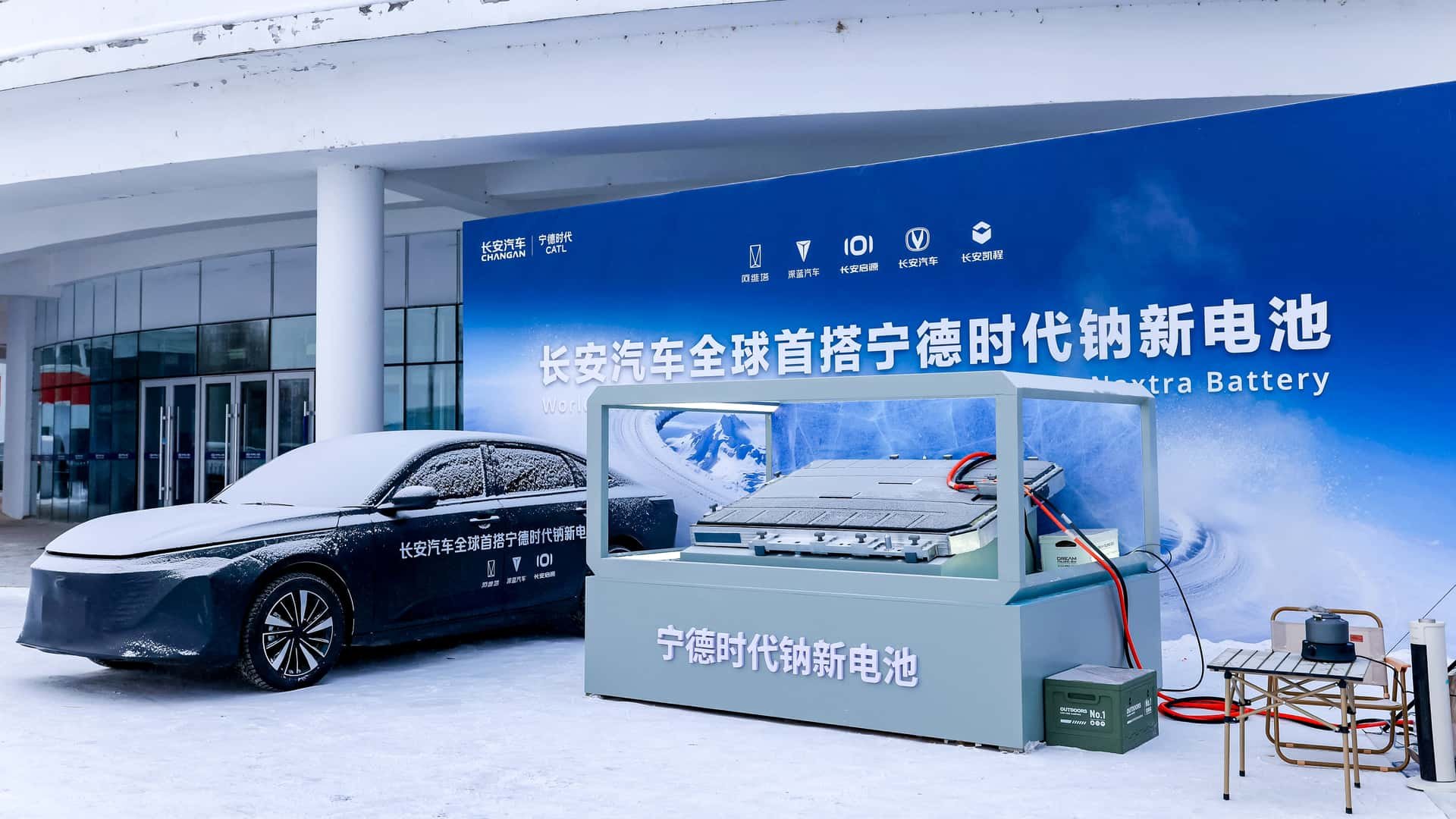
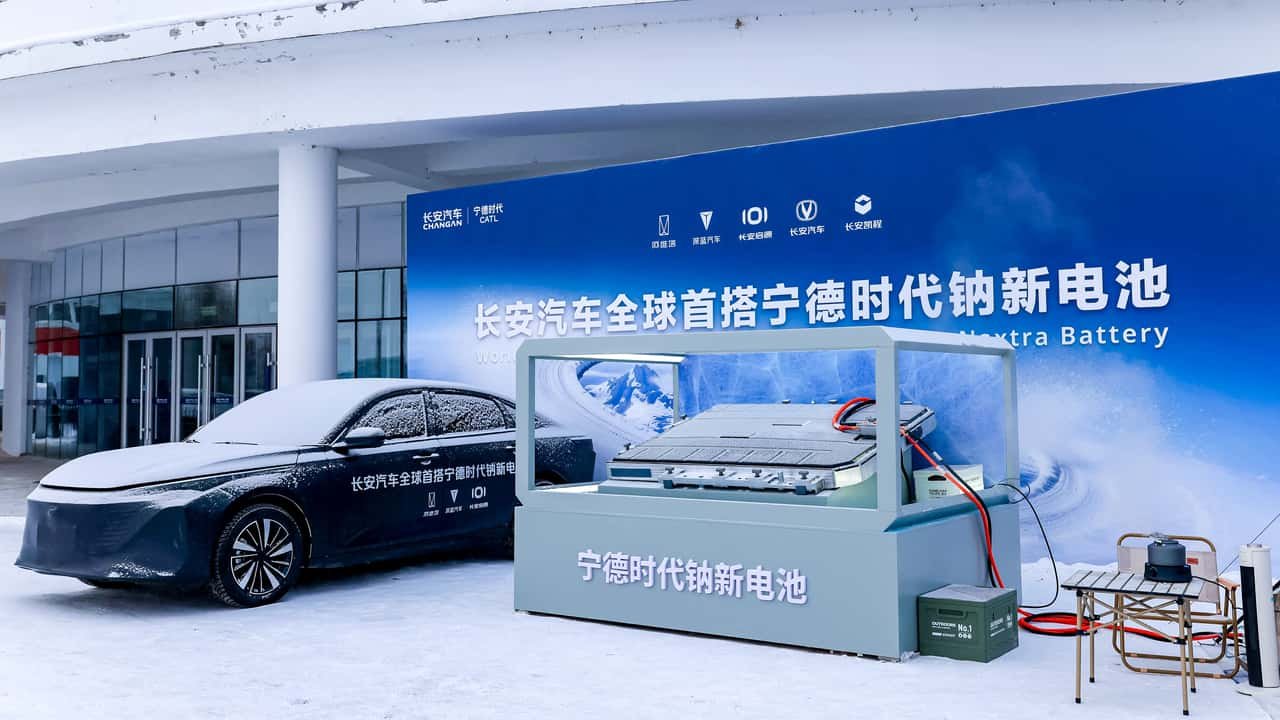
It's a meaningful step forward for the technology that's rapidly emerging as an alternative to lithium-iron phosphate (LFP) batteries, which currently dominate China's EV market. Studies show that sodium-ion batteries carry no risk of thermal runaway and are far less sensitive to extreme temperatures. Above all, sodium is significantly cheaper and far more abundant than lithium.
From an energy density standpoint, the Naxtra battery is competitive but not revolutionary. It delivers 175 watt-hours per kilogram of energy density, which is lower than nickel-rich chemistries but roughly on par with LFP. That makes it more suitable for low-cost and low-range EVs as well as stationary energy storage.
By using a cell-to-pack design, where individual cells are integrated directly into the battery pack instead of modules, CATL was able to extract 400 kilometers (249 miles) of range on the CTLC cycle.

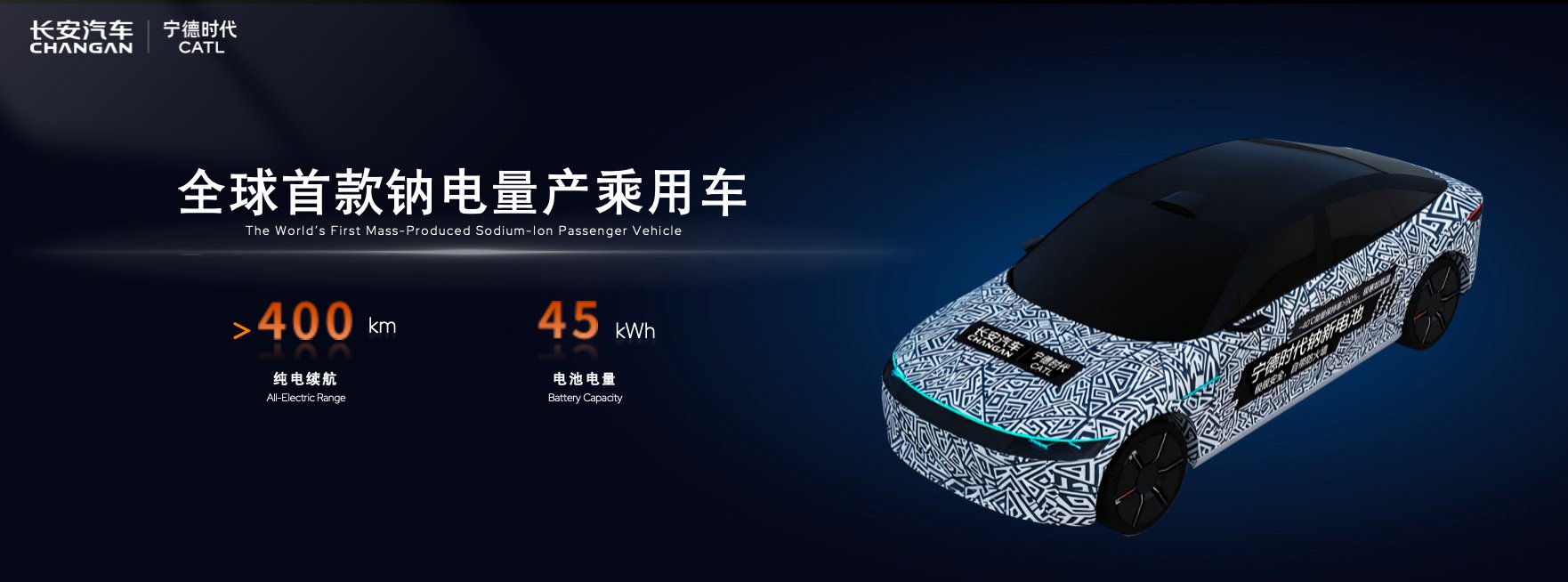
But CATL says there's plenty of room for improvement on the range front. As the sodium-ion supply chain matures, the company expects EV range to climb to 600 kilometers (373 miles), while extended-range EVs (EREVs) and hybrids could reach up to 400 kilometers (249 miles). That would cover more than half of the typical range requirements in China's EV market, CATL claims.
Where the Naxtra battery really stands out, however, is cold-weather performance. CATL says its discharge power at -30 degrees Celsius (-22 degrees Fahrenheit) is three times higher than that of LFP batteries. Unlike LFP or nickel-manganese-cobalt (NMC) packs, it reportedly avoids severe winter range loss, retaining more than 90% of its range at -40 degrees C (-40 degrees F). Power delivery is also said to remain stable at temperatures as low as -50 degrees C (-58 degrees F).
As always, we'll have to wait for independent testing for real-world results. But on paper, the technology looks genuinely compelling. While the Naxtra battery isn't coming to the U.S., it could be especially valuable in places like the Midwest and the Northeast, where EV drivers routinely report steep range losses when temperatures plunge in winter.
While lithium-ion batteries aren't going anywhere, it's becoming increasingly clear that the future of EVs will be defined by multiple battery chemistries coexisting. That's how internal combustion engines evolved over the years, giving drivers more options to be able to choose the battery technology that best fits their driving habits, power needs—and the climate they live in.
Reader Comments and Analysis
The community response to this development has been mixed, with several readers raising important technical questions and concerns about the practical implications of this new technology.
One reader, Adam Bernard, pointed out that 249 miles on the Chinese cycle translates to less than 200 miles on the EPA cycle, questioning whether this truly qualifies as a "range monster" in winter conditions. He notes that this range is already shorter than what's available in existing EVs like the 2019 Bolt, and is reportedly 25% lower than the average for all Chinese EVs.
Another reader, Cybermonkey, offers a counterpoint by emphasizing that no current EV in the US retains so much range in sub-zero temperatures. The key advantage here isn't absolute range but consistency across temperature conditions. As they note, "This battery will basically deliver its stated range in all conditions which is mighty impressive."
Several readers have also highlighted missing technical specifications that would help assess this technology more thoroughly. Questions remain about the battery's pack capacity in kilowatt-hours, the vehicle's weight, and how the battery performs in hot weather conditions.
Technical Context and Industry Implications
The emergence of sodium-ion batteries represents a significant shift in the EV landscape. Unlike lithium-ion batteries, sodium-ion technology uses materials that are more abundant and less expensive, potentially addressing supply chain concerns that have plagued the EV industry.
The technology's resistance to thermal runaway is particularly noteworthy. Traditional lithium-ion batteries can experience thermal runaway under certain conditions, leading to fires that have been a concern for EV safety. Sodium-ion batteries eliminate this risk entirely, which could have significant implications for insurance costs and public perception of EV safety.
However, the energy density limitations mean that sodium-ion batteries are likely to find their niche in specific market segments rather than replacing lithium-ion technology entirely. They're well-suited for urban commuters, fleet vehicles, and regions with extreme cold weather where range consistency matters more than maximum range.
Looking Ahead
The "dual chemistry era" that CATL envisions suggests a future where different battery technologies serve different use cases. Just as gasoline and diesel engines coexisted for decades, serving different market segments and driving patterns, we may see lithium-ion batteries continue to dominate long-range and high-performance applications while sodium-ion batteries find their place in cost-sensitive and climate-challenged markets.
This development also raises questions about the future of battery technology investment. Will companies continue to pour resources into improving lithium-ion technology, or will sodium-ion and other emerging chemistries begin to attract more attention and funding?
For now, the Changan Nevo A06 represents an important proof of concept. Whether it becomes a commercial success or remains a technological curiosity will depend on factors like pricing, real-world performance, and how well it addresses the specific needs of its target market.
The broader implication is that the EV revolution may be more diverse than many anticipated, with multiple technologies coexisting to serve different needs rather than a single dominant approach emerging.
Comments
Please log in or register to join the discussion