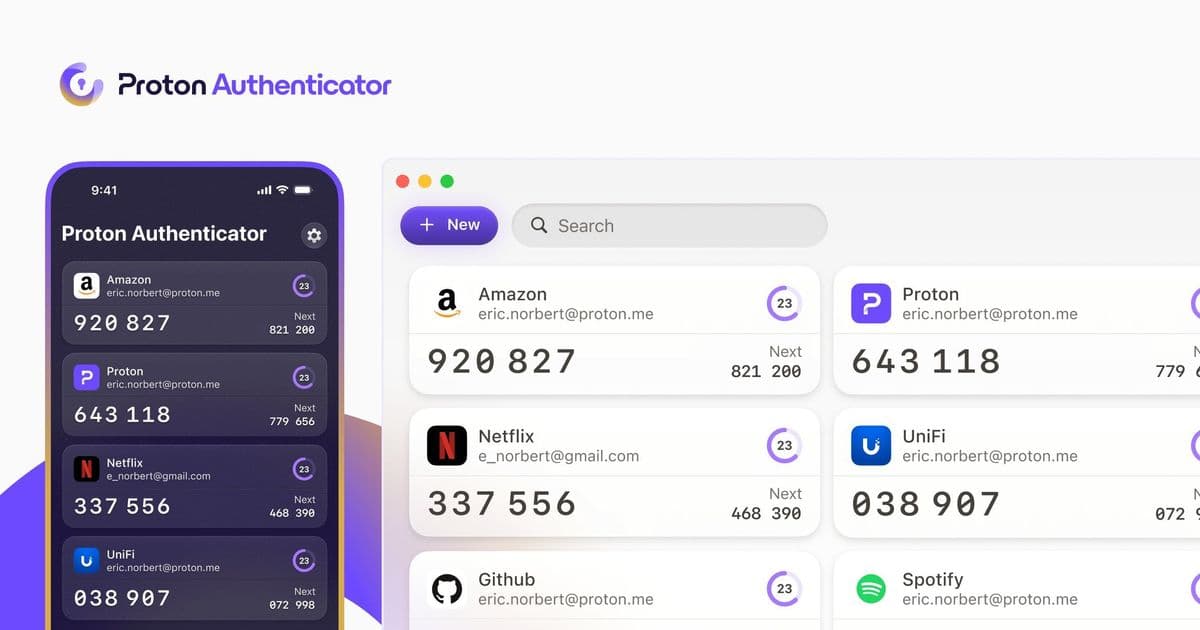
Passwords alone are increasingly vulnerable to sophisticated attacks, costing billions annually. Proton has launched Proton Authenticator, a free, open-source 2FA app offering encrypted backups, multi-device sync, and desktop support to eliminate common security compromises. This move reinforces Proton's mission to democratize privacy-first tools in an era of rising account takeovers.
In a digital landscape where password breaches have become commonplace, two-factor authentication (2FA) is no longer optional—it's essential. Yet, many existing 2FA apps suffer from critical flaws: they’re closed-source, riddled with trackers, or lack encrypted backups, leaving users trapped in ecosystems that prioritize profit over security. Proton, the Swiss-based privacy advocate behind Proton Mail and Proton VPN, is challenging this status quo with the launch of Proton Authenticator. Free, open-source, and available across iOS, Android, macOS, Windows, and Linux, the app aims to redefine security with uncompromising encryption and user control.
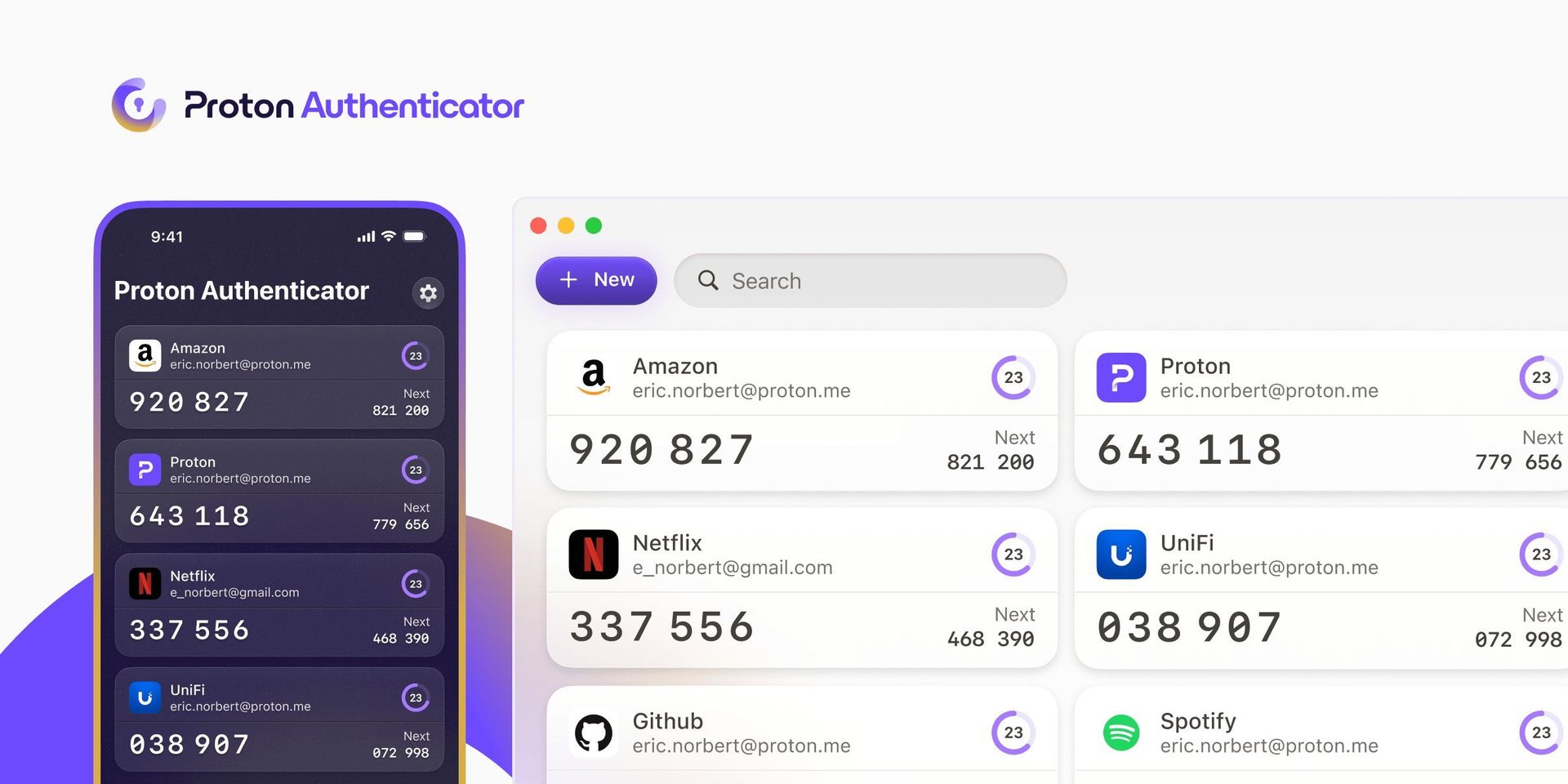
The Urgent Case for Robust 2FA
Account takeover attacks inflict tens of billions in losses yearly, yet they’re largely preventable. While SMS-based 2FA is widespread, it’s vulnerable to SIM-swapping—a risk Proton Authenticator eliminates by generating time-sensitive codes locally on your device. As the source notes:
'An authenticator app is much more difficult for hackers to crack because it generates codes locally on your device, and each code expires after 30 seconds.'
This approach isolates authentication from network-based exploits, but until now, users faced trade-offs. Most authenticators are proprietary, lack cross-platform support, or force data lock-in. Proton Authenticator solves this by enabling seamless import/export of tokens and offering end-to-end encrypted backups, ensuring users retain ownership of their security credentials.
Inside Proton Authenticator’s Privacy-First Design
Built on Proton’s ethos of transparency, the app provides several key advantages:
- Cross-Platform Accessibility: Codes sync via iCloud or Proton Account with E2E encryption, working offline on any device—addressing a gap in desktop-compatible solutions.
- User Sovereignty: Biometric or PIN protection secures the app, while one-click migration from tools like Google Authenticator avoids vendor lock-in.
- Zero-Cost Security: Unlike ad-supported alternatives, it’s completely free, aligning with Proton’s nonprofit-driven model.
For developers and security teams, the open-source nature allows independent verification of its code—a critical feature for enterprise adoption. 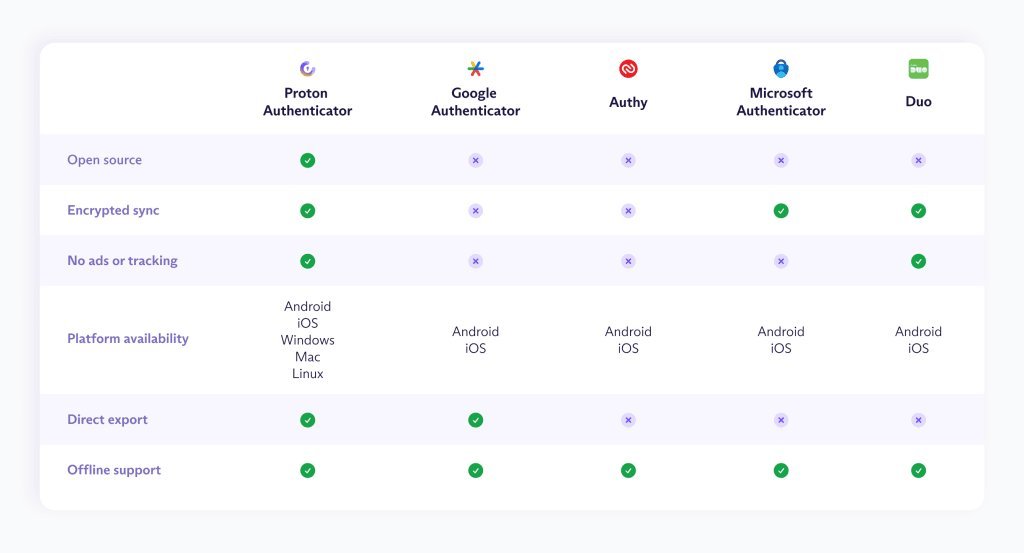 visually underscores its interface simplicity compared to cluttered competitors.
Proton Authenticator vs. Proton Pass: Tailoring Security to Your Workflow
Proton acknowledges that security isn't one-size-fits-all. While Proton Pass includes built-in 2FA for streamlined logins, Proton Authenticator operates as a dedicated, air-gapped app for heightened protection against credential-stealing malware. This dual-tool strategy empowers users to choose based on their threat model:
- Convenience Seekers: Proton Pass autofills passwords and codes in one step.
- High-Risk Profiles: Proton Authenticator’s separation of duties mitigates risks like keylogger attacks.
A Foundation of Trust in an Age of Surveillance
Proton’s expansion—from email to VPN, password manager, and now authenticator—reflects a broader vision: an internet where privacy is a fundamental right, not a premium feature. As a nonprofit-backed entity, it avoids the data monetization pitfalls of Big Tech, focusing instead on community-driven development. The launch invites user feedback on platforms like Reddit, emphasizing collaborative improvement.
Ultimately, Proton Authenticator isn’t just another app; it’s a statement that security tools should be accessible, verifiable, and user-controlled. In a world where digital autonomy is under siege, it offers a tangible step toward reclaiming control—one login at a time.
Source: Proton Blog
Comments
Please log in or register to join the discussion