Proton, the Swiss non-profit behind Proton Mail and Proton VPN, has unveiled Lumo, an AI assistant built on open-source models with end-to-end encryption that refuses to log conversations or use prompts for training. This tool addresses growing privacy concerns in AI by offering server-side deletion of chats and GDPR-compliant European infrastructure, positioning itself as a transparent alternative to opaque commercial services. With features like encrypted file uploads and tiered access, Lumo e
In an era where AI assistants routinely harvest user data for profit, Proton's launch of Lumo marks a defiant step toward ethical AI. Announced today, this privacy-respecting tool from the Swiss non-profit—renowned for its encrypted email and VPN services—challenges industry norms by eliminating server logs and training data exploitation. As AI adoption surges, Lumo's architecture prioritizes user control, leveraging open-source transparency to rebuild trust in a landscape marred by surveillance capitalism.
The Privacy Problem in AI: Why Lumo Matters
Most AI assistants, from giants like ChatGPT to niche tools, retain conversation histories and use prompts to refine models, creating risks of leaks, misuse, or regulatory breaches. Proton's analysis reveals a stark contrast: "Other AI companies keep a record of all your conversations on their servers, leaving this information vulnerable to data leaks or exploitation for profit," the company stated. Lumo counters this by defaulting to no online searches, wiping chats upon closure, and storing nothing server-side. Any saved conversations are encrypted locally, ensuring only the user can decrypt them—a boon for developers handling sensitive code or data.
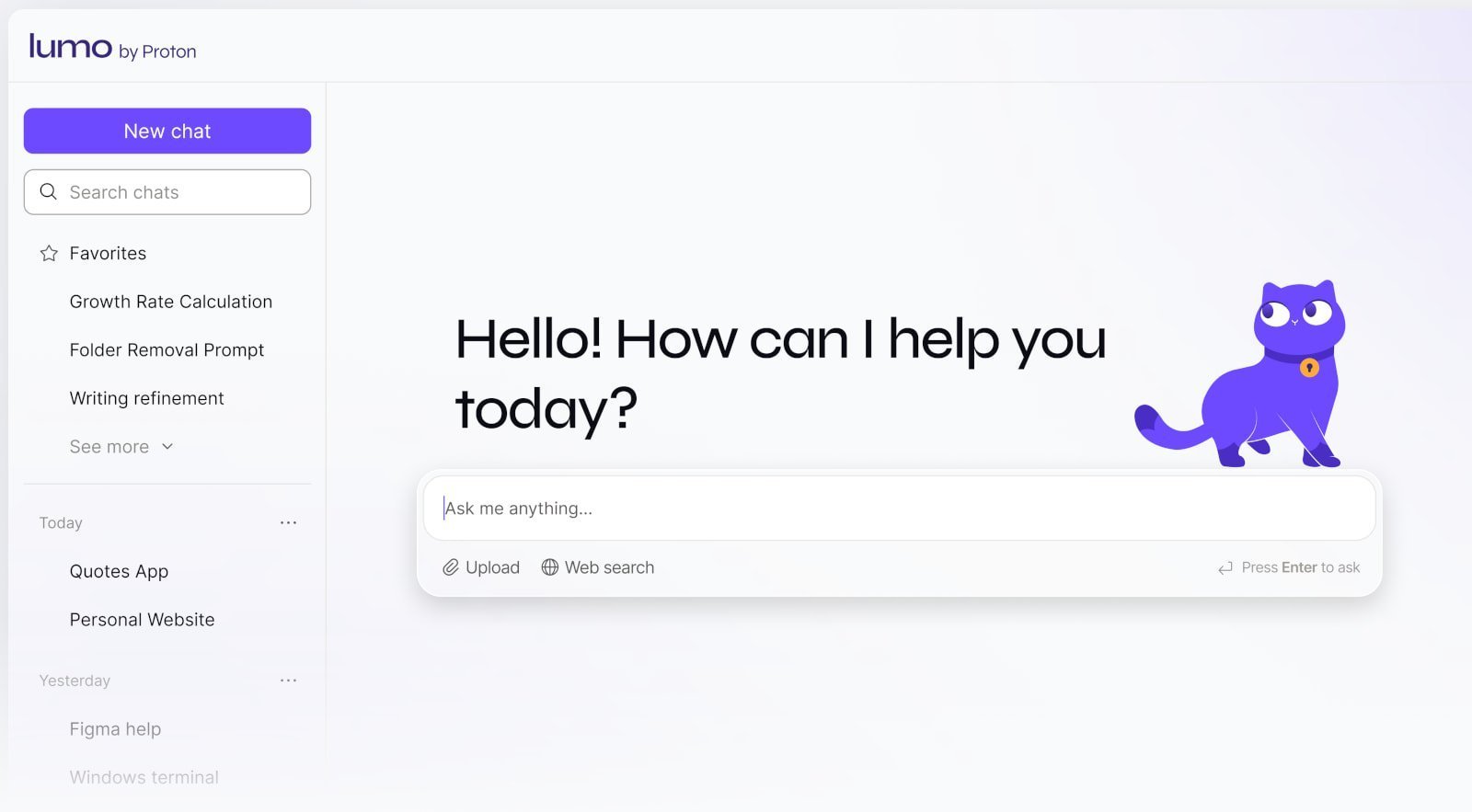 Lumo's clean, intuitive interface mirrors mainstream AI tools but adds layers of privacy.
Under the Hood: Open-Source Models and Encryption
Lumo isn't just a policy shift; it's a technical overhaul. Built on open-source large language models (LLMs), its codebase is fully public, allowing community audits—a rarity in an industry where proprietary black boxes dominate. Proton integrates its battle-tested open-source encryption, securing all interactions end-to-end. This transparency extends to file uploads: users can attach documents directly or from Proton Drive, with encryption applied before any data leaves their device.
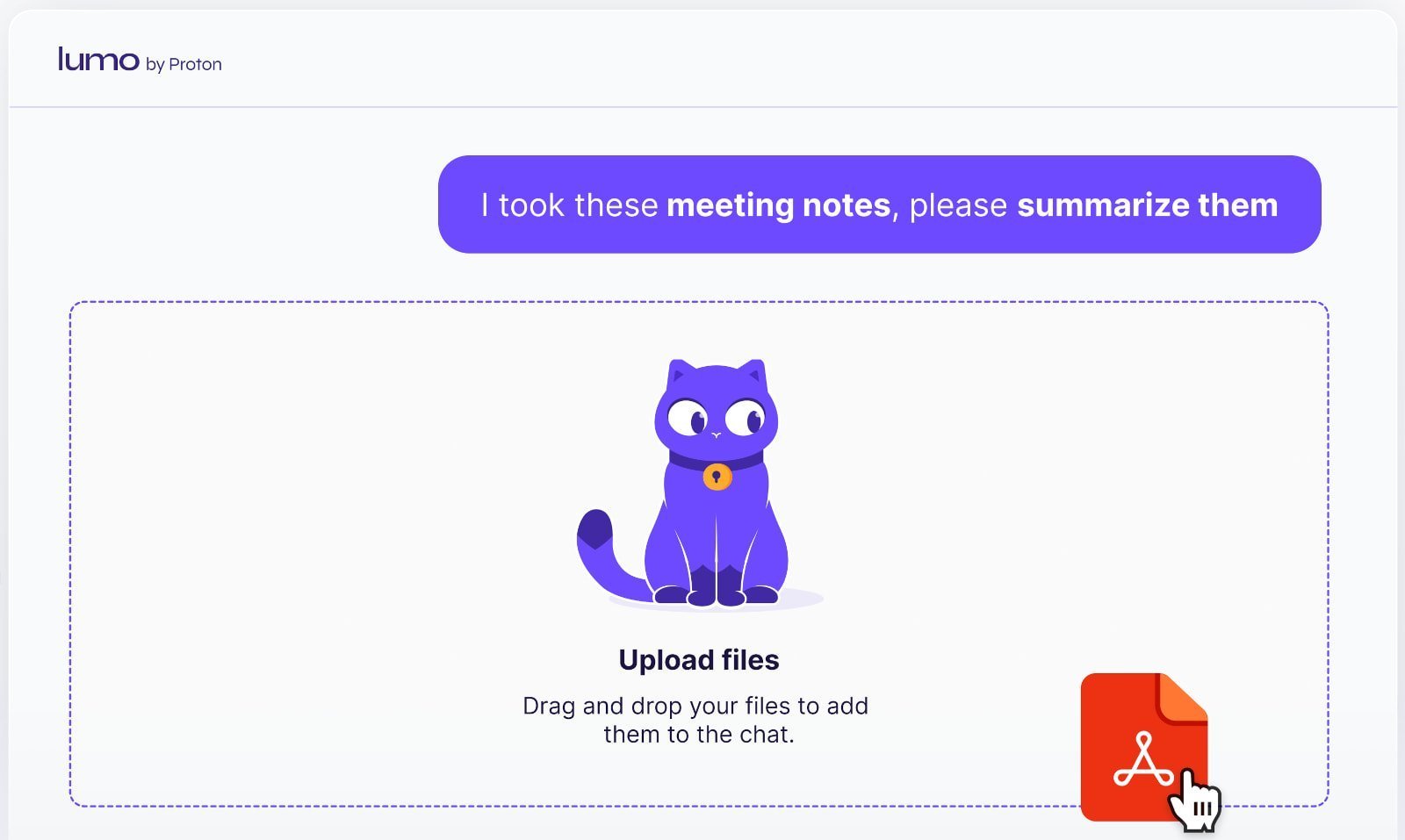 Encrypted document uploads ensure files remain private, even during processing.
Infrastructure and Accessibility: GDPR-Compliant and Multi-Platform
Hosted in Europe, Lumo operates under GDPR's stringent data protection rules, avoiding data transfers to weaker jurisdictions. It's accessible via web at lumo.proton.me or as mobile apps for Android and iOS, making privacy-first AI portable. Language support starts with English, French, German, Spanish, and Italian, with more planned, broadening its global appeal.
{{IMAGE:4}} Lumo's mobile app brings encrypted AI assistance on the go, with the same privacy guarantees.
Tiered Access: From Free to Premium
Lumo offers three tiers to cater to diverse needs:
- Guest: No Proton account required; limited weekly questions with no chat retention.
- Free: Requires a Proton account; includes file uploads, higher question limits, and basic encrypted chat history.
- Plus: Priced at $12.99/month; unlocks unlimited chats, extended encrypted history, unlimited favorites, and support for large file batches.
This structure democratizes access while incentivizing upgrades through enhanced security features—ideal for developers needing robust, scalable tools.
Implications for the Tech Ecosystem
Lumo arrives as regulators scrutinize AI data practices, and developers grapple with ethical dilemmas. By rejecting data monetization, Proton sets a precedent: AI can be powerful without being predatory. For engineers, this means a verifiable, auditable alternative to closed-source systems, reducing supply-chain risks. If adopted widely, it could pressure competitors to adopt similar transparency, accelerating a shift toward user-first AI. As Proton's non-profit model proves, prioritizing privacy isn't just feasible—it's a competitive edge in a distrustful market.
Source: BleepingComputer
Comments
Please log in or register to join the discussion