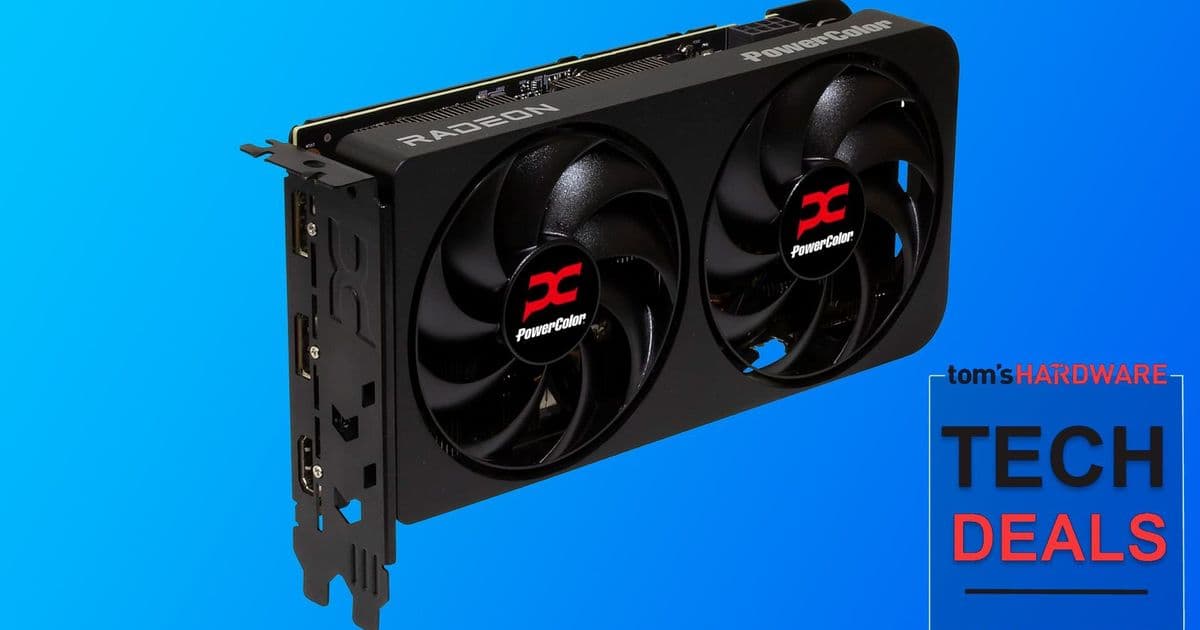
PowerColor's Reaper RX 9060 XT 8GB graphics card bucks the AI-driven memory shortage trend by maintaining its $299 MSRP, offering budget gamers a rare opportunity to purchase a modern GPU at MSRP in today's inflated market.
The graphics card market has been turned upside down by AI-driven memory shortages, with prices for consumer GPUs skyrocketing as manufacturers prioritize high-margin AI accelerators. Yet amid this chaos, PowerColor's Reaper AMD Radeon RX 9060 XT 8GB stands as an anomaly, maintaining its $299 MSRP when competing options start at $349.
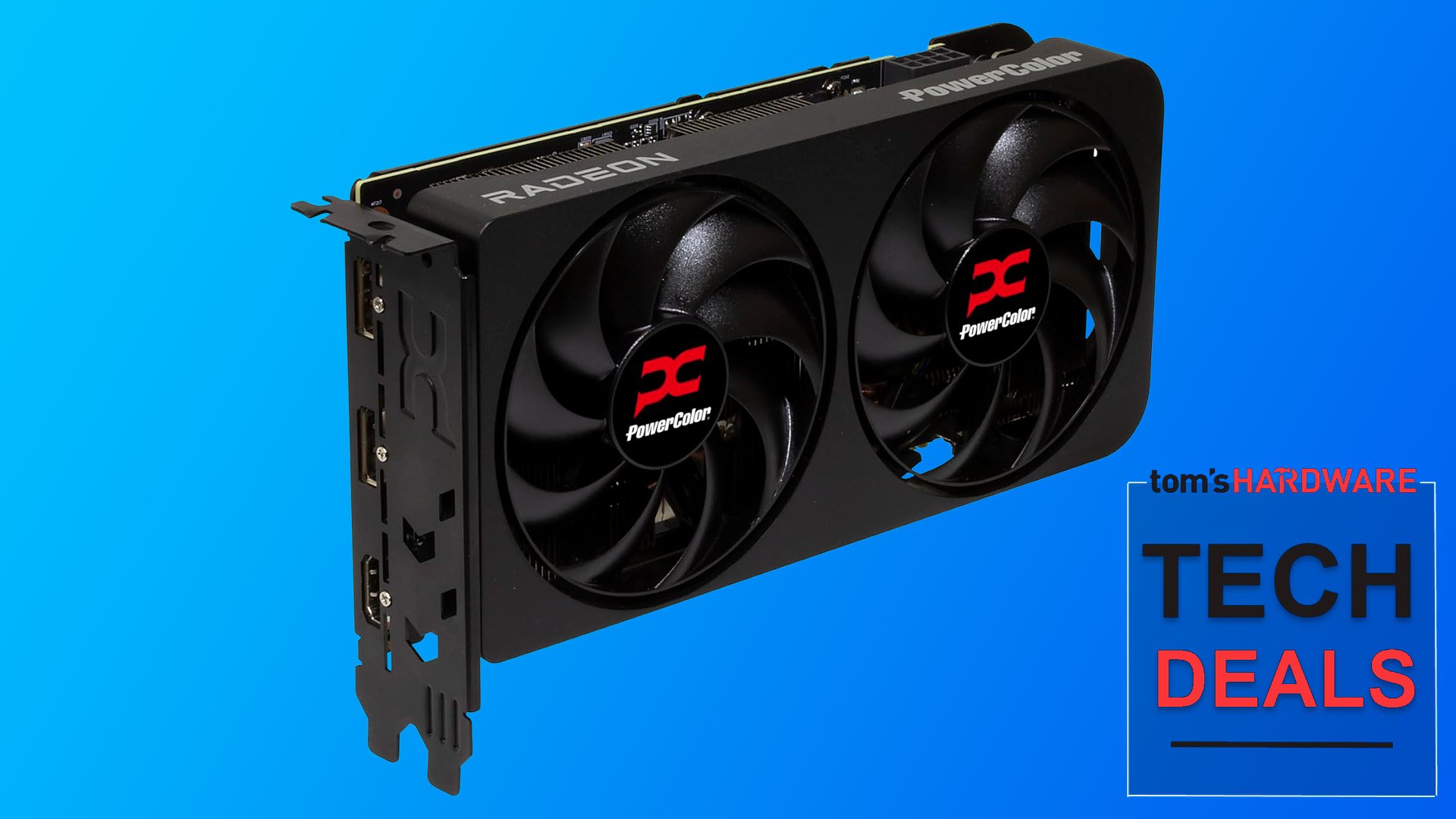
This pricing defiance comes at a critical moment for budget-conscious gamers. The Reaper's compact 8.7-inch (220mm) dual-slot design makes it compatible with even the most space-restricted cases, while its dual-fan cooling system with Japanese ball bearings and nine-blade ring design delivers efficient thermal performance without excessive noise.
The card's specifications align with AMD's reference design: a 1,700 MHz base clock that typically runs around 2,530 MHz in games, with boost capabilities reaching 3,310 MHz under optimal conditions. Power consumption remains modest at 150W, requiring only a standard 8-pin PCIe connector and a 500W power supply.
What makes this offering particularly noteworthy is the memory configuration. While 12GB or 16GB has become the standard sweet spot for modern gaming, the 8GB variant represents a calculated trade-off between performance and affordability. For 1080p gaming with reasonable image settings, the 8GB memory proves sufficient for most modern titles.
The memory shortage's impact becomes starkly apparent when comparing configurations. Where the 8GB model sits at $299, the cheapest 16GB Radeon RX 9060 XT starts at $439—a $140 premium that approaches half the cost of the 8GB variant. This price differential highlights how AI demand has distorted the graphics card market, making memory capacity a luxury rather than a standard feature.
PowerColor's decision to maintain MSRP pricing on the 8GB model appears strategic, targeting gamers who prioritize value over maximum specifications. The Reaper serves as a lifeline for budget builders and upgraders who might otherwise be priced out of the current market, where even mid-range cards often command significant premiums over their launch prices.
The timing proves fortuitous as well. With many gamers holding onto older hardware due to inflated prices, a reasonably priced modern GPU at MSRP provides an accessible upgrade path. The card's modest power requirements mean it can drop into existing systems without necessitating power supply upgrades, further reducing the total cost of ownership.
This pricing strategy also positions PowerColor advantageously against competitors who have raised prices across their product lines. By maintaining the $299 price point, the Reaper becomes the only custom Radeon RX 9060 XT available at MSRP, creating a compelling value proposition in an otherwise expensive market segment.
For gamers weighing their options, the decision between 8GB and 16GB configurations ultimately depends on use case. Those playing VRAM-intensive games or seeking future-proofing may find the $140 premium worthwhile, but for mainstream 1080p gaming, the 8GB model delivers strong performance at a price point that defies current market trends.
The Reaper's availability at MSRP represents more than just a good deal—it signals that some manufacturers still prioritize the gaming market despite AI's gravitational pull on memory supplies. In an era where GPU prices often bear little relation to their MSRPs, PowerColor's commitment to the $299 price point offers a rare glimpse of market normalcy.
Comments
Please log in or register to join the discussion