
Wi-Fi 7's flagship features like MLO and AFC are barely supported in consumer routers, creating confusion and limiting real-world performance gains despite the standard's theoretical capabilities.
Wi-Fi 7 represents the latest evolution in wireless networking standards, promising dramatic improvements in speed, reliability, and performance over its predecessors. However, a closer examination reveals that many of the standard's most touted features remain largely unimplemented in consumer hardware, creating a confusing landscape for buyers and limiting the real-world benefits of upgrading.
The Wi-Fi 7 Standard: More Promise Than Reality
The Wi-Fi Alliance made grand promises about Wi-Fi 7's capabilities when it was introduced, positioning it as a revolutionary leap forward. The technical specifications certainly support this vision:
- Three frequency bands: 2.4 GHz, 5 GHz, and 6 GHz
- 320 MHz channel bandwidth (up from 160 MHz in Wi-Fi 6)
- 16 spatial streams (double Wi-Fi 6's 8 streams)
- 4096 QAM modulation (up from 1024 QAM)
- Theoretical maximum data rate: 46 Gbps
Yet despite these impressive numbers, the reality on store shelves tells a different story.
The Dual-Band vs. Tri-Band Confusion
One of the most significant sources of confusion stems from the fact that not all Wi-Fi 7 routers are created equal. Due to regional licensing restrictions, particularly in markets like China where the 6 GHz band isn't licensed for consumer use, manufacturers have begun producing dual-band Wi-Fi 7 routers that only support the 2.4 GHz and 5 GHz bands.
This practice allows manufacturers to capitalize on the Wi-Fi 7 branding while delivering hardware that doesn't fully implement the standard. Consumers must now look beyond the "Wi-Fi 7" label to determine whether they're purchasing a tri-band router with full 6 GHz support or a dual-band variant that's missing a crucial component of the standard.
Multi-Link Operation: The Feature That Never Was
Multi-Link Operation (MLO) was positioned as one of Wi-Fi 7's headline features, promising to revolutionize how devices connect to wireless networks. The concept is elegant: instead of connecting to a single band at a time, MLO would allow devices to bond multiple bands under a single SSID, dynamically switching between them based on real-time conditions like interference, distance, and network congestion.
There are two primary implementations of MLO:
- Multi-Link Single Radio (MLSR/eMLSR): Allows dynamic hopping between bands while maintaining a single active connection
- Multi-Link Multi-Radio (MLMR): Aggregates data across all three bands simultaneously
However, the reality is far less impressive. In testing, MLO has shown minimal real-world benefits—often just 1-2% performance improvement over traditional single-band connections. More concerning, most routers don't implement MLO properly in firmware, leading to inconsistent and unreliable performance.
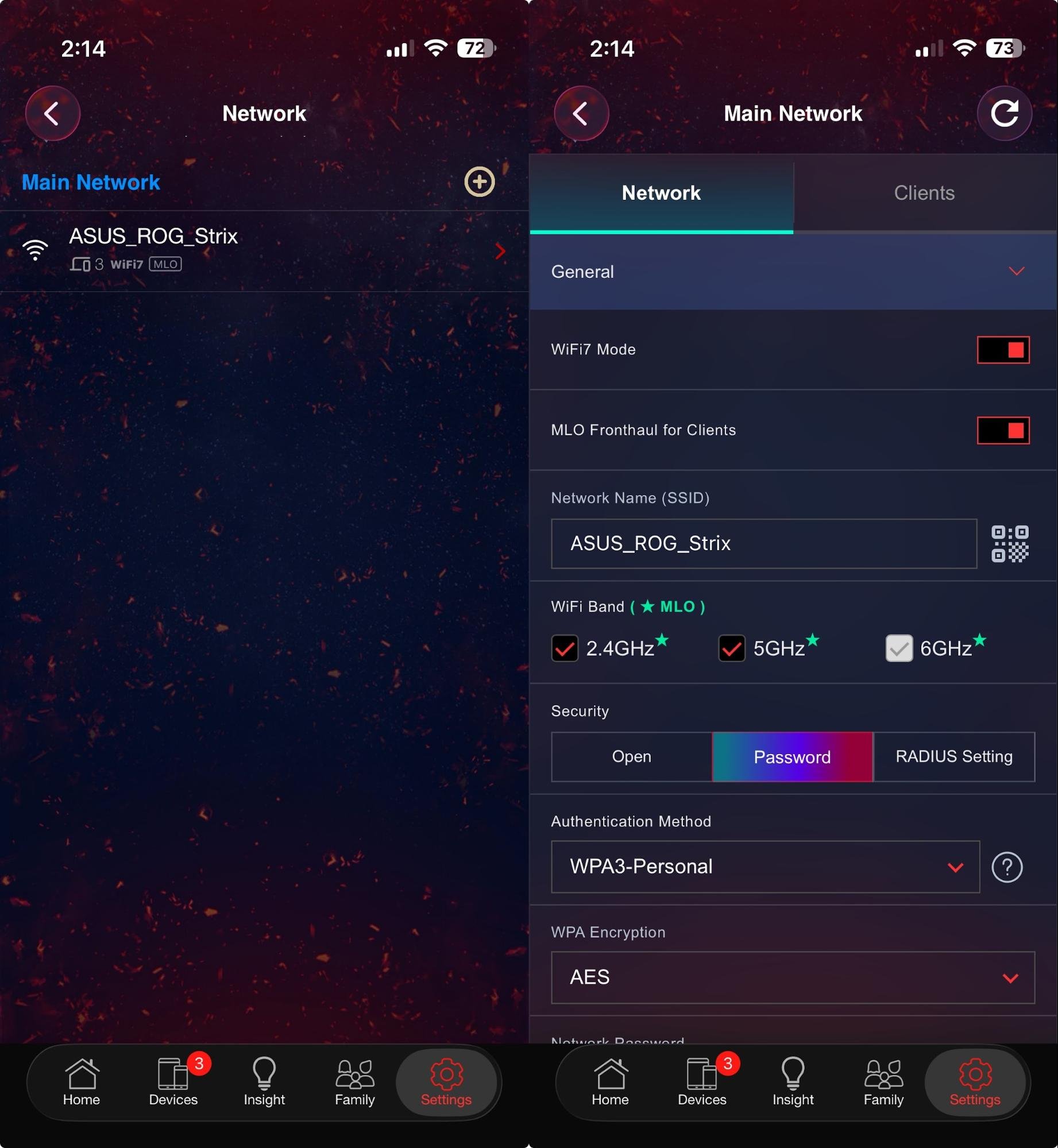
Compounding the problem, MLO requires WPA3 authentication and only works with Wi-Fi 7 devices. Given that most households still have predominantly Wi-Fi 5 and Wi-Fi 6 devices, the practical utility of MLO remains extremely limited.
Automated Frequency Coordination: The Turbocharger That's Hard to Find
Automated Frequency Coordination (AFC) represents another promising feature that's barely implemented in consumer hardware. AFC acts as a "turbocharger" for the 6 GHz band, boosting broadcasting power and extending range beyond what's possible in standard Low Power Indoor (LPI) mode.
In LPI mode, the 6 GHz band offers higher performance than 5 GHz but at the cost of range. AFC switches the router to Standard Power (SP) mode, improving signal strength and enabling connections beyond 50 feet. However, accessing AFC is far from straightforward:
- Your country must support 6 GHz consumer devices
- Local restrictions may still prevent AFC usage
- Both router and client must support AFC
- Some implementations require smartphone apps that use location data to verify AFC eligibility
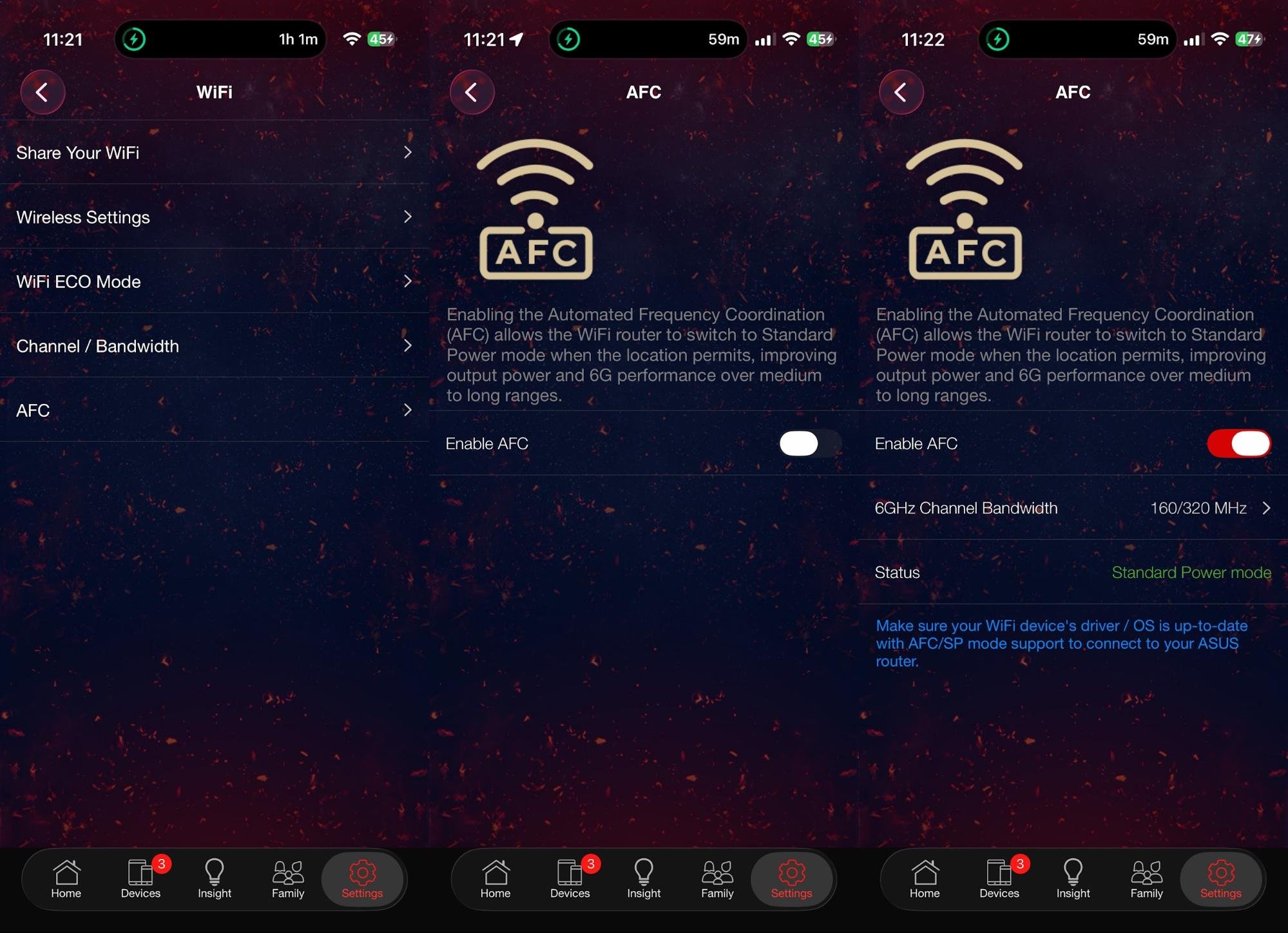
The complexity of enabling AFC has resulted in it being one of the least utilized features in Wi-Fi 7, despite its potential to significantly improve network performance.
Real-World Testing Reveals the Truth
Extensive testing of Wi-Fi 7 routers has consistently shown that the theoretical benefits of features like MLO rarely materialize in practice. In most cases, traditional single-band SSIDs actually outperform MLO-enabled networks. This discrepancy between marketing promises and real-world performance has left many consumers disappointed with their Wi-Fi 7 upgrades.
The situation is further complicated by inconsistent firmware implementations across different router manufacturers, making it difficult to predict whether a given device will actually deliver on Wi-Fi 7's promises.
Wi-Fi 8: More of the Same Confusion
Looking ahead to Wi-Fi 8, which is expected to launch in late 2027, the confusion appears set to continue. Early prototypes from companies like Asus show that the same bifurcation between tri-band and dual-band routers will persist, and hardware support for advanced features like MLO and AFC will remain dependent on individual manufacturers' implementations.
Wi-Fi 8's improvements appear more evolutionary than revolutionary:
- Same three bands (2.4 GHz, 5 GHz, 6 GHz)
- Same 4096 QAM modulation
- Same 320 MHz maximum channel bandwidth
- Same 46 Gbps theoretical maximum data rate
Instead of raw performance gains, Wi-Fi 8 focuses on features like Ultra High Reliability (UHR), which promises 25% better real-world data rates through technologies like:
- Coordinated Spatial Reuse (Co-SR): Improves network efficiency in congested environments
- Coordinated Beamforming (Co-BF): Directs signals only to active devices
- Dynamic Sub-Channel Operation (DSO): Maximizes utilization of unused spectrum
- Enhanced Modulation Coding Scheme (MCS): Provides smoother transitions in unstable conditions
- Extended Long Range: Improves stability for edge devices
The Bottom Line for Consumers
The current state of Wi-Fi 7 represents a cautionary tale about the gap between technical standards and real-world implementation. While the standard itself offers impressive theoretical capabilities, the actual experience for most consumers falls far short of these promises.
For consumers considering a Wi-Fi 7 upgrade, the key takeaways are:
- Verify tri-band support: Ensure the router includes 6 GHz capability
- Don't expect MLO benefits: The feature is barely implemented and offers minimal real-world improvement
- AFC is unlikely: Most routers don't support this feature, and enabling it is complex
- Focus on fundamentals: Router placement, device compatibility, and basic features matter more than Wi-Fi 7 branding
- Wi-Fi 8 won't solve confusion: The same implementation challenges will likely persist
The Wi-Fi Alliance and router manufacturers need to address this disconnect between standards and implementation if they want to maintain consumer confidence in wireless networking upgrades. Until then, Wi-Fi 7 remains more promise than delivery, with many of its most exciting features remaining tantalizingly out of reach for the average user.
Comments
Please log in or register to join the discussion