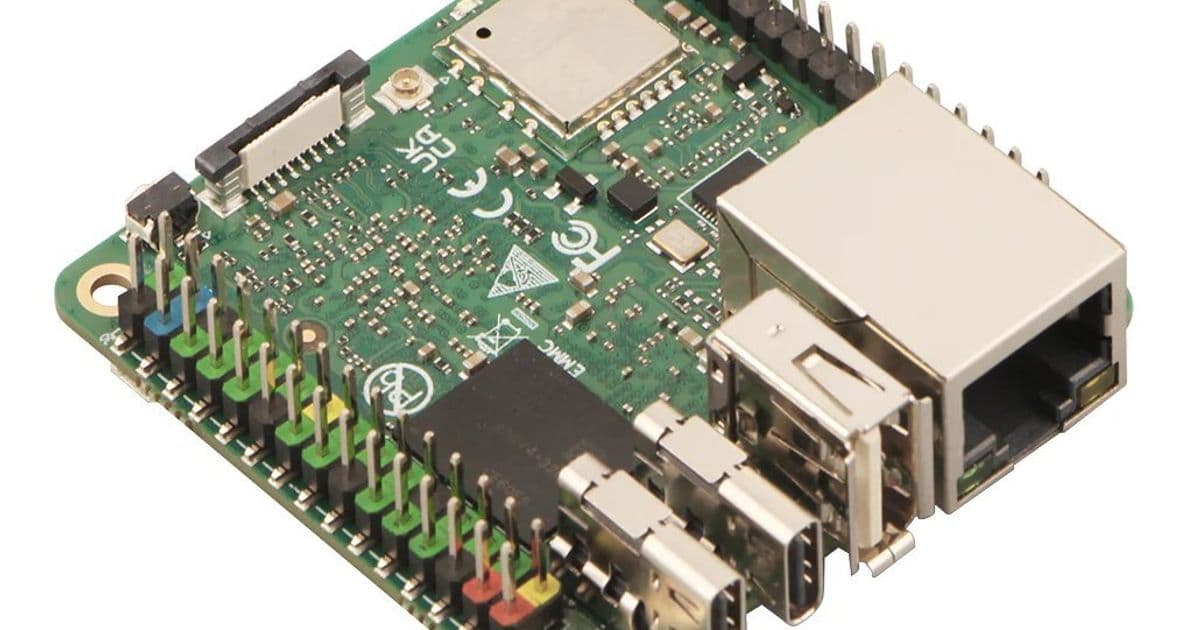
Radxa's Cubie A7S packs an Allwinner A733 processor, LPDDR5 memory, and versatile connectivity into a 2" x 2" board, starting at just $25 with 4GB RAM and PCIe expansion options.
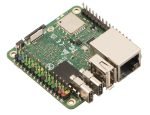
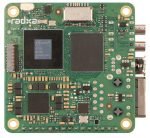
The single-board computer market just got a compelling new entry with Radxa's Cubie A7S, a remarkably compact device that manages to pack impressive specifications into a tiny 51 x 51mm form factor. At just $25 for the base model, this little powerhouse offers features typically found on much larger and more expensive boards, making it an attractive option for developers, hobbyists, and anyone looking to experiment with compact computing solutions.
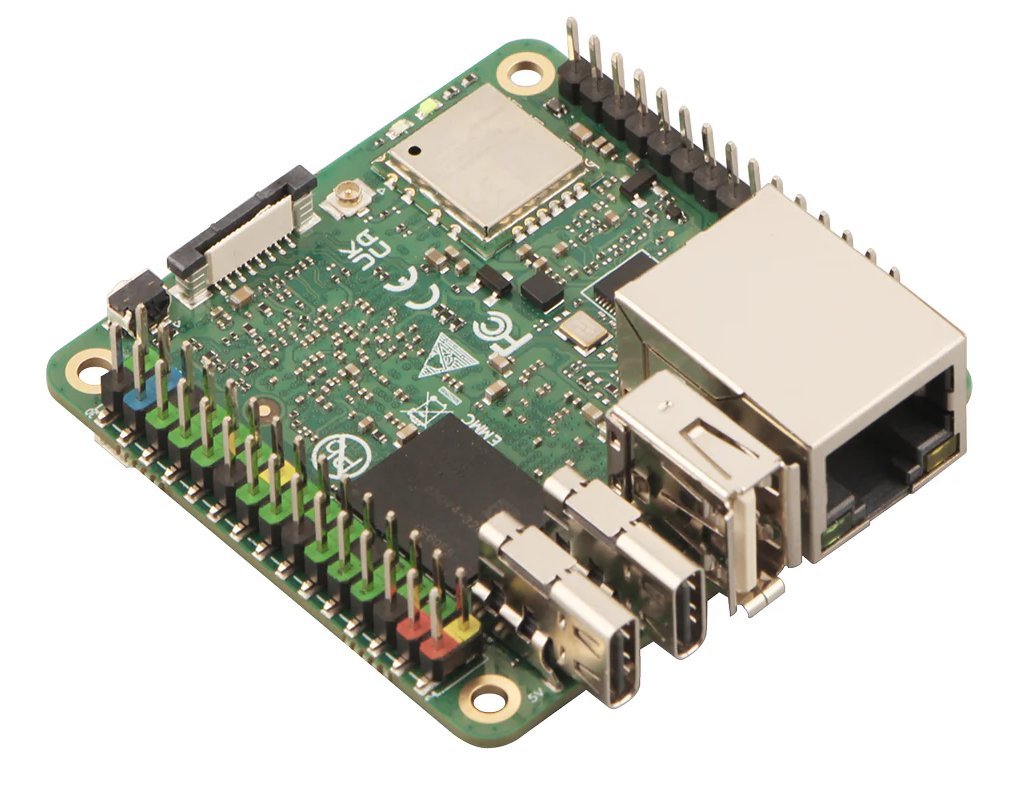
Allwinner A733: The Heart of the Cubie A7S
At the core of the Cubie A7S lies the Allwinner A733 processor, a chip that represents an interesting blend of performance and efficiency. The processor configuration includes two Arm Cortex-A76 cores running at up to 2 GHz for demanding tasks, complemented by six Cortex-A55 cores at up to 1.8 GHz for power-efficient operations. This big.LITTLE architecture allows the system to balance performance and power consumption effectively.
What makes the A733 particularly interesting is the inclusion of an Alibaba XuanTie E902 RISC-V core running at up to 200 MHz. This dedicated core can handle specific workloads or serve as a low-power companion processor, showcasing the growing integration of RISC-V technology in mainstream computing devices.
The integrated Imagination PowerVR BXM-4-64 MC1 graphics processor provides adequate 2D and 3D capabilities for most embedded applications, while the 3 TOPS neural processing unit opens up possibilities for AI and machine learning workloads directly on the device.
Memory and Storage Options
Radxa plans to offer the Cubie A7S with configurations up to 16GB of LPDDR5 memory, though the currently available model comes with 4GB. The use of LPDDR5 is noteworthy as it provides faster memory speeds and better power efficiency compared to older LPDDR4 standards, which is particularly important in a compact form factor where thermal management can be challenging.
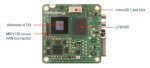
For storage, Radxa is positioning the A7S as a versatile platform. While the base model doesn't include eMMC storage, configurations with up to 256GB of eMMC are planned. Additionally, the board features a microSD card slot for expandable storage and, most impressively, a PCIe 3.0 x1 interface through an FPC connector.
Connectivity That Punches Above Its Weight
Despite its diminutive size, the Cubie A7S offers a surprisingly comprehensive set of connectivity options:
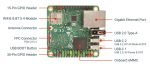
- USB 3.2 Type-C with DisplayPort Alt Mode: This versatile port can handle high-speed data transfer, display output, and power delivery all through a single connector.
- USB 2.0 Type-C: Serves as the power input, supporting 5V power adapters.
- USB 2.0 Type-A: For traditional USB peripherals.
- Gigabit Ethernet: Full-speed wired networking for reliable connections.
- PCIe 3.0 x1 FPC connector: Enables NVMe SSD storage or expansion with AI accelerators and network cards.
- 4-lane MIPI-CSI camera connector: For integrating camera modules.
- Dual GPIO headers: 30-pin and 15-pin headers for custom hardware projects.
- Fan connector: For active cooling when pushing the system's limits.
Wireless Capabilities
The onboard wireless module supports WiFi 6 and Bluetooth 5.4, ensuring modern connectivity standards are met. WiFi 6 support is particularly valuable as it provides better performance in congested wireless environments and improved power efficiency.
Expansion and Flexibility
One of the most compelling aspects of the Cubie A7S is its expansion potential. The PCIe 3.0 x1 interface, while limited to a single lane, opens up numerous possibilities. Users can connect NVMe SSDs for fast storage, AI accelerator cards for enhanced machine learning performance, or various network interface cards for specialized connectivity needs.
The USB boot button is a thoughtful addition that allows users to easily boot from external drives, making system recovery and alternative operating system testing much more convenient.
Current Availability and Pricing
As of publication, the 4GB RAM version without eMMC storage is available for $25 from ARACE. While this might seem limiting compared to the planned 16GB/256GB configurations, it actually makes the board an excellent entry point for experimentation and development. The low price point means users can purchase multiple units for different projects without significant financial investment.
Target Applications
The Cubie A7S's combination of compact size, reasonable performance, and versatile connectivity makes it suitable for various applications:
- Edge computing devices: The 3 TOPS NPU and compact form factor make it ideal for edge AI applications.
- Network appliances: Gigabit Ethernet and PCIe expansion support router and firewall projects.
- Media centers: USB 3.2 with DisplayPort Alt Mode enables 4K video output capabilities.
- IoT gateways: The mix of wireless and wired connectivity suits IoT hub applications.
- Development platforms: The GPIO headers and expansion options make it excellent for hardware prototyping.
Considerations and Limitations
While the Cubie A7S offers impressive specifications for its size and price, potential users should be aware of some limitations. The single-lane PCIe interface, while useful, won't provide the same performance as a full x4 or x8 connection. The base 4GB RAM configuration might be limiting for memory-intensive applications, though the planned 16GB option should address this for most use cases.
Additionally, as with many Allwinner-based boards, software support and community resources might not be as extensive as those for more established platforms like Raspberry Pi or Rockchip-based devices. However, Radxa has a track record of providing good documentation and support for their products.
The Future of Compact Computing
The Cubie A7S represents an interesting trend in the single-board computer market: the move toward more powerful, feature-rich devices in increasingly compact form factors. As components continue to shrink and integrate more functionality, we can expect to see even more capable devices emerging in this size class.
For $25, the Radxa Cubie A7S offers an exceptional value proposition. Whether you're a hobbyist looking for a compact development platform, a professional building edge computing solutions, or simply someone interested in exploring the possibilities of single-board computers, the Cubie A7S deserves serious consideration.
The combination of modern processor architecture, versatile connectivity, expansion options, and aggressive pricing makes the Cubie A7S a noteworthy addition to the single-board computer landscape. As more users get their hands on these devices and begin pushing their capabilities, we'll likely see innovative applications emerge that take full advantage of this tiny board's impressive feature set.
Comments
Please log in or register to join the discussion