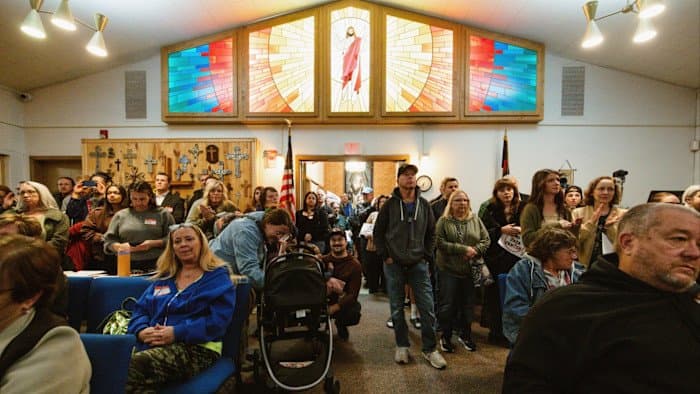
Conservative communities in Missouri are mounting grassroots opposition to Trump-backed AI expansion, revealing a surprising political realignment on technology policy.
In the heart of Missouri's conservative countryside, an unexpected rebellion is taking shape. Local citizens, clergy members, and elected officials are mounting grassroots opposition to the Trump administration's aggressive push for AI expansion, creating a political fault line that could reshape the technology policy landscape ahead of the 2026 midterms.
The resistance centers on concerns about data centers, surveillance capabilities, and the cultural impact of AI technologies in rural communities. What makes this movement particularly noteworthy is its bipartisan nature—traditional Republican strongholds are now questioning policies championed by their own party leadership.
The Missouri Model of Resistance
Community leaders in towns across Missouri have organized town halls, circulated petitions, and engaged in direct lobbying efforts against proposed AI infrastructure projects. The concerns range from practical issues like increased energy consumption and water usage to deeper philosophical objections about privacy and community values.
Local pastors have framed the debate in moral terms, warning congregations about AI's potential to erode human relationships and traditional ways of life. Meanwhile, fiscal conservatives question whether the promised economic benefits justify the infrastructure costs and potential disruption to agricultural communities.
Political Implications
This grassroots movement represents a significant challenge to the Trump administration's technology agenda. The White House has positioned AI expansion as a cornerstone of economic competitiveness and national security, but the Missouri resistance suggests this message isn't resonating uniformly across conservative America.
Republican strategists are privately concerned that this backlash could undermine support in key districts during the upcoming midterms. The situation creates an unusual dynamic where local Republican officials find themselves at odds with national party leadership on a major policy initiative.
The Broader Context
The Missouri resistance is part of a larger pattern of local pushback against big tech infrastructure. Similar movements have emerged in other states, though the conservative framing in Missouri adds a new dimension to the debate. This suggests that opposition to AI expansion may transcend traditional political boundaries.
Environmental concerns, data privacy issues, and questions about corporate influence are finding common ground across ideological lines. The result is a more complex political landscape than the simple partisan divide that often characterizes technology policy debates.
Economic Tensions
At the heart of the resistance are competing economic narratives. The Trump administration promises job creation and economic revitalization through AI infrastructure investment. Local opponents counter that these promises often fail to materialize, citing examples from other regions where data centers brought minimal local employment while straining community resources.
The debate reflects a broader skepticism about whether technology-driven economic development truly benefits rural communities or primarily serves corporate interests. This skepticism cuts across party lines, suggesting a potential realignment in how Americans view the relationship between technology and economic opportunity.
Cultural Dimensions
Beyond economics, the resistance taps into deeper cultural anxieties about technological change. In communities where traditional values and ways of life are already under pressure from broader social changes, AI represents another potential disruption.
This cultural dimension helps explain why the resistance has gained traction even in areas that might otherwise support pro-business Republican policies. The concern isn't just about specific projects but about the broader trajectory of technological change and its impact on community identity.
Looking Ahead
The Missouri movement could serve as a template for similar resistance in other conservative regions. If successful, it might force a recalibration of the national AI policy debate, pushing it away from purely economic and security considerations toward more nuanced discussions about community impact and values.
For the technology industry, this represents a wake-up call about the limits of top-down policy initiatives. Even well-funded, politically connected AI projects may face significant obstacles when they encounter organized local opposition that speaks to deeply held community values.
The irony is that this resistance is emerging in precisely the kind of communities that technology advocates have long hoped would benefit from AI-driven economic development. Instead of embracing these opportunities, many are choosing to push back, suggesting that the path to AI adoption may be more complicated than policy makers anticipated.
As the 2026 midterms approach, this grassroots rebellion could become a significant political factor, potentially forcing candidates to navigate between national party positions and local community concerns. The result may be a more balanced and locally-informed approach to AI policy development.
Comments
Please log in or register to join the discussion