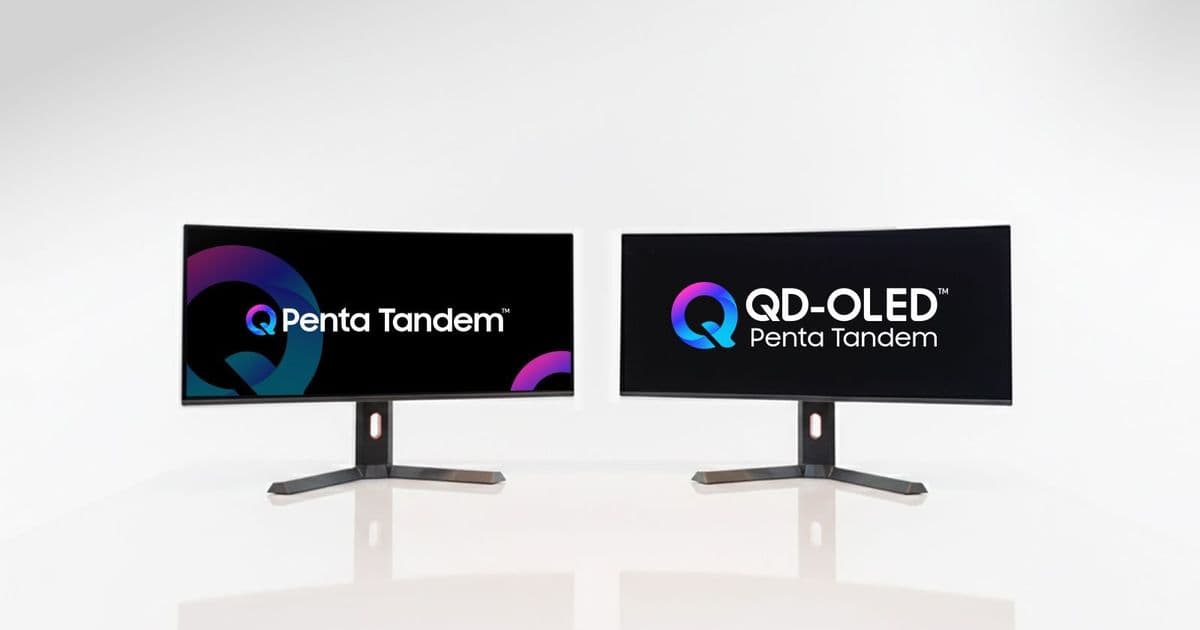
Samsung Display's new Penta Tandem structure stacks five OLED layers to achieve 1.3x higher luminous efficiency and double the lifespan, with monitors reaching 1,300 nits and TVs hitting 4,500 nits peak brightness.
Samsung Display has unveiled its latest advancement in QD-OLED technology with the official branding of "Penta Tandem," a five-layer OLED stack structure that promises to double panel lifespan while significantly boosting brightness capabilities. This development marks a substantial evolution from the company's previous four-layer approach, positioning Samsung's displays to compete even more aggressively against LG's WOLED offerings in both the TV and monitor markets.
The Science Behind Penta Tandem
The term "tandem" refers to the technique of stacking multiple OLED layers atop each other, a method that has been associated with LG for years. By increasing the layer count from four to five, Samsung achieves what it calls "1.3x higher luminous efficiency" while simultaneously doubling the expected lifespan of the display panels. This dual benefit addresses two critical pain points in OLED technology: brightness limitations and longevity concerns.
The physics behind this improvement is straightforward yet powerful. By distributing the electrical load across five layers instead of four, each individual OLED layer experiences less stress during operation. This reduced stress translates directly to slower degradation over time, effectively doubling the panel's usable life. Meanwhile, the additional layer provides more quantum dots to convert blue light into red and green, resulting in higher overall brightness without proportionally increasing power consumption or accelerating wear.
Brightness Breakthroughs
Perhaps the most impressive specification is the peak brightness capability. Samsung's Penta Tandem TVs can reach up to 4,500 nits of peak brightness, a figure that would have been unthinkable for OLED technology just a few years ago. For monitors, the limitation is set at 1,300 nits, which still represents a significant improvement over the previous 1,000-nit barrier that has constrained OLED monitor performance.
These monitors will also support HDR True Black 500, ensuring deep blacks and excellent contrast ratios even at higher brightness levels. The combination of high peak brightness and true black performance positions these displays as ideal for both professional content creation and high-end gaming applications.
Current Implementation and Market Presence
Despite the new branding, Penta Tandem technology isn't entirely new to the market. Samsung Display debuted the 4K 27-inch class 4th Gen QD-OLED panels in 2025, which power displays like Asus' PG27UCDM. Several manufacturers have already been shipping products with this five-layer structure, though they've been referring to it under different marketing terms.
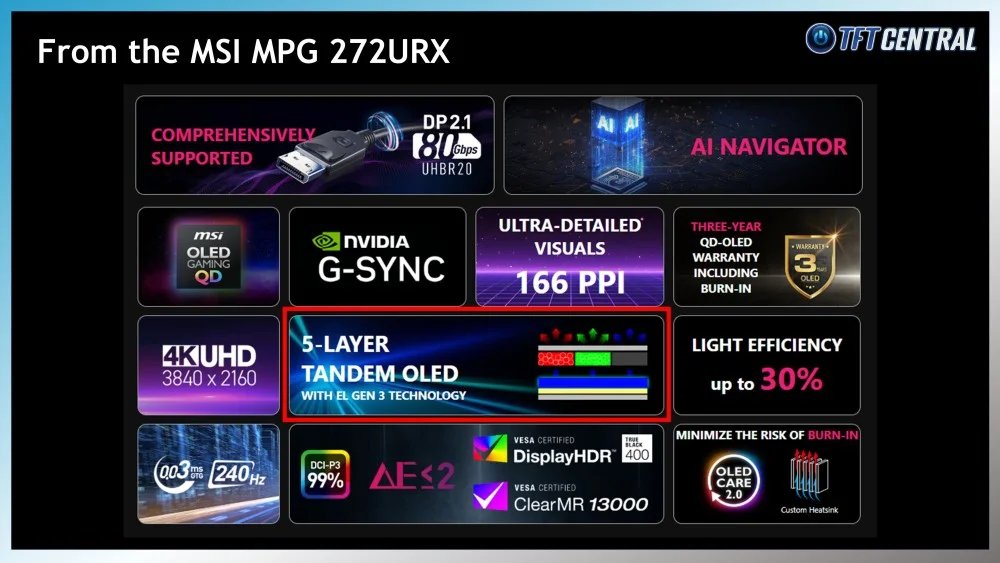
MSI, for instance, has been marketing its 27-inch 4K QD-OLED monitor as featuring a "5-Layer Tandem OLED" structure as part of its "EL 3.0" materials upgrade. This demonstrates how the technology has been gradually making its way into consumer products even before the official Penta Tandem branding was established.
The 2026 Refresh Cycle
Samsung is now positioning 2026 as the year when Penta Tandem technology will become the standard across its QD-OLED lineup. The company has announced plans to refresh existing panel classes with this new technology throughout the year. The 49-inch dual QHD (5,120 x 1,440) monitor is specifically mentioned as the next model scheduled to receive the Penta Tandem update.
However, several questions remain unanswered. Samsung hasn't provided details about potential refresh rate improvements for these updated panels, nor has it confirmed whether the new displays will feature the latest V-stripe subpixel layout. The V-stripe configuration offers improved text clarity and reduced color fringing compared to traditional OLED subpixel arrangements, making it particularly valuable for desktop productivity tasks.
Looking Beyond Current Limits
The current 240 Hz refresh rate ceiling for high-resolution QD-OLED monitors may soon be a thing of the past. Samsung has already demonstrated 27-inch 1440p panels capable of 500 Hz refresh rates, suggesting that these faster panels could also receive the Penta Tandem treatment. This would create an interesting product segmentation where high-refresh-rate gaming monitors and high-resolution professional displays both benefit from the improved longevity and brightness characteristics of the five-layer stack.
Competitive Implications
The timing of this announcement is significant given the intensifying competition in the premium display market. LG continues to advance its WOLED technology with true RGB stripe subpixel layouts and tandem structures of its own. Samsung's Penta Tandem represents a direct response to these developments, offering comparable or superior performance metrics while maintaining the color volume advantages of quantum dot technology.
For consumers and professionals considering high-end displays in 2026, the choice between WOLED and QD-OLED will increasingly come down to specific use cases and preferences. QD-OLED's superior color volume and now improved brightness and longevity make it particularly attractive for creative professionals working with wide-gamut content, while the technology's inherent advantages in color purity remain valuable for gaming and general entertainment use.
The official branding of Penta Tandem also suggests that Samsung Display is preparing for broader market adoption of this technology. As more manufacturers adopt the terminology and highlight the five-layer structure in their marketing materials, consumers will become more aware of the technical advantages and can make more informed purchasing decisions based on their specific needs and priorities.
With 2026 shaping up to be a pivotal year for premium display technology, Samsung's Penta Tandem initiative represents a significant step forward in addressing the traditional limitations of OLED while building on its inherent strengths in color performance and contrast ratio.
Comments
Please log in or register to join the discussion