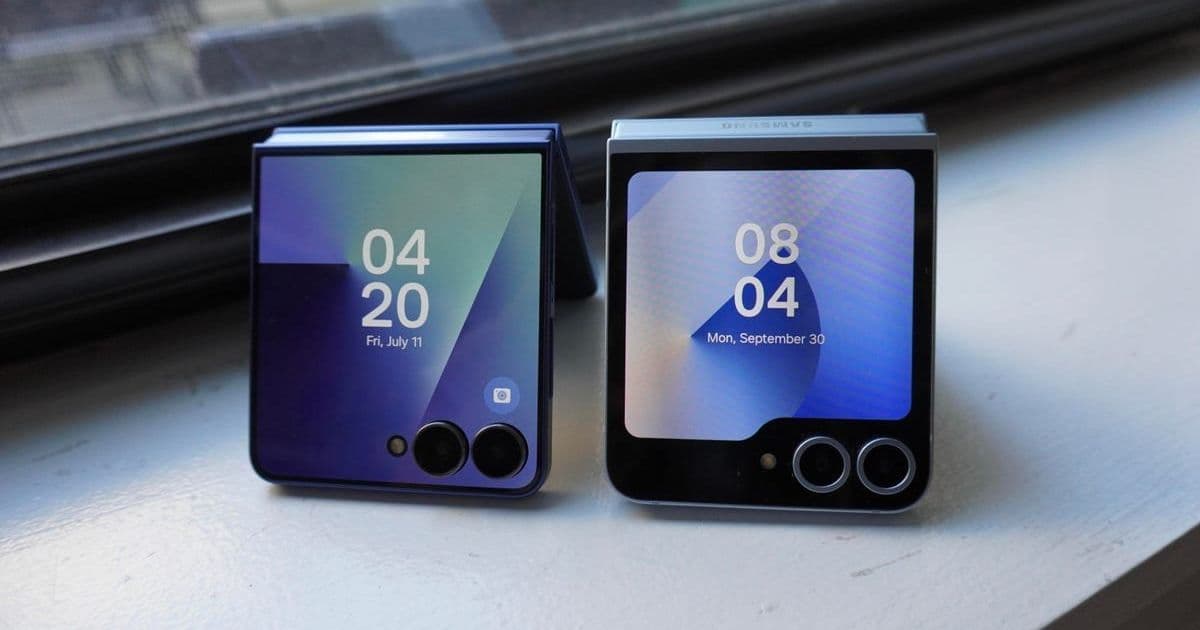
While Samsung's Galaxy Z Flip 7 delivers impressive refinements like expanded cover screen functionality and DeX support, mounting evidence suggests the 2026 Z Flip 8 could represent a quantum leap in foldable technology. Anticipated innovations include crease-free displays, revolutionary battery tech, 2nm processors, and enhanced durability—all potentially arriving alongside Apple's rumored foldable iPhone. For developers and early adopters invested in mobile's future, strategic patience might
 )
Credit: Sabrina Ortiz/ZDNET
)
Credit: Sabrina Ortiz/ZDNET
Samsung's Galaxy Z Flip 7 stands as the company's most polished clamshell foldable yet—boasting meaningful upgrades like a more functional cover screen, robust DeX desktop support, and improved battery life. Yet seasoned tech strategists and mobile developers should scrutinize whether immediate adoption aligns with the accelerating innovation curve. Multiple industry signals point to the 2026 Z Flip 8 delivering transformative advancements that could redefine the foldable landscape.
Beyond Lithium: The Battery Revolution
Current Z Flip 7 models use a respectable 4,300mAh lithium-ion battery, but Samsung appears poised for a chemistry breakthrough. Korean outlet FNNews reports Samsung's exploration of silicon-carbon batteries for its 2026 flagships—technology offering superior energy density and longevity. This aligns with Samsung's public R&D focus and could enable significant capacity gains without bulk.
Simultaneously, TheElec reveals Samsung's interest in SUS CAN (steel use stainless canister) battery casing—already deployed in Apple's iPhone 16 Pro Max. This architecture mitigates swelling risks while permitting higher capacity, addressing historical pain points exacerbated by foldables' spatial constraints. For developers creating battery-intensive foldable apps, these advancements could dramatically alter power management paradigms.
The Dawn of Crease-Free Folding
 )
Credit: Sabrina Ortiz/ZDNET
)
Credit: Sabrina Ortiz/ZDNET
The persistent crease—foldables' most visible compromise—may finally vanish. Apple supply chain analyst Ming-Chi Kuo indicates both Apple's rumored foldable and Samsung's 2026 devices will feature laser-drilled metal plates beneath displays to distribute bending stress evenly. Fine M-Tec reportedly manufactures the solution, with Samsung Display supplying panels.
This engineering leap isn't merely cosmetic. Eliminating the crease could enhance touch accuracy for creative apps, reduce long-term screen degradation, and lower display replacement costs—critical factors for enterprise adoption. As Motorola and Google advance rival foldables, Samsung needs this win to maintain developer mindshare.
Processing Power: The 2nm Arms Race
Performance trajectories suggest another inflection point. The Flip 7 debuted Samsung's in-house Exynos 2500 chip, but 2026 could bring a 2nm process node—either via Qualcomm's rumored Snapdragon 8 Elite Gen 2 "For Galaxy" variant or Samsung's own Exynos 2600. This represents more than incremental gains:
- 50% power efficiency improvements over 3nm designs
- Enhanced AI/ML capabilities for on-device processing
- Superior thermal management in thin form factors
For developers, this leap enables computationally intensive applications—think real-time AR overlays or local LLM inference—previously impractical on foldables. Conflicting reports about Qualcomm's commitment to Samsung Foundry add intrigue, but the 2nm transition seems inevitable.
Durability: Closing the Dust Defense Gap
Despite IP48 water resistance, foldables remain vulnerable to particulate ingress—a pain point Samsung Mobile Chief TM Roh acknowledges. With Motorola's Razr Ultra achieving IP52 and Google's Pixel 10 Pro Fold rumored for IP68, Samsung faces pressure. Expect the Z Flip 8 to finally address this through:
- Reinforced hinge sealing mechanisms
- Nano-coatings for internal components
- Enhanced dust filtration systems
For engineers, robust ingress protection isn't just about device longevity—it enables reliable performance in diverse environments, from construction sites to sandy beaches, expanding foldables' utility beyond urban settings.
Strategic Patience in the Foldable Frontier
The Z Flip 7 delivers Samsung's most compelling clamshell experience yet, but 2026 promises tectonic shifts: Apple's foldable debut will intensify competition, while Samsung's potential combination of crease-free displays, advanced battery chemistries, 2nm silicon, and hardened builds suggests a generational upgrade. For developers building foldable-optimized apps and tech leaders allocating hardware budgets, postponing upgrades could yield disproportionate returns. In mobile's most dynamic category, timing is everything.
Source: Considering Samsung's new Z Flip 7? Why I recommend waiting for next year's model by Jason Howell for ZDNet.
Comments
Please log in or register to join the discussion