Spotify has reached a landmark agreement with Universal Music Group to develop AI-powered remix features, representing a significant strategic pivot as the streaming giant builds a new 'taste model' to differentiate itself in the increasingly competitive music streaming market.
Spotify and Universal Music Group have entered into a groundbreaking agreement to develop AI-powered remix features, marking a significant shift in how music streaming platforms are approaching artificial intelligence. The deal, which comes amid growing tensions between streaming services and music labels over AI-generated content, positions Spotify to leverage both its technological capabilities and vast user data to create a new competitive advantage.
The agreement focuses on creating AI-powered remix capabilities that will allow users to transform existing tracks in novel ways while maintaining proper compensation for artists and rights holders. This partnership represents a strategic pivot for Spotify, which has been working to build a new "taste model" that goes beyond traditional recommendation algorithms to create more personalized and engaging music experiences.
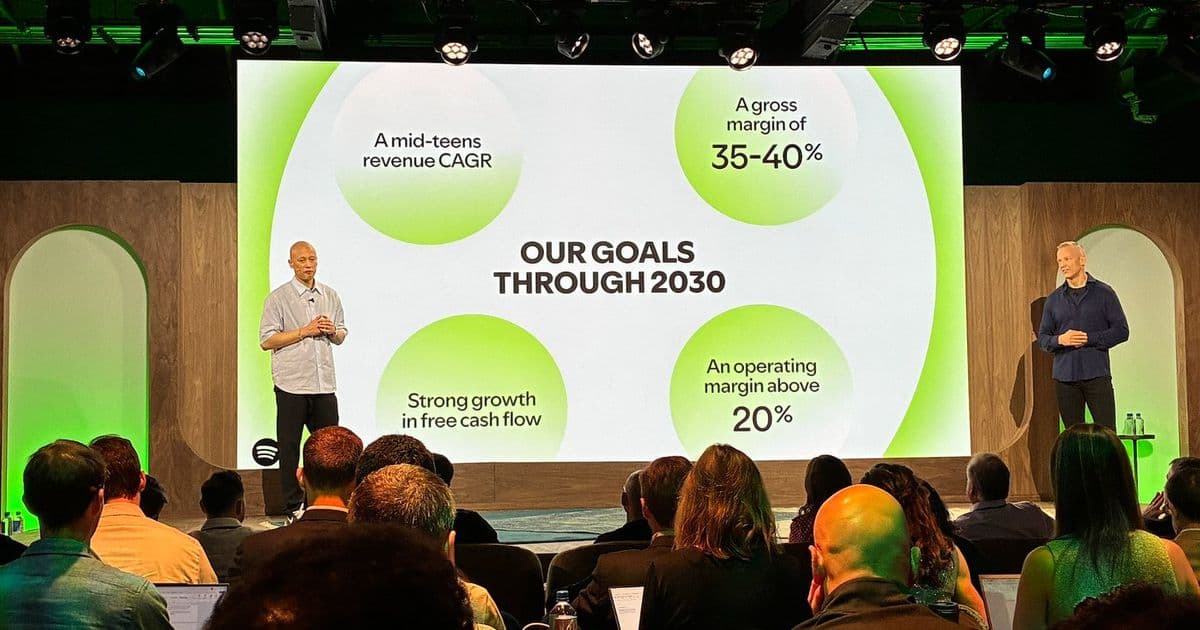
"We're entering a new era of music consumption where AI will play an increasingly important role," said Spotify co-CEOs Alex Norström and Gustav Söderström during the company's recent Investor Day. "This partnership with Universal Music allows us to explore the creative possibilities of AI while ensuring artists are fairly compensated for their work."
Market Context
The streaming music industry has reached a mature phase with approximately 616 million paid subscribers globally as of Q1 2024, according to the International Federation of the Phonographic Industry (IFPI). Spotify leads the market with approximately 220 million premium subscribers, followed by Apple Music with over 100 million. However, competition has intensified as platforms like Amazon Music and YouTube Music continue to grow their user bases.
Financially, Spotify reported revenue of €11.7 billion in 2023, up 20% year-over-year, but continues to face profitability challenges with a net loss of €248 million. The company's gross margin improved to 26.1% in 2023, up from 24.5% in 2022, reflecting ongoing efforts to improve operational efficiency.
Universal Music Group, the world's largest music company with artists like Taylor Swift, Drake, and The Weeknd under its umbrella, generated €9.1 billion in revenue in 2023, up 10.5% year-over-year. The company has been particularly vocal about its concerns regarding AI-generated music, making this partnership with Spotify somewhat unexpected but strategically significant.
Strategic Implications
This deal represents several strategic shifts for both companies:
AI Differentiation: As streaming platforms increasingly compete on similar catalogs and pricing, AI capabilities could become a key differentiator. Spotify's investment in AI-powered remixes could create a unique user experience that competitors struggle to replicate.
Monetization Opportunities: AI-generated content opens new revenue streams beyond traditional streaming royalties. The company could introduce premium tiers for advanced AI remix features or create new advertising opportunities around personalized music experiences.
Data Advantage: Spotify's extensive listening data provides a significant advantage in developing effective AI models. The company processes over 460 million playlists and 3.6 million podcast episodes monthly, creating a rich dataset for training recommendation and generation algorithms.
Industry Collaboration: This partnership sets a precedent for how AI development might unfold in the music industry, potentially leading to similar agreements between streaming services and other major labels like Sony Music and Warner Music Group.
The technical implementation of this AI remix capability will likely involve several components:
- Content analysis to identify separable elements within tracks
- Style transfer algorithms to apply different musical characteristics
- Personalization engines that adapt remixes based on individual user preferences
- Rights management systems to ensure proper attribution and compensation
"This isn't just about novelty features," explains music technology analyst James McQuivey. "Spotify is building an AI framework that understands musical structure, cultural context, and individual preferences at a level that could fundamentally change how we interact with music. The taste model they're developing could eventually power everything from personalized radio stations to collaborative music creation tools."
For Universal Music, the deal provides a controlled environment for exploring AI applications while maintaining artistic integrity and fair compensation. The company has previously expressed concerns about AI companies training models on copyrighted music without permission, making this structured partnership particularly significant.
As the music industry continues to grapple with AI's disruptive potential, this collaboration between Spotify and Universal Music may represent a path forward that balances innovation with the protection of artists' rights and creative control. The success of this venture could influence how other entertainment sectors approach AI development and monetization.
Spotify's stock has responded positively to the news, rising approximately 8% in the days following the announcement, reflecting investor optimism about the company's strategic direction in the AI era. The company's market cap now stands at approximately $35 billion, with analysts increasingly focusing on its technological capabilities rather than just subscriber growth metrics.
As both companies move forward with implementation, the industry will be watching closely to see whether this partnership can deliver on its promise of innovative AI experiences while creating sustainable value for artists and rights holders. The outcome could shape the future of music creation, distribution, and consumption in the age of artificial intelligence.
Comments
Please log in or register to join the discussion