Thailand's chocolate industry is experiencing a renaissance, with local producers like MarkRin Chocolate pioneering sustainable, organic cocoa cultivation and transforming the country's agricultural landscape.
Valentine's Day in Thailand tells a story of cultural transformation that extends far beyond romance. While the holiday's chocolate tradition began in Victorian England, it has found fertile ground in Southeast Asia, where consumption patterns are shifting dramatically and local producers are emerging to meet growing demand.
At the heart of this transformation is MarkRin Chocolate, Thailand's oldest chocolate factory, founded in 2010 by Sanh La-ongsri, a former professor at Maejo University. Located in San Sai, northeast of Chiang Mai's city center, the operation represents more than just another chocolate maker – it embodies Thailand's agricultural evolution from traditional crops to high-value specialty products.
The numbers tell a compelling story. A single cacao tree can produce up to 100,000 flowers, yet fewer than 1% mature into pods. This natural inefficiency makes the success of Thailand's cocoa industry all the more remarkable. Sanh La-ongsri has developed a new strain called Irin Mark One, a cross between the Imperial College Selection variety and a hybrid of Forastero and Criollo plants. This innovation combines rapid growth with high yields and drought resistance – crucial adaptations for Thailand's climate.
What makes MarkRin's approach distinctive is their commitment to controlling the entire production chain. "Most chocolate manufacturers buy their beans from farmers and advertise their product as being 'from bean to bar,'" explains Rawisara "Irin" La-ongsri, the founder's daughter. "Here at MarkRin, we control the whole process, so we can proudly claim our product to be 'from seedling to chocolate.'"
The cultivation process reveals both the complexity and the sustainability of modern cocoa farming. Workers carefully manage seedlings, protecting young plants with straw and leaves around their bases to shield roots from temperature extremes. A light plastic gauze stretched above the trees provides shelter from direct sunlight while allowing filtered light to reach the plants.
Harvesting requires precision and timing. Cocoa pods, shaped like miniature rugby balls, grow directly from the trees' trunks and branches in colors ranging from green to red to orange-yellow, indicating ripeness. Each pod contains 20 to 40 beans wrapped in white mucilage, a natural substance that plays a crucial role in fermentation.
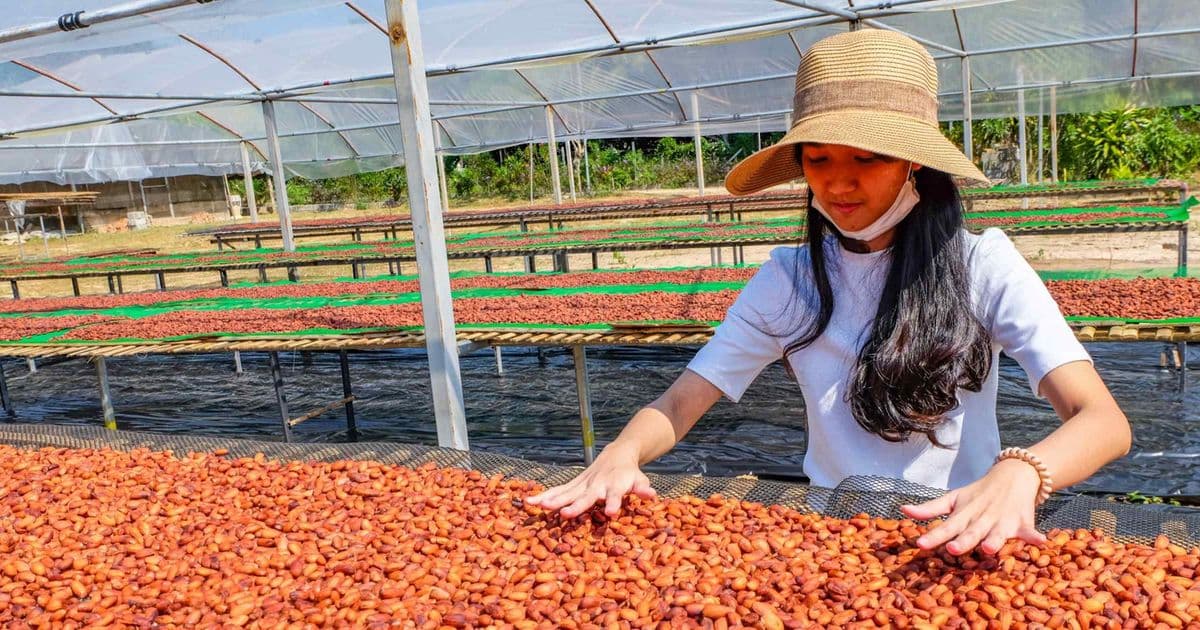
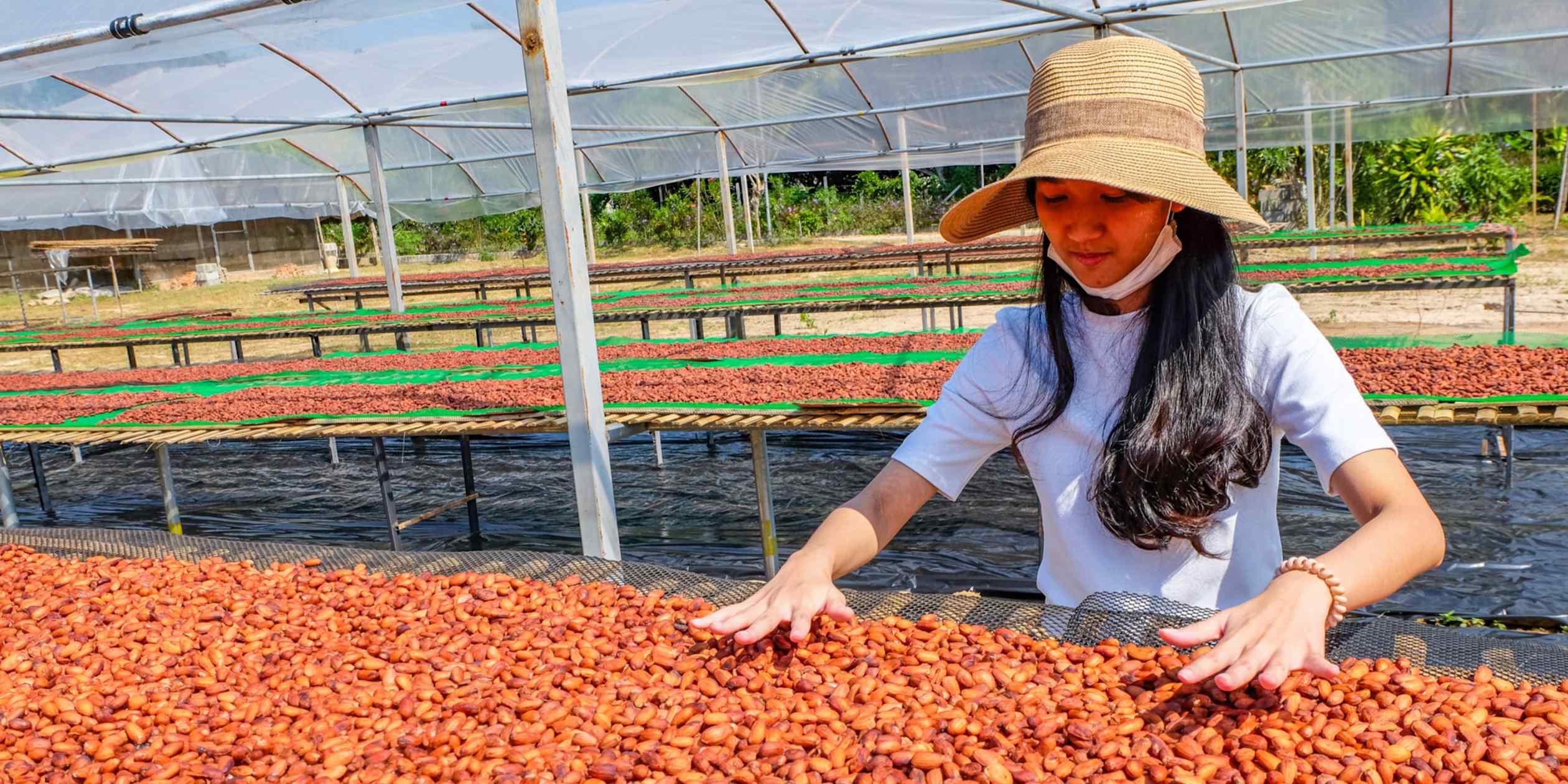
The fermentation process, conducted by wrapping beans in banana leaves, represents the most critical stage in flavor development. This is where the distinctive chocolate aroma emerges, transforming bitter beans into the foundation of gourmet chocolate. Following fermentation, beans dry in the sun on waist-high racks, where workers regularly check moisture levels by hand.
Once dried, the beans undergo a complex transformation: grading and cleaning, roasting, cracking and winnowing, grinding, conching (a unique chocolate production process), tempering, and finally molding. This intricate process, refined over centuries, turns humble cocoa beans into the luxurious treat we know today.
MarkRin's commitment to sustainability extends beyond organic cultivation. The operation produces zero waste, with discarded pods composted to create natural fertilizer. "Our chocolate is 100% organic since we use no chemical pesticides or fertilizers," Sanh La-ongsri notes with pride, highlighting the environmental benefits of their approach.
The cultural shift in Thailand has been remarkable. Just decades ago, most Thais didn't consume chocolate or hot beverages like tea, coffee, or cocoa, nor did they grow the raw materials. Today, they're avid consumers of all these products and produce award-winning crops of each plant.
This transformation reflects broader changes in Southeast Asian consumer behavior and agricultural practices. As incomes rise and global tastes influence local markets, countries like Thailand are finding opportunities to move up the value chain, producing premium products rather than just commodities.
For Valentine's Day shoppers, this means access to locally produced, sustainable chocolate that tells a story of innovation and cultural change. The connection between romance and chocolate, which began in 1868 when Cadbury started selling heart-shaped boxes in the U.K., has found new expression in Thailand's emerging chocolate industry.
The success of operations like MarkRin suggests that Thailand's chocolate revolution is just beginning. As local producers continue to innovate and refine their techniques, they're not just meeting domestic demand – they're positioning Thailand as a player in the global premium chocolate market.
For consumers, this means more choices and the satisfaction of supporting sustainable, locally produced goods. For Thailand, it represents an opportunity to diversify its agricultural economy while building on its reputation for quality and innovation. And for chocolate lovers everywhere, it's another reason to celebrate the enduring appeal of this most beloved treat.
Comments
Please log in or register to join the discussion