
Generative AI has become a 'magical wand' enabling anyone to create software, but flawed outputs reveal why developer expertise remains irreplaceable. As these tools rapidly evolve to handle complexity, skilled engineers who understand systems design will amplify their impact—not be replaced by automation. Democratizing development tools elevates the industry while underscoring the enduring value of technical craftsmanship.
Imagine being handed a wand that materializes buildings with a spoken command. According to a recent analogy gaining traction among technologists, generative AI is precisely that wand for software development—a tool democratizing creation by turning prompts into functional code. But like any nascent magic, its power comes with critical limitations.

When wielded by non-experts, this 'wand' often produces outputs resembling a hastily constructed house: vulnerable to foundational flaws, riddled with illogical structures, and plagued by metaphorical plumbing failures. These manifest as brittle code architectures, security gaps, or inefficient algorithms. As the source material observes:
"That house is not going to come without issues. It might be vulnerable to plumbing problems. It might have nonsensical layouts & doors to nowhere."
Here lies the enduring value of the software engineer—the skilled contractor in this analogy. Developers don’t just execute commands; they understand interdependent systems, anticipate edge cases, and enforce structural integrity. Their expertise transforms the wand’s raw output into resilient, scalable solutions. This distinction grows more critical as AI capabilities advance. Within months, models will better handle foundational tasks like dependency management or architectural consistency. Soon after, they’ll tackle skyscraper-scale projects.
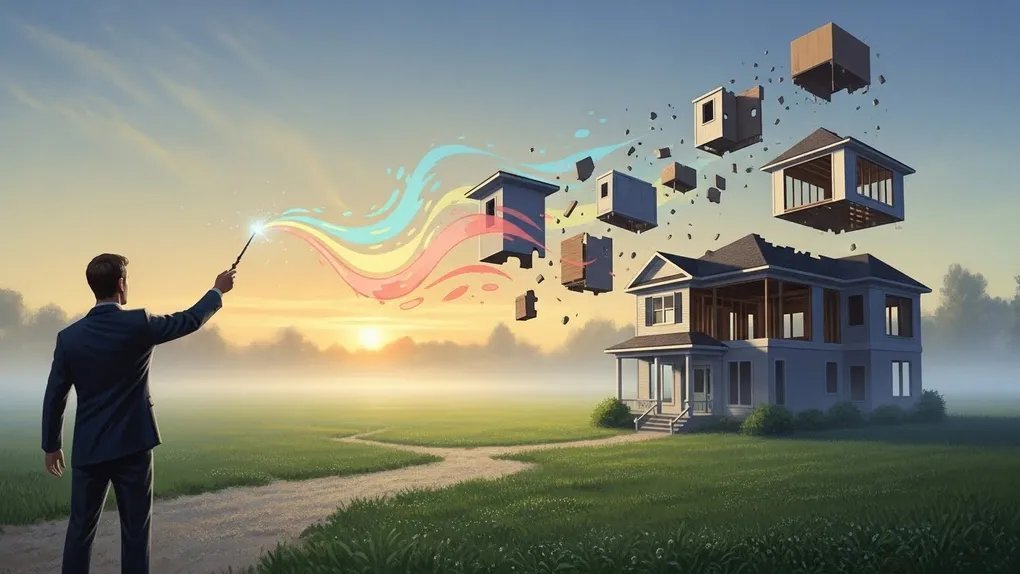
Yet complexity breeds new challenges. Automation handles the 'what,' but engineers master the 'why'—the tradeoffs between performance and cost, the nuances of technical debt, and the translation of business logic into robust systems. As the source notes:
"That contractor who becomes diligent with the wand is always going to be able to do much more than I will."
Democratization doesn’t eliminate specialization; it recontextualizes it. When everyone possesses a wand, those who deeply understand its mechanisms and limitations will pioneer unprecedented innovation. The future belongs not to AI replacing engineers, but to engineers wielding AI to build the software equivalent of castles and cities—structures impossible without both magic and mastery.
Source: Backnotprop Blog
Comments
Please log in or register to join the discussion