
C's evolution from programming language to system interoperability protocol creates fundamental challenges for modern language ecosystems, forcing Rust, Swift and others to navigate inconsistent ABIs and header parsing nightmares.

For decades, C served as the foundational programming language for operating systems and performance-critical software. Today, it occupies a more complex role: a interoperability protocol that every general-purpose language must implement to access system resources or communicate with existing codebases. This shift creates systemic challenges for language designers and ecosystem developers.
The Foreign Function Interface Mandate
Modern languages face an immediate requirement upon creation: implement C foreign function interfaces (FFI) to interact with operating systems. As the article C Isn't A Programming Language Anymore observes, "We must all speak C, and therefore C is not just a programming language anymore – it's a protocol that every general-purpose programming language needs to speak."
This requirement forces language implementers into complex territory:
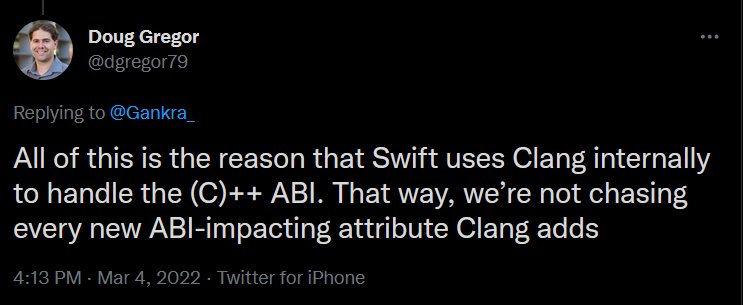
- Header Parsing Impossibility: Accurate C header parsing requires replicating platform-specific preprocessor behaviors, include paths, and macro expansions. Swift's approach exemplifies the challenge – despite Apple's resources and Clang expertise, Swift uses Clang internally rather than implementing independent parsing.
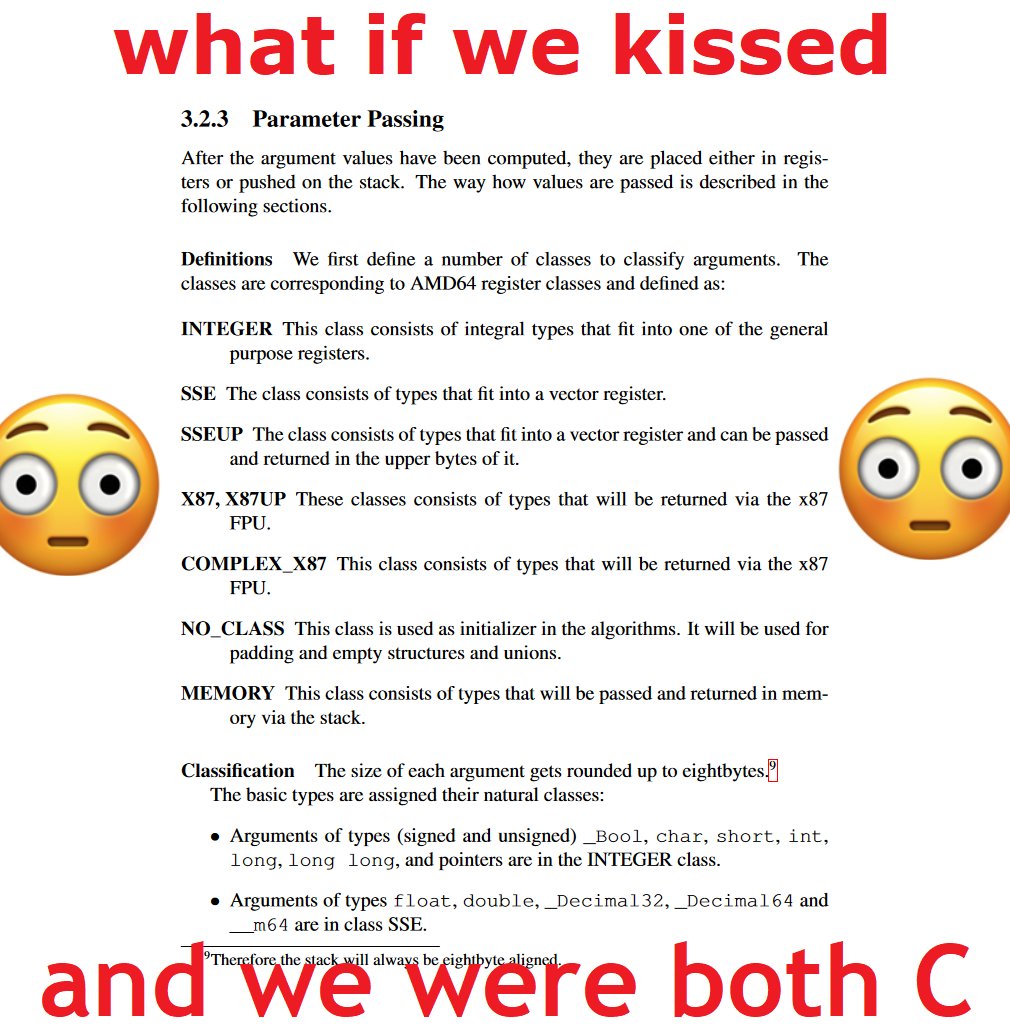
ABI Inconsistencies: The AMD64 SysV ABI defines calling conventions in terms of C types, yet major C compilers disagree on implementations. Testing reveals that Clang and GCC handle __int128 arguments differently on x64 Linux, despite both following the same specification.
Target Triple Explosion: Rust's compiler supports 176 target triples, each representing unique ABI requirements. This fragmentation complicates cross-platform interoperability and library distribution.
Versioning Strategies and Forward Compatibility
Systems attempting to evolve C-based interfaces employ sophisticated techniques:
- Symbol Versioning: Libraries like glibc suffix symbols with version tags (e.g., open_v1, open_v2) allowing gradual API transitions
- Opaque Type Handling: Microsoft's MINIDUMP_HANDLE_DATA_STREAM uses size-prefixed headers and self-describing structures to enable format evolution
- Layout Stability: Careful padding control enables data structure compatibility across 32-bit and 64-bit architectures
These approaches contrast with failed attempts to change fundamental types like jmp_buf or intmax_t, where non-opaque type definitions caused ecosystem-wide breakage requiring mass recompilation.
Ecosystem Implications
The C protocol's dominance creates paradoxical constraints:
- Innovation Friction: New languages must prioritize C compatibility over novel type systems or calling conventions
- Standardization Challenges: Cross-language tools like bindgen become essential but fragile abstraction layers
- Platform Risk: Changes to C semantics potentially break entire dependency graphs, as evidenced by Debian's libc ABI break
Paths Forward
Emerging strategies suggest possible evolution:
- ABI-Centric Language Design: Swift and Rust now treat C-compatible types as first-class citizens in their type systems
- Wasm Component Model: Emerging WebAssembly standards aim to create C-free cross-language interoperability
- Hybrid Approaches: Microsoft's CLang adoption for Swift/C++ interop demonstrates leveraging existing C tooling
As language ecosystems mature, the tension between C protocol compatibility and native language capabilities remains a fundamental design challenge. The solution may lie not in replacing C's protocol role, but in building better abstraction layers above it.
Comments
Please log in or register to join the discussion