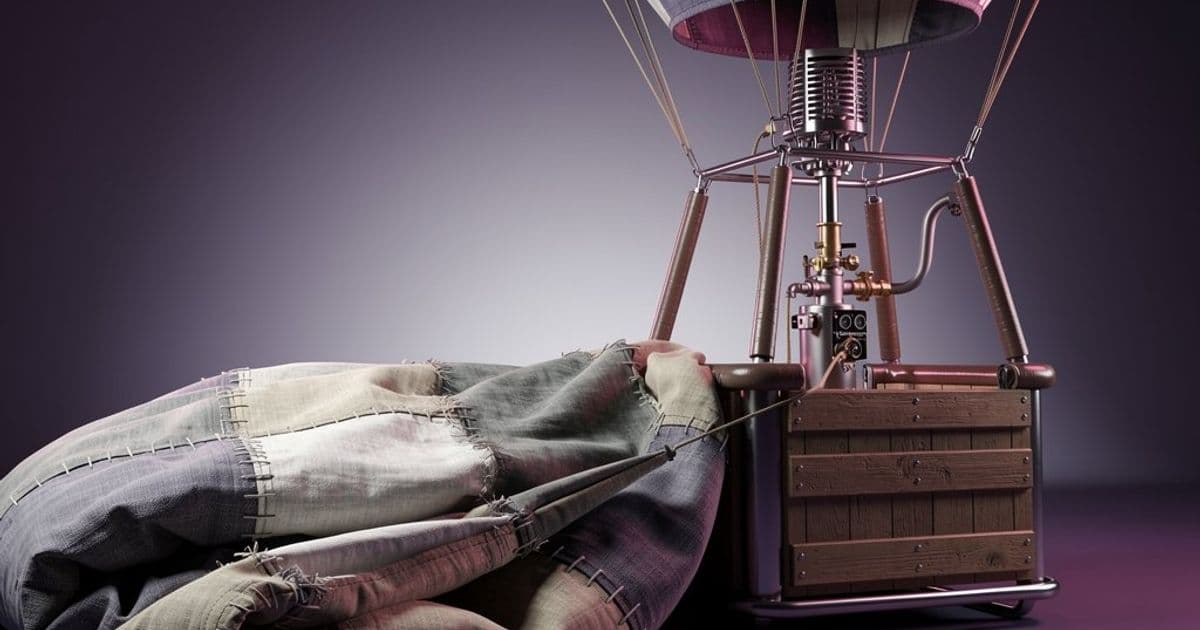
In 1979, two East German families escaped the heavily fortified border using a homemade hot air balloon, a feat of improvisation, engineering, and nerve that exposed the limits of state surveillance.
The image of a hot air balloon drifting silently over the inner German border in 1979 seems almost whimsical, a stark contrast to the grim reality of the fortified divide. Yet for the Strelzyk and Wetzel families, this was not a leisurely flight but a meticulously planned escape from the German Democratic Republic (GDR). Their successful crossing on September 16, 1979, was the culmination of a year-and-a-half-long project that involved three distinct balloon prototypes, countless failures, and a first attempt that nearly doomed them. It stands as a testament to human ingenuity in the face of a system designed to be inescapable.
{{IMAGE:2}}
The backdrop was the inner German border, a landscape of watchtowers, land mines, and armed guards under orders to shoot to kill. For Peter Strelzyk, an electrician and former Air Force mechanic, and Günter Wetzel, a bricklayer, the desire to reach the West was a constant, shared undercurrent. They began planning in March 1978, initially considering a helicopter before settling on a hot air balloon, inspired by a television program. Their goal was audacious: to transport two adults, their wives, and four children, with a total payload of around 750 kilograms, across a heavily monitored border.
The first challenge was material. Living in the small town of Pößneck, purchasing large quantities of fabric without attracting the attention of the Stasi was impossible. Their solution was to drive 50 kilometers to Gera, where they bought 850 meters of cotton cloth, telling the clerk it was for tent lining for a camping club. This first balloon, sewn by Wetzel on a manual machine, was a learning experience. Their initial tests in a secluded forest clearing near the border failed repeatedly. The cotton proved too porous, leaking air faster than their homemade burner could heat it. They built a blower from a motorcycle engine and a Trabant starter, but the fundamental flaw remained. This first attempt cost them 2,400 East German Marks and ended with Strelzyk burning the material in his furnace over several weeks to dispose of the evidence.
Undeterred, they moved to a second prototype. This time, they tested materials rigorously, using a vacuum cleaner and water-filled tubes to measure air permeability. They settled on a synthetic taffeta, purchasing 800 meters from a department store in Leipzig, using the cover story of needing it for sailmaking. This balloon held air, but their burner, built from propane bottles and water pipes, was still underpowered. For months they experimented, doubling the propane tanks and tweaking fuel mixtures. The project stalled, and Wetzel even considered abandoning it to build a small plane. The breakthrough came in June 1979 when Strelzyk discovered that inverting the propane tanks increased pressure and produced a massive 12-meter flame. The engineering was crude, but it was finally sufficient.
{{IMAGE:3}}
Their first escape attempt on July 3, 1979, was a near-disaster. The balloon lifted off and climbed to 2,000 meters, but entered a cloud layer where water vapor condensed on the fabric, adding weight and causing a premature descent. They landed just 180 meters short of the border, in the heart of a mined and heavily patrolled zone. After a tense nine-hour ordeal, they extracted themselves and hiked 14 kilometers back to their car, making it home just in time to explain their absence. The abandoned balloon was discovered by authorities, triggering a Stasi investigation. The clock was now ticking.
The failed attempt forced a radical redesign. They decided to double the balloon's size to 4,000 cubic meters, requiring 1,250 square meters of taffeta. To avoid suspicion, they purchased the fabric in various colors and patterns from stores across the country. Wetzel sewed the third balloon, using over 6 kilometers of thread. In six weeks, they had a new, larger craft. On September 15, with a violent thunderstorm creating favorable winds, they launched again. This time, they made it across.
{{IMAGE:1}}
The flight itself was fraught with peril. At liftoff, a miscalculation sent the flame toward the fabric, causing a fire that they extinguished with a portable extinguisher. The balloon climbed to 2,500 meters, high enough to be detected by West German radar but not identified. A design flaw caused the balloon to split, extinguishing the burner flame. Günter Wetzel had to re-light it repeatedly with a match. They drifted for 28 minutes, the temperature dropping to -18°C in their open gondola, before the propane ran out. They landed near Naila, Bavaria, in West Germany. Wetzel broke his leg on impact, but the families were free.
The aftermath was immediate. East Germany closed small airports near the border and registered propane tanks as controlled products. Mail to the escapees was prohibited. Stasi arrested Strelzyk's brother and other relatives for "aiding and abetting escape," sentencing them to prison terms before their eventual release. The families settled in the West; the Strelzyks later moved to Switzerland before returning to their hometown after reunification.
The story has been immortalized in films like Disney's Night Crossing (1982) and the German production Balloon (2018). The actual balloon, a patchwork of taffeta and ingenuity, is now on permanent display at the Haus der Bayerischen Geschichte museum in Regensburg. It serves as a physical artifact of a time when the most sophisticated border security in the world could be bypassed by two determined men, a sewing machine, and a homemade burner fueled by household propane.
Comments
Please log in or register to join the discussion