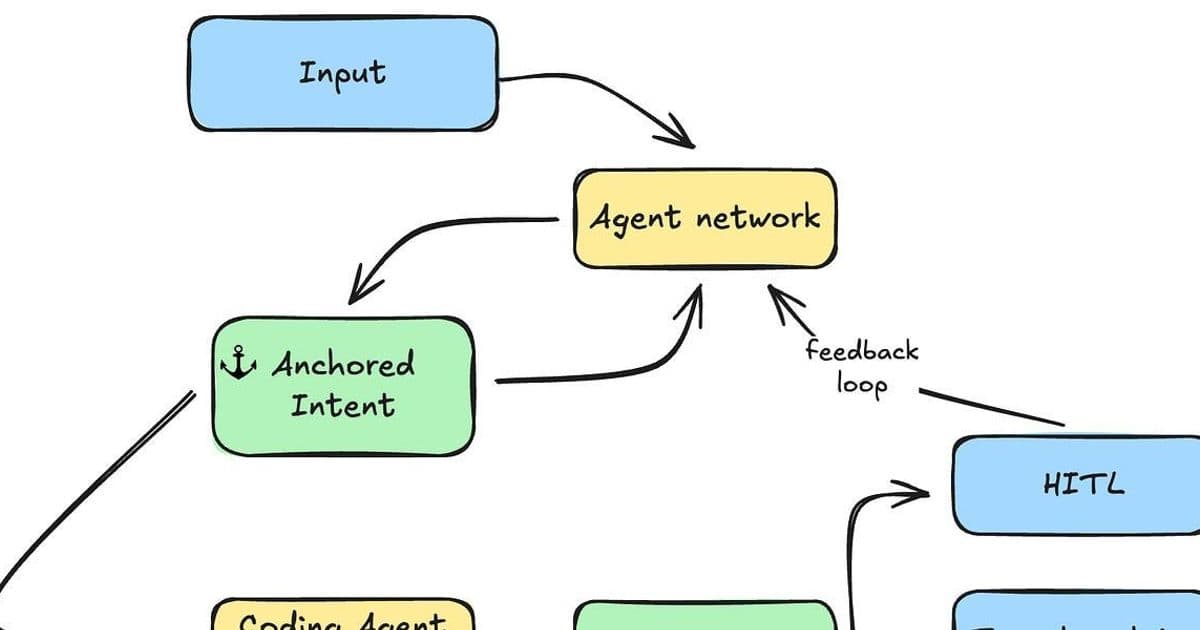
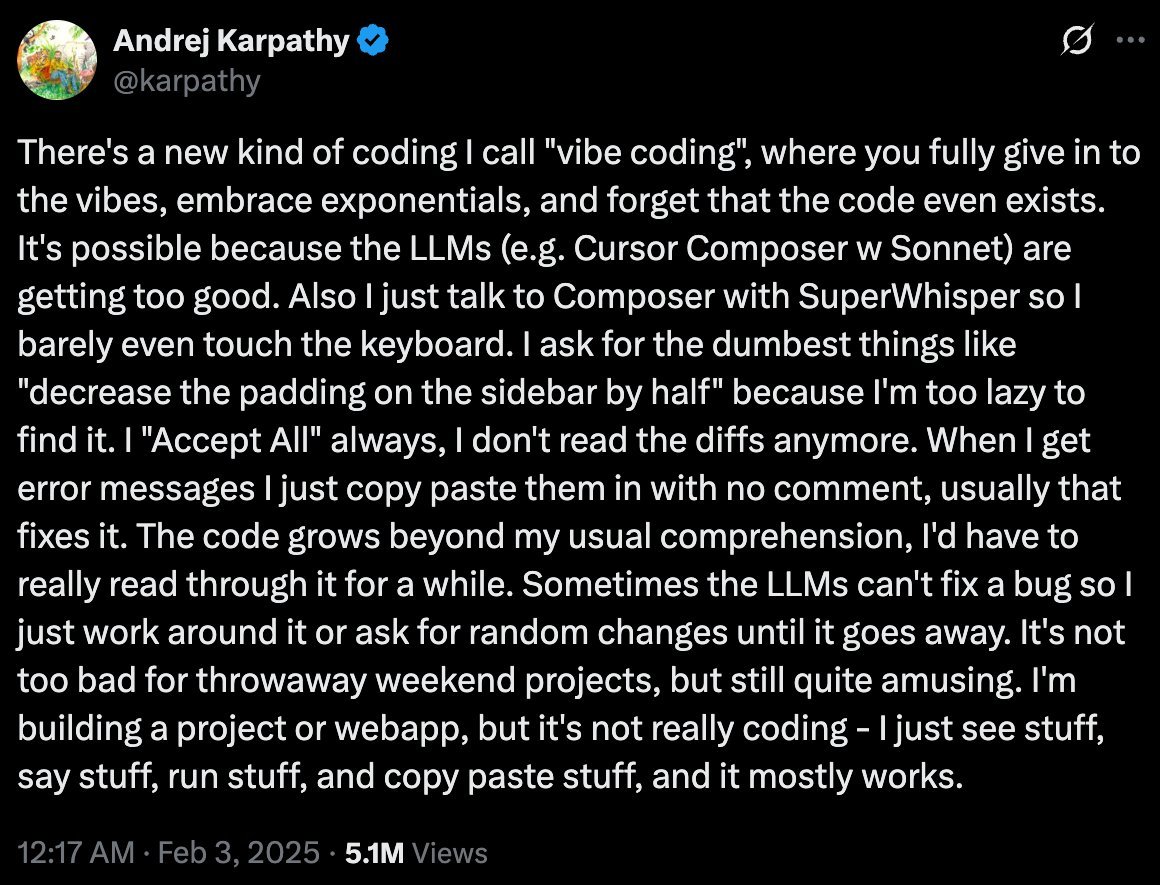
The rise of 'vibe-coding' with LLMs accelerates development but buries teams under mountains of forgotten, AI-generated code. We explore the shift towards ephemeral, self-regenerating code anchored to user intents, arguing this paradigm requires new agentic architectures and expertise to avoid crippling technical debt.
For decades, the software development ethos centered on permanence: write robust code once, reuse it everywhere. The rise of SaaS, npm, and cloud services amplified this, letting small teams leverage complex capabilities. Seniority became defined by knowing what to build versus what to integrate. Now, Large Language Models (LLMs) are shattering this foundation with "vibe-coding" – generating code on the fly – forcing a fundamental question: Is the future of your codebase... no code at all?
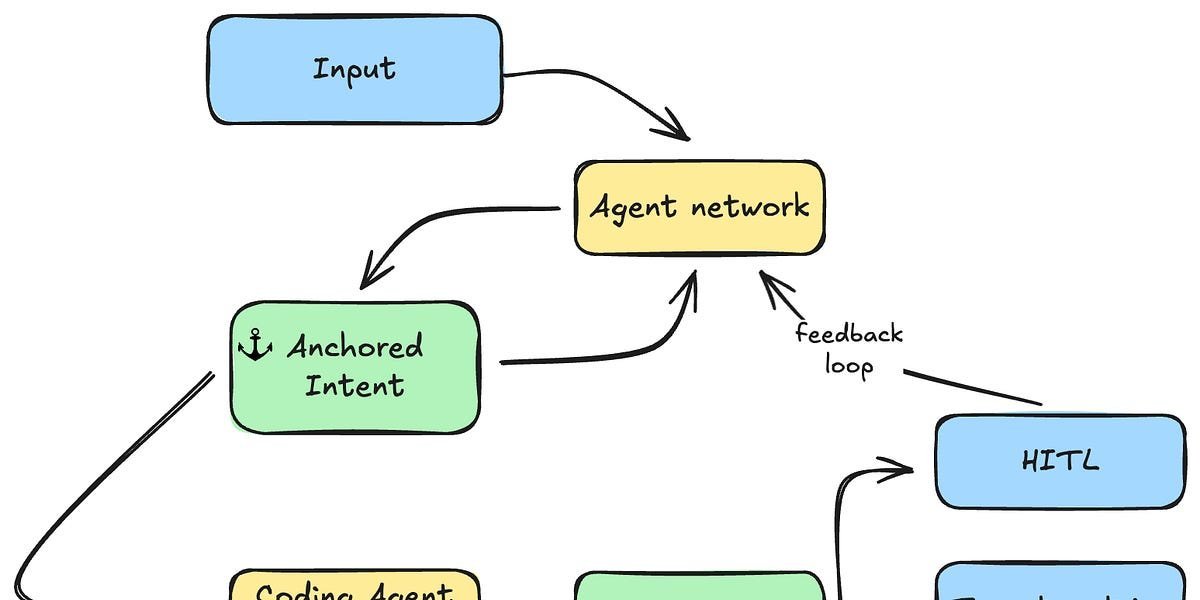 The traditional software development lifecycle is being disrupted by ephemeral, agent-generated code.
Vibe-Coding: Acceleration at a Cost
The allure is undeniable. LLMs empower developers to generate functional code snippets rapidly – translating requirements into implementation with astonishing speed ("vibe-coding"). However, this acceleration masks a critical burden:
- It's Still Code (With All the Baggage): Generated code isn't magic. It still requires debugging, testing, security audits, monitoring, and maintenance. Reddit threads overflow with vibecoders facing classic software engineering woes – brittle outputs, security holes, and unexpected failures.
- The Avalanche of Forgotten Features: The ease of generation leads to an exponential increase in code volume. Features are added per customer or use-case, but rarely pruned. Teams accustomed to managing a 20-year-old codebase evolution suddenly face an equivalent complexity mountain in just 2 years, without proportional maturity in processes or tooling.
- The Maintenance Trap: This burgeoning, under-managed codebase devours resources. Teams risk spending 80%+ effort on maintenance – debugging generated artifacts, removing unused paths, adding telemetry – crippling innovation and productivity. The feeling is one of perpetual deprecation.
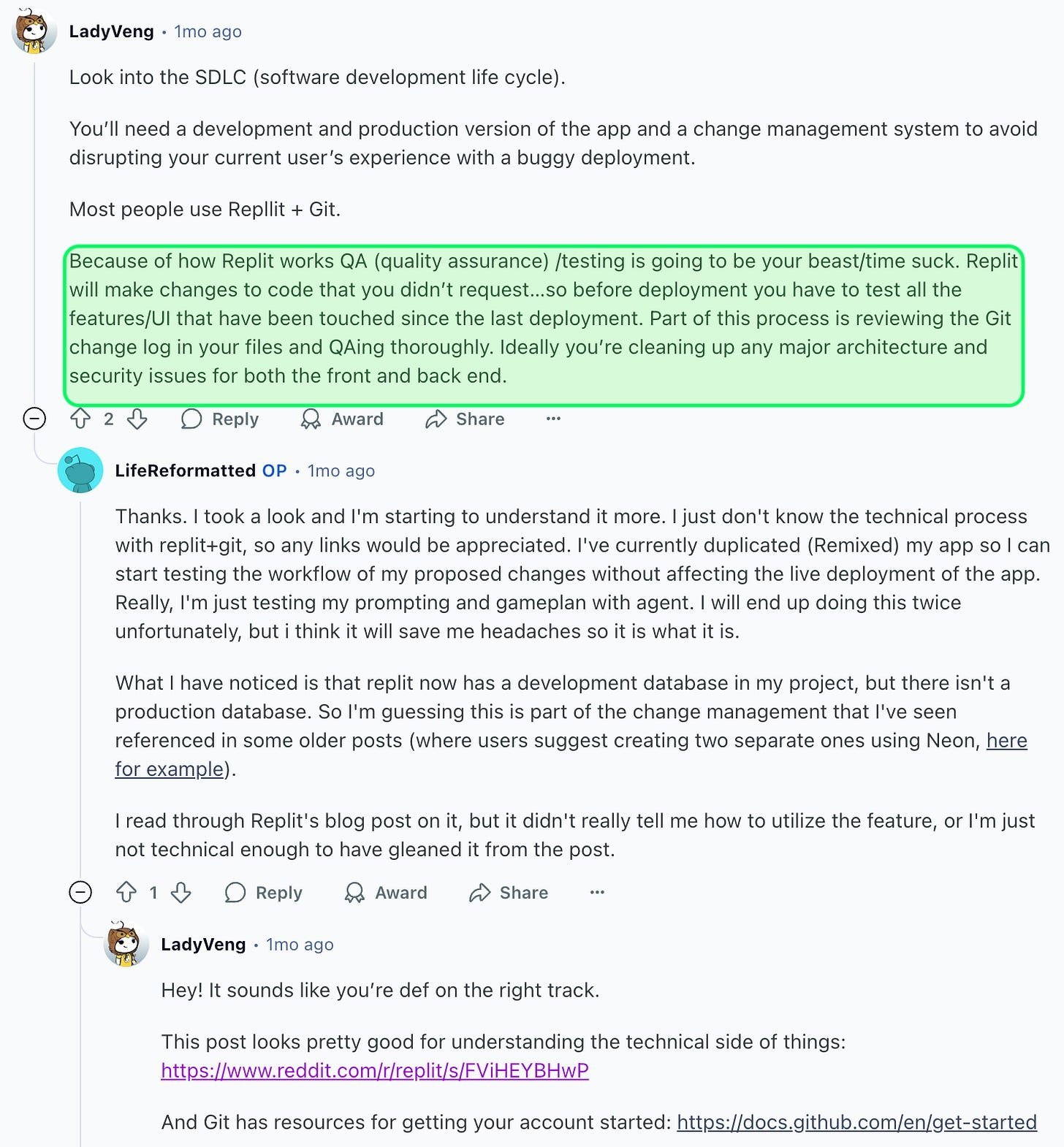 Vibecoders face familiar challenges like debugging and maintenance, amplified by the volume of generated code.
Beyond Generation: Towards Ephemeral Code & Anchored Intents
The solution isn't abandoning LLMs, but fundamentally rethinking what we build and how long it persists. The core shift is moving from permanent code to ephemeral code anchored to stable intents:
- Ephemeral Code: Code generated for a specific purpose or run, then discarded. It doesn't live forever in the codebase, reducing long-term debt. The system regenerates it as needed, incorporating feedback and improvements.
- Anchored Intents: The permanent element becomes the human-defined core behavior, look, feel, and business rules – the "what" and "why". These are the stable anchors around which the ephemeral code mutates. Achieving determinism where it matters (e.g., core UX, critical business logic) requires:
- Human-in-the-Loop: Confirmation from users, product managers, or engineers to lock down critical anchored behaviors.
- Highly Detailed Specifications: Bloated prompts or configurations that meticulously define the non-negotiable aspects, ensuring regenerated code meets core expectations.
The Agentic Architecture Imperative
Managing this shift demands new architectural patterns centered on specialized agents:
- Coding Agent: Deeply understands the tech stack, business rules, design principles, and limitations. Generates the ephemeral code.
- Observability Agent: Continuously monitors system health, performance, and signals. Detects issues preemptively and triggers regeneration or alerts.
- Communication Agents: Handle user support, internal coordination, and external interactions – often the most revenue-critical.
- Quality Assurance Agent: Rigorously tests the application (E2E, API, evals) after regeneration, ensuring it meets quality standards before release.
 Managing ephemeral code requires a constellation of specialized agents handling generation, monitoring, quality, and communication.
Expertise: The Unchanged Differentiator
While code becomes ephemeral, expertise is paramount. Building, configuring, and managing these agentic systems requires deep knowledge:
- Domain Expertise: Understanding the core business value and user needs to define effective anchored intents.
- Agent Development/Configuration: Knowing how to build or select and fine-tune each agent type.
- Feedback Loop Engineering: Designing the mechanisms that allow agents to learn from usage, errors, and performance metrics to improve subsequent code generation – this becomes the primary engineering focus.
The Leap: Embracing Ephemerality
This shift mirrors the transition from low-level languages to managed runtimes (Java, Python, .NET). The performance overhead of interpretation was accepted for massive gains in developer productivity and abstraction. Similarly, accepting the overhead of runtime code generation and agent management unlocks unprecedented flexibility and reduces the long-term burden of static codebases. The winners won't be those who generate the most code, but those who best master anchoring intents and orchestrating ephemeral, self-improving agentic systems. The era of permanent code is fading; the era of anchored ephemerality is dawning.
Source: The future of your code is no-code by pleasedontdeploy.com
Comments
Please log in or register to join the discussion