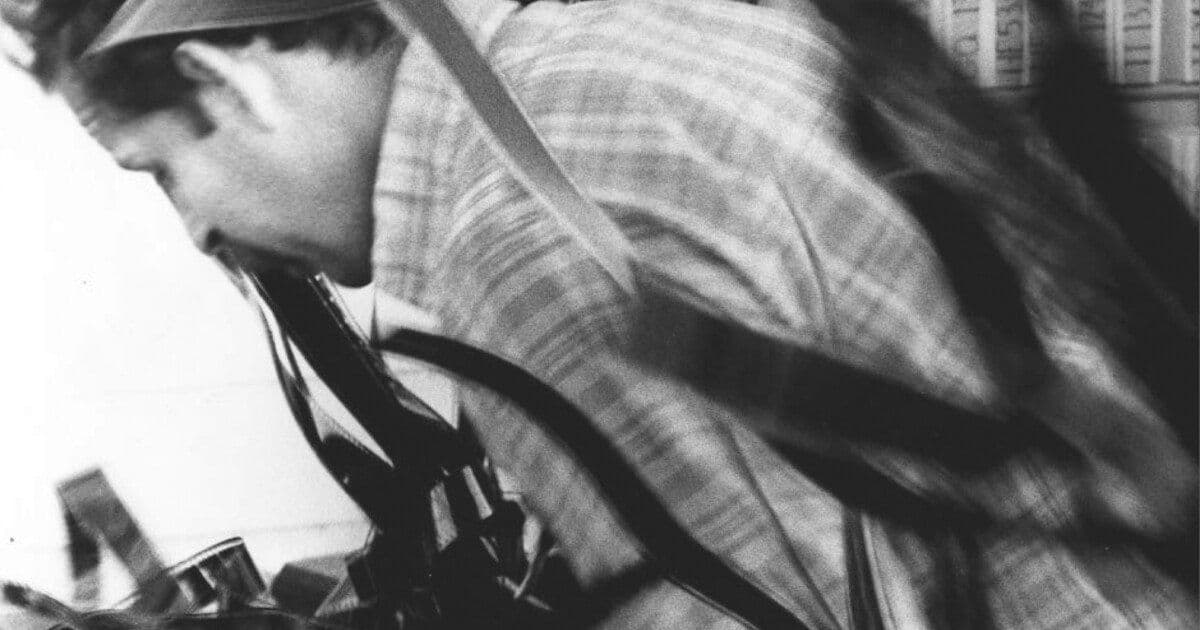
Legendary editor Walter Murch, the 'intellectual' behind classics like *Apocalypse Now* and *The Godfather*, reveals the profound technical craft and cognitive science shaping cinematic storytelling. His new book *Suddenly Something Clicked* dissects the physics of film weight, the neurology of perception, and the artistry of sound as emotional code, offering invaluable insights for creators in any visual medium.
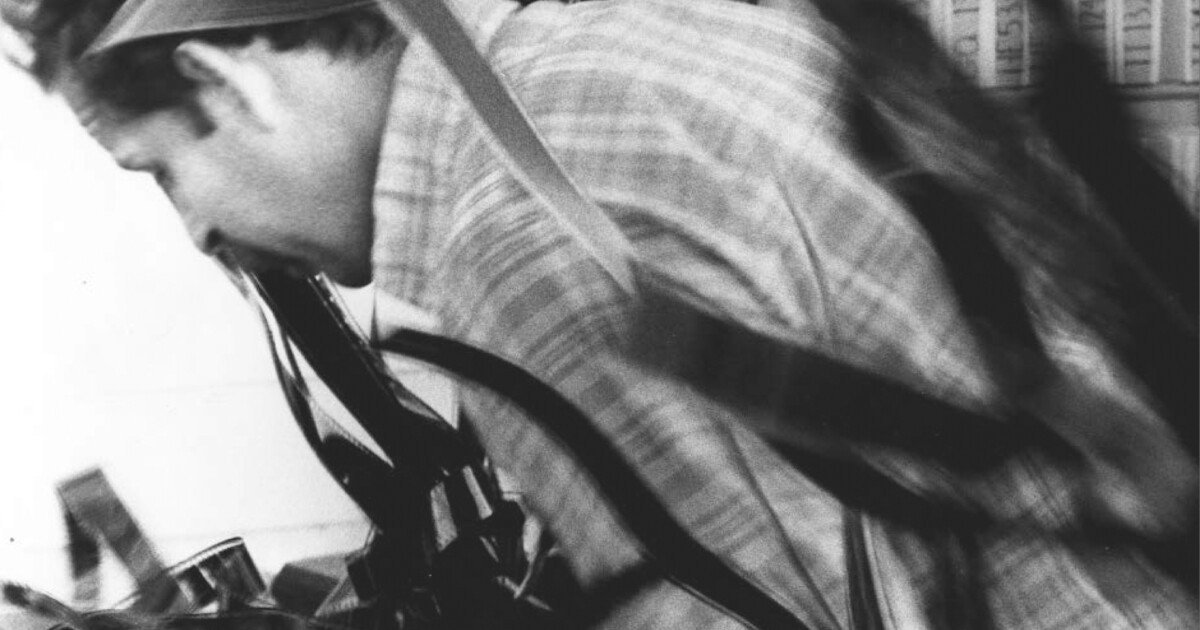
Walter Murch isn't just a film editor; he's a master engineer of human perception. Described by Francis Ford Coppola as "the film world’s one intellectual," Murch has spent nearly six decades dissecting the intricate mechanics of how images and sound manipulate time, emotion, and thought. His latest work, Suddenly Something Clicked: The Languages of Film Editing and Sound Design, transcends memoir, offering a deep technical dive into the invisible architecture of cinema – principles increasingly relevant to creators in VR, game design, and interactive media.
The Physicality of the Invisible Craft
Murch frames editing as a "full-body experience," a "choreography of images and sounds in the flow of time." This isn't poetic fluff; it's grounded in staggering physical reality. Consider Apocalypse Now:
- The Weight of Decisions: A single 35mm frame weighed five-thousandths of an ounce. The 1,250,000 feet shot totaled over seven tons of film.
- Ratio & Reduction: With a shooting ratio of 95:1 (far exceeding the average 20:1), Murch's team distilled 236 hours of raw footage into 2 hours 27 minutes – a four-year feat of narrative bushwhacking and structural engineering. This involved not just trimming, but often radical restructuring, as with The Conversation, where he effectively rewrote the film by excising a third of the scenes.
"Most of the work he does is going to affect us subliminally. There is no showing off here." – Michael Ondaatje on Murch's process.
The Cognitive Science of the Cut: Blinks, Saccades, and Neurological Latency
Murch elevates editing theory beyond aesthetics into neuroscience:
- The Blink as Cut: He champions John Huston's analogy: shifting focus in real life involves blinks – natural cuts. A film cut signals the end of one idea and the start of another. The editor's rhythm must align with the audience's cognitive processing speed.
- Saccades & the Frame: Our eyes make rapid jumps (saccades) 3 times per second, during which we are effectively blind. Murch posits that film's illusion of motion exploits this neurological gap. Crucially, he notes our perception of reality lags by approximately 120 milliseconds (3 film frames).
- Energy Transfer: Murch describes shots as a ball tossed across a field. The editor must ensure the next shot "receives" the energy of the previous one – swinging with it, hitting it back, or dissipating it. Anne Coates' iconic match-cut to sunrise in Lawrence of Arabia exemplifies this perfectly.
Sound Design as Psychological Warfare
Murch revolutionized sound's role from support to active narrative agent:
- Womb to Demotion: He notes our primal connection to sound (developing in the 75-decibel "industrial" womb environment), yet its post-birth demotion in conscious awareness. In film, "The better the sound, the better the image" – sound subconsciously enhances the perceived quality of the visuals.
- The Godfather's Metaphorical Scream: His most famous innovation wasn't scripted: the rising metallic screech as Michael Corleone prepares to kill Sollozzo and McCluskey. Detached from any on-screen source, it became a pure, terrifying expression of Michael's internal state, stopping abruptly after the shots. This demonstrated sound's power to convey subconscious emotion.
- Apocalypse Now's Restored Voice: Murch salvaged Captain Willard's narration by recording a temporary track himself, proving its necessity as the audience's internal compass in the chaotic narrative. This restored voiceover, crucial for character depth, highlights the editor's role as a proactive "bait-thrower" proposing narrative solutions.
A Digital Playbook for Modern Creators
Suddenly Something Clicked is uniquely structured as a "three-braided rope – theory, practice and history." It leverages modern tech:
- QR Codes: Provide immediate access to deep dives – Orson Welles' lost Touch of Evil memo, pre-mixes of Ride of the Valkyries in Apocalypse Now, scene restructuring analyses.
- Interactive Fortunes: Adages from other artists at the bottom of pages act as a counterpoint chorus.
Murch’s exploration of perception, his quantification of the intangible (like emotional hooks and rhythmic structure), and his embrace of technology for deeper understanding make his work essential reading not just for filmmakers, but for any developer, designer, or engineer crafting immersive digital experiences. His core truth remains: the most powerful technical work operates beneath conscious awareness, shaping feeling and thought long before the audience realizes the cut has even happened. His legacy is a masterclass in building the invisible frameworks that hold our stories together.
Source: Adapted from John Lahr's review "Every Blink" in the London Review of Books (Vol. 47 No. 19 · 23 October 2025), covering Walter Murch's book "Suddenly Something Clicked" (Faber, 2025).
Comments
Please log in or register to join the discussion