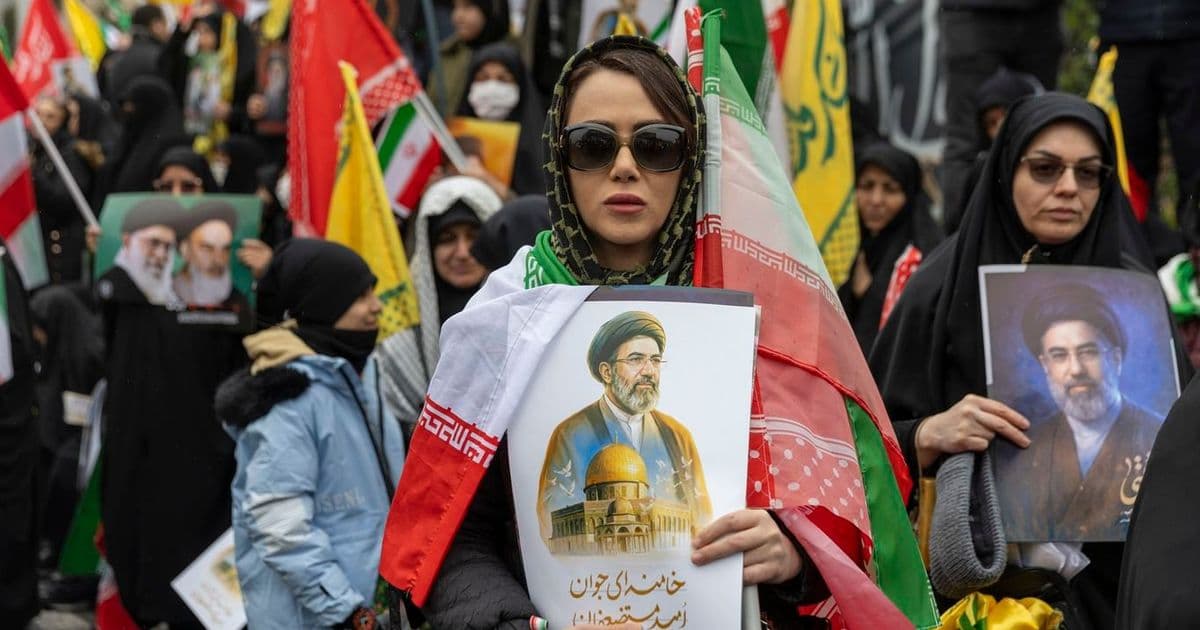
U.S. intelligence agencies are closely monitoring Mojtaba Khamenei, son of Iran's Supreme Leader, as potential successor amid growing speculation about succession planning in Tehran.
The CIA is intensifying its intelligence gathering on Mojtaba Khamenei, the son of Iran's Supreme Leader Ayatollah Ali Khamenei, as speculation mounts about potential succession in Tehran. The younger Khamenei, who has maintained a relatively low public profile despite his influential family connections, has become the subject of increased scrutiny from U.S. intelligence agencies seeking to understand Iran's future leadership trajectory.
Background on Mojtaba Khamenei
Mojtaba Khamenei, born in 1969, is the second son of Ayatollah Ali Khamenei, who has served as Iran's Supreme Leader since 1989. Unlike his father, who rose through the clerical ranks before assuming the highest religious and political office in Iran, Mojtaba has primarily operated behind the scenes in various advisory and organizational roles.
Intelligence analysts note that Mojtaba has cultivated relationships with key power centers in Iran, including the Islamic Revolutionary Guard Corps (IRGC) and various clerical institutions. His influence appears to have grown significantly in recent years, particularly as questions about his father's health and longevity have intensified.
U.S. Intelligence Focus
The CIA's increased attention on Mojtaba Khamenei reflects broader U.S. concerns about Iran's political stability and future direction. Intelligence gathering efforts reportedly include:
- Monitoring communications and movements of Mojtaba and his inner circle
- Analysis of his relationships with key Iranian power brokers
- Assessment of his potential policy preferences and ideological leanings
- Evaluation of his support within various Iranian institutions
This intelligence push comes amid growing uncertainty about the health of Ayatollah Ali Khamenei, who is believed to be in his mid-80s. The Supreme Leader's potential departure would trigger a complex succession process that could significantly impact Iran's domestic politics and foreign policy.
Succession Dynamics
Iran's succession process is governed by the Assembly of Experts, a clerical body responsible for selecting the next Supreme Leader. However, the process is heavily influenced by existing power structures, particularly the IRGC, which has become increasingly powerful in recent years.
Mojtaba Khamenei's potential candidacy faces both support and opposition within Iran's political establishment. Supporters view him as a continuity candidate who could maintain his father's policies and alliances, while critics worry about the concentration of power within a single family.
Strategic Implications
The CIA's focus on Mojtaba Khamenei underscores the strategic importance of understanding Iran's leadership transition. A change in Iran's Supreme Leader could affect:
- Iran's nuclear program and negotiations with world powers
- Tehran's support for regional proxies and allies
- Iran's economic policies and international engagement
- The balance of power between reformist, conservative, and hardline factions
Regional Context
The succession question comes at a time of heightened regional tensions, with Iran facing various challenges including economic sanctions, domestic unrest, and regional rivalries. The identity and policies of the next Supreme Leader could significantly impact these dynamics.
Intelligence Challenges
Gathering reliable intelligence on Iranian leadership succession presents numerous challenges for U.S. agencies. Iran's security services maintain tight control over information about the country's leadership, and succession planning is typically conducted through opaque channels.
Analysts must rely on a combination of human intelligence, signals intelligence, and careful analysis of public statements and actions to piece together an understanding of Iran's internal dynamics and potential succession scenarios.
Looking Ahead
As the succession question becomes increasingly pressing, U.S. intelligence agencies are likely to maintain their focus on Mojtaba Khamenei and other potential candidates. The outcome of Iran's leadership transition could have profound implications for Middle East stability and U.S. interests in the region.
The coming months and years will likely see continued speculation and intelligence gathering as Iran's political establishment grapples with the question of succession. For now, Mojtaba Khamenei remains a central figure in these discussions, whether he ultimately seeks or attains the position of Supreme Leader or not.
Comments
Please log in or register to join the discussion