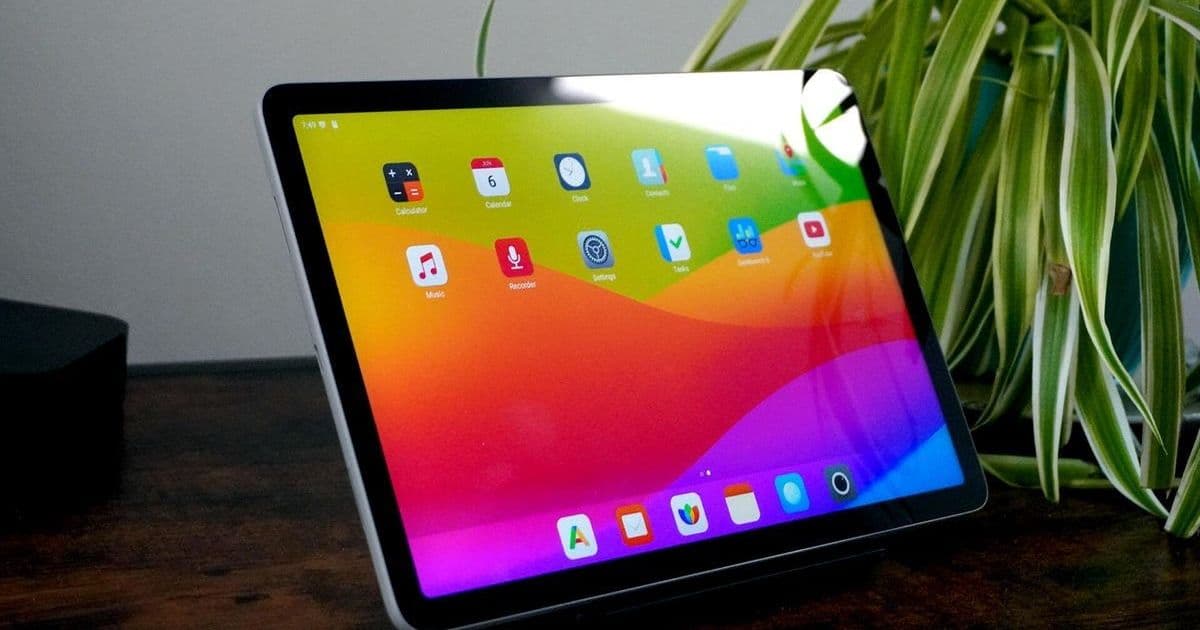
ZDNET's hands-on review reveals the Murena Tablet—a reimagined Google Pixel Tablet stripped of Google services and tracking—offering a genuinely private, bloatware-free Android experience. While it commands a premium price, its /e/OS platform delivers tangible privacy control and refreshing simplicity for users seeking escape from Big Tech ecosystems.
For Android tablet users weary of pre-installed bloatware and pervasive tracking, the quest for a truly private, streamlined experience often leads to complex DIY solutions—until now. Murena's reworked Pixel Tablet, running its privacy-centric /e/OS, offers a compelling, ready-made alternative that ZDNET testing confirms delivers on its promise of liberation from Google's ecosystem.
The De-Googled Difference: More Than Just Missing Apps
Physically identical to Google's Pixel Tablet, the Murena variant undergoes a radical software transformation. It ships with /e/OS, a custom Android 13 fork that eliminates all default Google services, trackers, and pre-loaded applications. Where a standard Pixel Tablet arrives with over 60 apps, the Murena version boasts a mere 23. This isn't just about removing Gmail or Maps; it's a foundational shift that strips out the underlying frameworks enabling user behavior tracking and data collection pervasive in standard Android distributions.
"Using the Murena Tablet on a day-to-day basis is a refreshing experience... There are no forced ecosystems or distractions. You truly choose your apps and services, down to deciding whether you use an account with your tablet or not," notes ZDNET's Maria Diaz.
The User Experience: Control Without Compromise (Mostly)
Testing revealed significant practical benefits:
- Effortless Privacy: Users can operate the device without any registered account, a stark contrast to mandatory sign-ins on standard Android or iOS devices. Apps like Gmail or YouTube remain accessible if the user chooses to install and log in, shifting control decisively to the individual.
- Reduced Bloat, Smoother Performance: Freed from background processes associated with Google services and unused apps, the tablet exhibited slightly faster single and multi-core CPU performance in Geekbench 6 benchmarks compared to the stock Pixel Tablet (1,477/3,867 vs 1,451/3,787). GPU performance dipped slightly (4,158 vs 4,961), likely due to missing Google graphics optimizations, but real-world use felt snappier for everyday tasks.
- Enhanced Privacy Tools: The recent /e/OS 3.0 update bolsters privacy further with:
- Murena Find: A Qwant-powered private search engine.
- Detailed Privacy Reports: Revealing app tracking attempts.
- Murena Vault: CryptPad-based encrypted cloud storage.
- Stronger Parental Controls & Device Finding via SMS.
The Trade-Off: Premium Price, Ecosystem Shift
This liberation comes at a cost. The Murena Tablet starts at $549 for 128GB—significantly higher than the $399 (often discounted) base Pixel Tablet, and notably without the included speaker dock. Users must also adapt to alternative app sources (like the Murena App Store or sideloading via Aurora Store) and embrace services outside the Google ecosystem.
Who Is This For? The Privacy-Conscious Android Advocate
The Murena Tablet isn't a mass-market iPad killer. It's a niche device with a clear audience: Developers and tech-savvy users prioritizing privacy who want a functional, bloatware-free Android tablet without the hassle of manually flashing custom ROMs. It offers a tangible, supported alternative to Apple's walled garden, proving that a usable, de-Googled mobile experience is not just possible, but polished. While the price premium and adjusted workflow are hurdles, for those valuing digital autonomy, the Murena Tablet represents a significant step towards reclaiming control over their devices and data.
Source: Based on testing and reporting by Maria Diaz, Staff Writer at ZDNET (July 18, 2025).
Comments
Please log in or register to join the discussion