
As Microsoft doubles down on AI integrations and faces growing ethical concerns, developers are increasingly moving their projects to alternative platforms. We examine the technical and political reasons behind this shift.
The developer ecosystem is witnessing a quiet revolution as prominent open source projects and individual programmers migrate away from GitHub. This movement, accelerating since Microsoft's 2018 acquisition, has gained new urgency with recent developments in AI and ethical concerns surrounding Microsoft's government contracts.

The cluttered GitHub Copilot settings interface exemplifies the platform's growing complexity
Technical Dissatisfaction Meets Ethical Concerns
Three primary factors are driving developers away:
Platform Degradation: Many report worsening performance, with simple repository views now taking multiple seconds to load. The Zig programming language's migration post detailed how GitHub Actions became unreliable for their CI pipeline.
AI Overreach: GitHub's aggressive push of Copilot features has alienated developers. The Software Freedom Conservancy's Give Up GitHub campaign highlights concerns about:
- Training models on GPL-licensed code without attribution
- Opaque AI model selection interfaces
- Microsoft's reorganization of GitHub under its CoreAI division
Ethical Objections: Multiple activist groups now target GitHub as part of broader Microsoft protests:
- The Palestinian BDS movement's Microsoft boycott over Azure contracts with Israeli military
- ICE Out of My Wallet's campaign against Microsoft's ICE contracts
- Free Software Foundation's objections to Windows 11 TPM requirements
The Practicalities of Migration
For individual developers, moving small projects proves relatively straightforward. The main challenges involve:
Network Effects: While GitHub's social features (stars, forks) provide visibility, many developers find these less critical than assumed. As one programmer documented, a technical blog post drove more traffic to their project than GitHub's discovery mechanisms.
Tooling Alternatives: Viable options now exist across the spectrum:
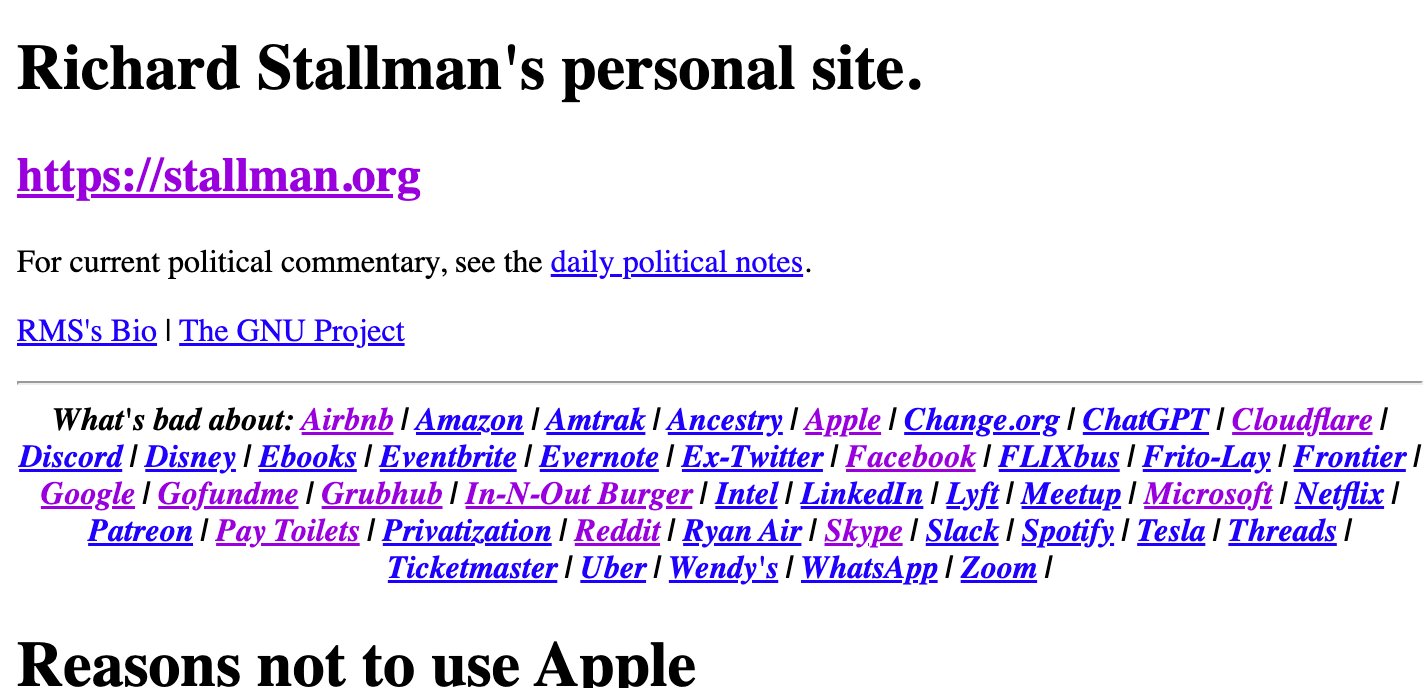
Richard Stallman's famously comprehensive boycott list demonstrates both the passion and impracticality of attempting to avoid all problematic tech companies
Why GitHub Makes an Effective Target
Unlike consumer platforms where leaving means disappearing, GitHub migrations can be strategic:
- Low Switching Costs: Small projects can move with minimal disruption using tools like the GitHub CLI
- Symbolic Value: Hosting elsewhere removes implicit endorsement of Microsoft's practices
- Collective Action Potential: The developer community's historical skepticism of Microsoft provides fertile ground for organized action
The Bigger Picture
This migration wave reflects broader trends in tech:
- Decentralization: Developers are exploring peer-to-peer code hosting models
- Ethical Consumption: Increased scrutiny of how tools align with personal values
- Interface Simplicity: Pushback against feature-bloated platforms

The free software movement's challenges in building practical coalitions remain evident today
For those considering migration, the key is balancing idealism with pragmatism. As the Software Freedom Conservancy advises, even partial moves create pressure for change while maintaining ability to contribute to projects still on GitHub.
Comments
Please log in or register to join the discussion