
Modern browsers are embedding AI classifiers to interpret search queries, but struggle to distinguish between genuine questions and search phrases like 'Who Framed Roger Rabbit?' This article examines how Dia, ChatGPT Atlas, Perplexity, and Google approach intent detection, revealing fundamental challenges in omnibox design.
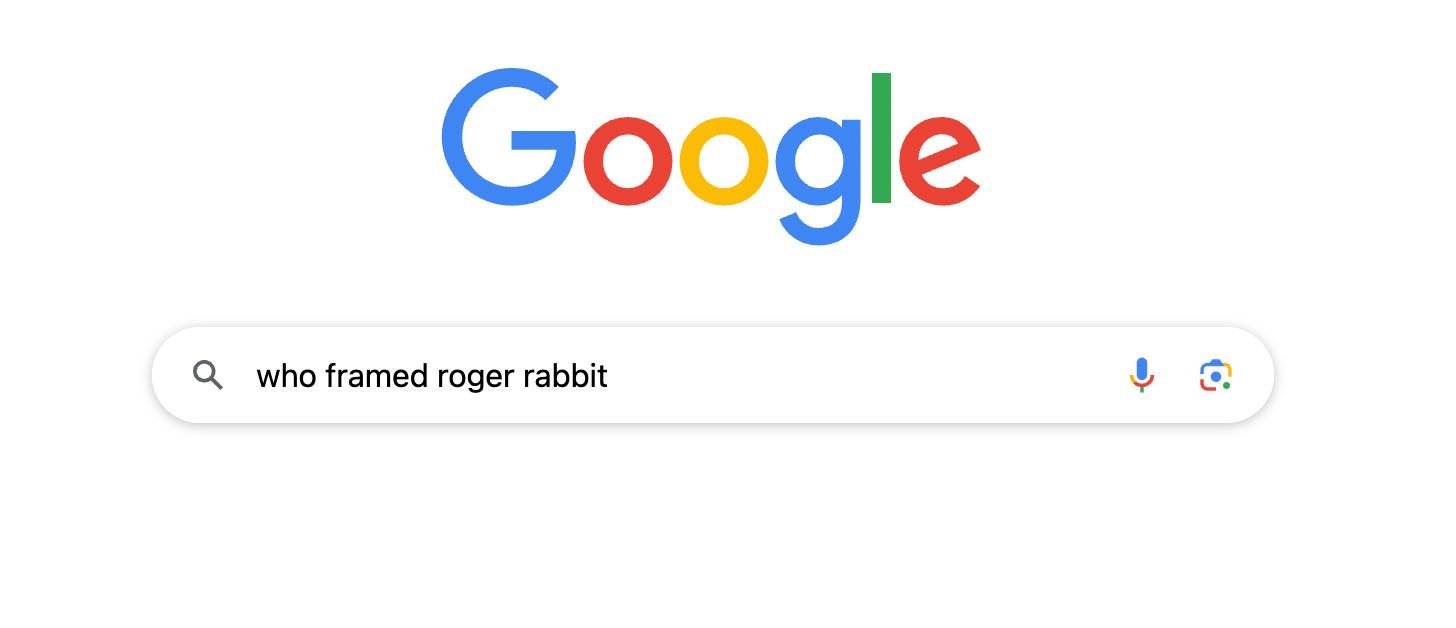
As browsers evolve into AI-powered platforms, their omniboxes face a critical design challenge: determining whether user input represents a question for conversational AI or a search for web content. This distinction becomes increasingly complex as browsers like Dia, ChatGPT Atlas, Perplexity's Comet, and Google Chrome implement divergent approaches to intent detection.
Dia employs a lightweight local DistilBERT classifier running on Apple's MLX framework to detect "question vibes" in under 10ms. While privacy-preserving, this approach falters with ambiguous phrases like movie titles starting with question words—notably misinterpreting "Who Framed Roger Rabbit?" as an inquiry rather than a search query. As developer Allen Pike notes: "This is basically never what the user wants when they type a film title into the browser omnibox."
Competitors avoid this pitfall through alternative strategies:
- ChatGPT Atlas uses a simple word-count heuristic: Queries under 10 words go to search; longer ones trigger chat
- Perplexity and Google route all queries to server-side models that dynamically decide between chat and search results
These approaches highlight a core tension: Local classifiers enable speed and privacy but lack contextual understanding, while server-side models offer sophistication at the cost of latency and data transmission. Google and Perplexity currently balance this differently—Google prioritizes web results while Perplexity leans toward AI-generated answers.
The acquisition of Dia by Atlassian presents two evolutionary paths: Either develop a full answer engine to compete with search giants, or simplify the classification approach as Atlas has done. Atlassian CEO Mike Cannon-Brookes' vision of a "browser for professional productivity" suggests focus may shift toward specialized workflows rather than universal question answering.
Browser omniboxes are merely the frontline of a broader challenge. As Pike observes: "Time will bring more and more ambitious text boxes" across software interfaces. The holy grail remains interfaces that execute user intent without modes or surprises—a goal requiring deeper contextual awareness than today's local classifiers provide. For now, developers must weigh tradeoffs between speed, privacy, and accuracy when designing intent-driven interfaces.
Source: Allen Pike, A Box of Many Inputs
Comments
Please log in or register to join the discussion