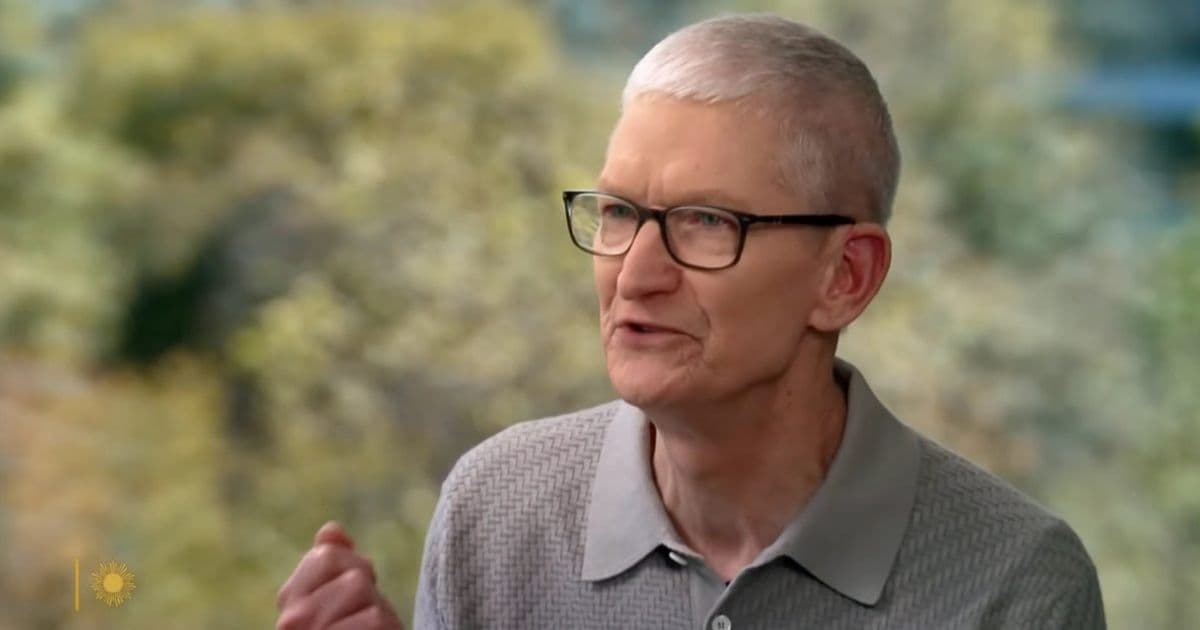
Apple CEO Tim Cook reflects on the company's unique DNA and Steve Jobs' enduring principles as Apple approaches its 50th anniversary, emphasizing that the company's culture and approach cannot be replicated.
As Apple approaches its 50th anniversary on April 1, CEO Tim Cook sat down with David Pogue for CBS's "Sunday Morning" program to reflect on the company's journey and unique position in the tech industry. The interview, conducted ahead of the milestone, reveals Cook's perspective on Apple's DNA, Steve Jobs' enduring influence, and why he believes the company exists "in a party of one."
Building a New Muscle for Milestone Moments
Apple, founded in 1976 by Steve Jobs, Steve Wozniak, and Ronald Wayne, has historically been a company that looks forward rather than backward. Cook admits that acknowledging the 50th anniversary requires "building a new muscle" for a company that typically focuses on "the next thing and improving something that exists today."
This forward-looking mentality has been central to Apple's success. Cook explains that the company's approach involves "trying to see around the corner and giving people something that they didn't know that they wanted." This philosophy has driven innovations from the original Macintosh to the iPhone and beyond, consistently delivering products that create new categories or redefine existing ones.
Steve Jobs' Principles as Company DNA
Perhaps the most revealing aspect of Cook's interview is his discussion of Steve Jobs' lasting impact on Apple's culture. Jobs passed away in 2011, but Cook emphasizes that the principles he established remain "the DNA of this company 50 years after its inception."
Cook describes Jobs' influence as a gift, particularly the advice to avoid the "Disney problem"—the tendency for companies to become paralyzed after losing their visionary founder, constantly wondering what that person would do. Jobs specifically told Cook not to fall into this trap, encouraging him to lead Apple forward rather than trying to channel Jobs' decision-making.
Despite this freedom to chart his own course, Cook believes Jobs' principles are so fundamental that they should guide Apple "100 years and 200 years into the future." These principles center on enriching lives and maintaining the drive to "do it all over again"—the relentless pursuit of innovation and excellence that has defined Apple's approach.
The Unreplicable Apple
The most striking statement from Cook's interview is his assertion that Apple exists "in a party of one"—a company so unique that it cannot be replicated. "I think Apple is such a unique place," Cook says. "It's not possible to replicate it. That's how I feel. I know a lot of different companies and I think Apple is just, you know, just in a party of one."
This perspective speaks to the combination of factors that make Apple distinctive: its integration of hardware and software, its design philosophy, its retail presence, its supply chain mastery, and perhaps most importantly, its culture. The seamless marriage of technology and liberal arts, a concept Jobs often emphasized, creates a company that operates differently from pure technology firms or traditional consumer product companies.
Looking Forward While Honoring the Past
As Apple enters its next half-century, the company faces the challenge of maintaining its innovative edge while honoring the principles that have brought it success. Cook's comments suggest a company comfortable with its identity but still hungry for what comes next.
The upcoming anniversary represents not just a celebration of past achievements but a reaffirmation of Apple's core values. In an industry where companies rise and fall with remarkable speed, Apple's ability to maintain its position as a leader for five decades speaks to the strength of its foundational principles and its capacity for reinvention.
For developers, designers, and consumers who have grown up with Apple products, Cook's words offer reassurance that the company's commitment to quality, innovation, and user experience remains unchanged. As Apple continues to push boundaries in areas like augmented reality, artificial intelligence, and health technology, the DNA that Jobs helped establish continues to guide its evolution.
The question now is how Apple will translate these enduring principles into the next generation of products and experiences. If Cook's confidence is any indication, the company that has defined personal technology for half a century is far from finished reimagining what's possible.
Comments
Please log in or register to join the discussion