DatanoiseTV releases TinyIce, a Go-based Icecast-compatible streaming server designed for instant deployment and modern broadcasting needs.
Traditional audio streaming solutions like Icecast have long been the backbone of internet radio, but their configuration complexity and resource demands create barriers for smaller broadcasters. TinyIce, a new open-source project from DatanoiseTV, addresses these challenges with a self-contained server written in Go that boots in seconds with zero initial configuration.
Unlike conventional streaming servers requiring manual setup, TinyIce generates unique secure credentials automatically on first launch using salted bcrypt hashing. Its single-binary architecture includes embedded web templates and icons, eliminating dependency management. The server implements modern security practices including CSRF protection and HTTP hardening while maintaining compatibility with standard broadcast tools like OBS, Mixxx, and VLC players.
The architecture supports multiple concurrent streams with distinct administration scopes. "Multi-tenancy was a core design consideration," explains the project documentation. "Each admin user manages only their own mount points, enabling isolated environments for different broadcasters on a single instance."
Notable technical capabilities include:
- Stream relaying: Pull external broadcasts with automatic reconnection and ICY metadata parsing
- Dual-protocol handling: HTTPS for listeners while accepting legacy HTTP streams from encoders
- Real-time monitoring: Server-Sent Events power live dashboards with playback statistics
- Persistent history: SQLite database tracking last 100 songs per station
- Auto-HTTPS: Integrated Let's Encrypt support for single-command SSL certificates
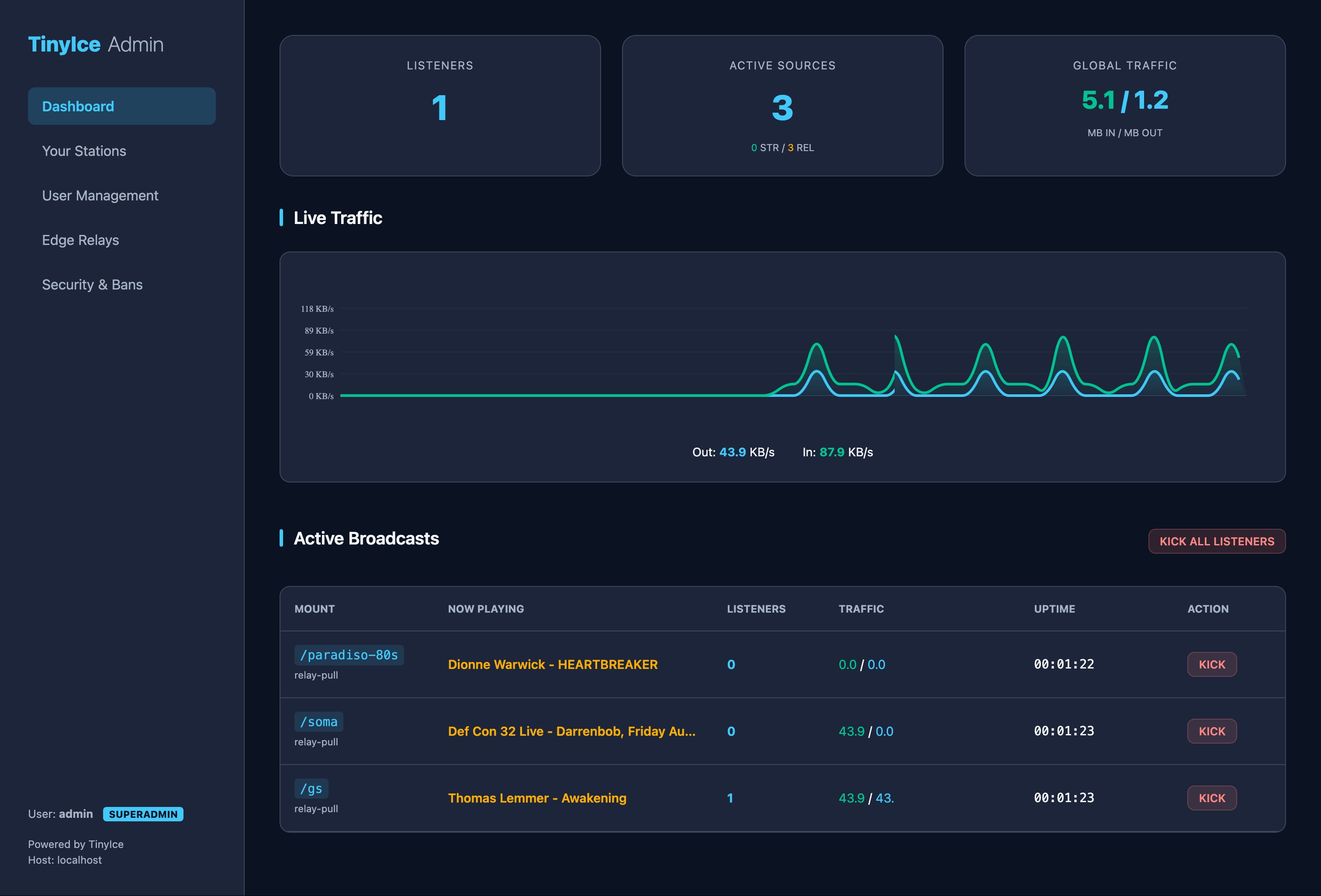
Administrators gain granular control through a web interface featuring IP banning, mount point management, and approval workflows where new streams remain hidden until manually enabled. The system also publishes to public directories via Icecast's YP protocol and exports Prometheus metrics for monitoring.
Getting started requires only Go 1.21+ (go build -o tinyice) and execution of the binary. On first run, the server outputs randomly generated credentials that must be securely stored. Command-line options allow binding to specific interfaces, log level adjustment, and daemon operation.
Performance benchmarks in the project's PERFORMANCE.md suggest efficient resource usage, though the maintainers emphasize this is a side project without independent security audit. "Use it at your own risk," cautions the README, noting the Apache 2.0-licensed project prioritizes security but remains experimental.
For broadcasters seeking lightweight alternatives to traditional streaming infrastructure, TinyIce offers a compelling blend of modern tooling and Icecast compatibility. The GitHub repository provides full source code and deployment documentation.
Comments
Please log in or register to join the discussion