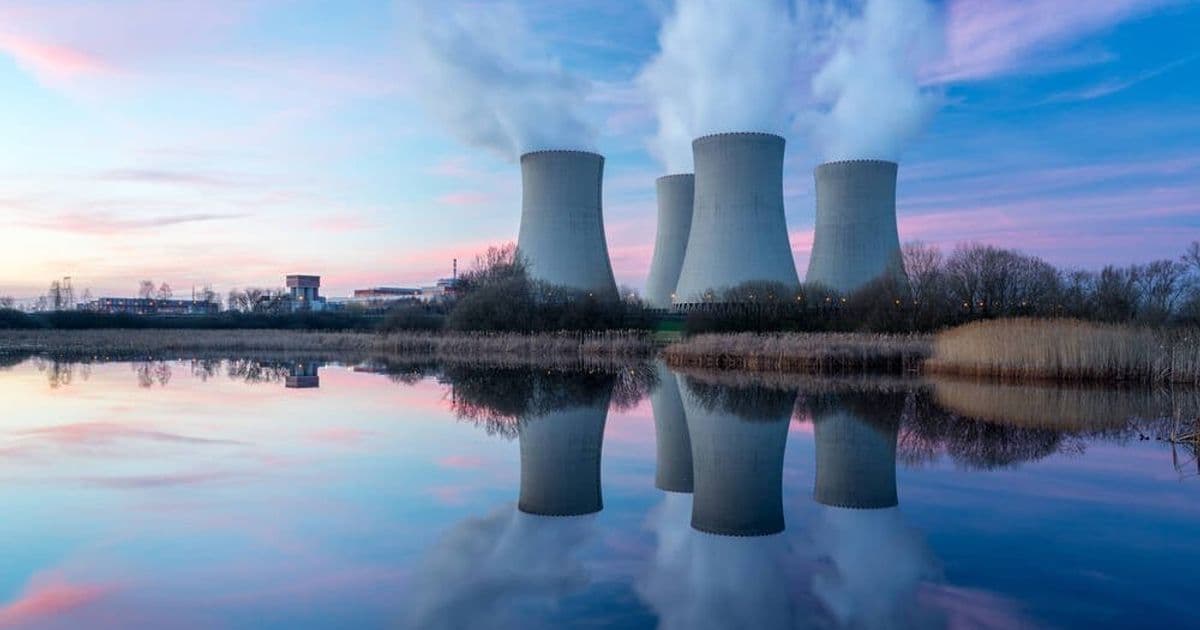
The Department of Energy has established a 'categorical exclusion' allowing advanced nuclear reactor projects to skip full environmental assessments, citing safety features while critics warn of insufficient oversight for unproven designs.
The Trump administration has moved to accelerate the deployment of next-generation nuclear reactors by allowing them to bypass full environmental reviews under the National Environmental Policy Act (NEPA). In a Federal Register filing on Monday, the Department of Energy (DoE) established a "categorical exclusion" for advanced nuclear reactors (ANRs), potentially streamlining their authorization, siting, construction, operation, reauthorization, and decommissioning processes.
What Are Advanced Nuclear Reactors?
The DoE's categorical exclusion covers several types of advanced nuclear technologies:
- Generation III+ reactors - Enhanced versions of traditional light-water reactors with improved safety features
- Small modular reactors (SMRs) - Compact, factory-built reactors designed for scalability
- Microreactors - Ultra-small reactors for remote locations or specialized applications
- Stationary and mobile reactors - Fixed installations and transportable nuclear power sources
The Regulatory Change
A categorical exclusion means that certain categories of actions "normally do not significantly affect the quality of the human environment" and therefore don't require full environmental assessments or environmental impact statements. This represents a significant departure from standard NEPA procedures, which typically require comprehensive environmental reviews for major infrastructure projects.
The DoE justified the move by arguing that advanced reactor designs incorporate safety features that limit potential environmental impacts. "Advanced nuclear reactors have key attributes such as safety features, fuel type, and fission product inventory that limit adverse consequences from releases of radioactive or hazardous material from construction, operation, and decommissioning," the department stated in its record of support.
Industry Context and Development Status
Despite the DoE's confidence in these technologies, most advanced reactor designs remain largely theoretical. Only a single pair of Generation III+ nuclear reactors has been constructed in the United States, coming online at the Vogtle nuclear power facility in Georgia in 2023 and 2024. Small modular reactors and microreactors exist primarily on paper, with only one SMR design having cleared US regulatory approval to date.
Energy Secretary Chris Wright has set an ambitious target, claiming the US will have at least one SMR operational before July 4, 2026. This aggressive timeline underscores the administration's push to revitalize nuclear power as part of its energy strategy.
Safety Concerns and Opposition
Critics argue that the DoE's approach cuts corners on public health and environmental safety. Edwin Lyman, nuclear power safety director at the Union of Concerned Scientists, told The Register that "the test reactor designs currently under construction have primarily existed on paper. This lack of real-world experience with the reactors means that they should be subject to more rigorous safety and environmental reviews before they're built, not less."
Lyman emphasized that "any nuclear reactor, no matter how small, no matter how safe it looks on paper, is potentially subject to severe accidents." His concerns reflect broader skepticism about deploying unproven nuclear technologies without thorough environmental scrutiny.
Broader Regulatory Rollbacks
The categorical exclusion is part of a larger pattern of regulatory changes aimed at accelerating nuclear deployment. The DoE has reportedly rewritten other nuclear safety documents, eliminating hundreds of pages of requirements, loosening groundwater protections, and increasing radiation exposure limits for personnel.
These changes align with executive orders directing agencies to streamline environmental reviews for nuclear reactors. The administration views advanced nuclear technology as critical for meeting growing energy demands, particularly from energy-intensive sectors like artificial intelligence and data centers.
Industry Support and Future Outlook
Major technology companies including Amazon, Meta, and Google have signed pledges to support tripling nuclear power capacity by 2050, recognizing nuclear energy's potential to provide reliable, carbon-free power for their expanding operations. However, energy experts caution that small modular reactors face significant technical and economic hurdles before they can deliver on their promise.
The DoE maintains that the streamlined approach represents "a win for bipartisan supported NEPA reform" while upholding "the highest standards of safety and security." Whether this balance can be achieved remains to be seen as the first advanced reactor projects move forward under the new regulatory framework.
The tension between accelerating clean energy deployment and ensuring adequate environmental protection will likely continue to shape the future of nuclear power development in the United States, with significant implications for both energy policy and environmental regulation.
Comments
Please log in or register to join the discussion