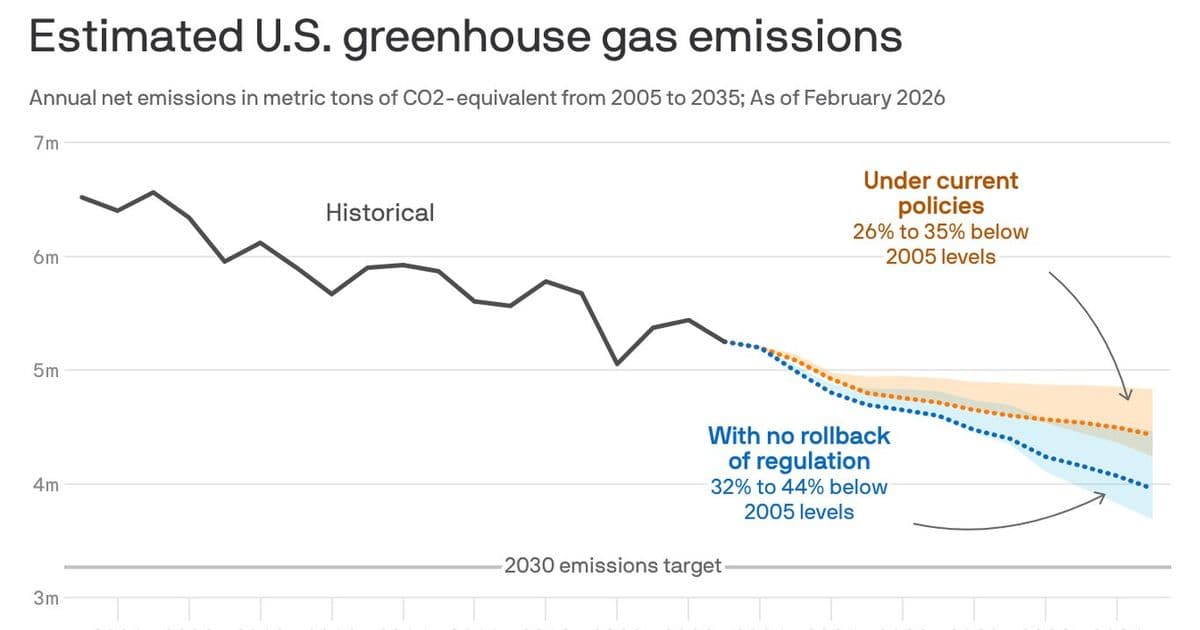
Despite Trump's efforts to roll back climate regulations, US greenhouse gas emissions will continue falling due to market forces and state policies, though at a slower pace than under Obama-era rules.
President Trump's aggressive rollback of climate regulations faces a fundamental challenge: market forces and state-level policies are already driving emissions reductions that his administration cannot easily reverse.
The Numbers Behind the Rollback
The Trump administration has moved to dismantle or weaken at least 95 environmental rules, with climate regulations bearing the brunt of the assault. Key targets include:
- Clean Power Plan: Repealed and replaced with the weaker Affordable Clean Energy rule
- Vehicle fuel efficiency standards: Frozen at 2020 levels instead of rising to 54.5 mpg by 2025
- Methane regulations: Relaxed for oil and gas operations
- Paris Agreement: Announced US withdrawal from the international climate accord
Despite these efforts, emissions are projected to fall 12-20% below 2005 levels by 2025, according to Rhodium Group analysis. This falls short of the 26-28% reduction target the US committed to under the Paris Agreement, but represents continued progress.
Why Emissions Keep Falling
Several market and policy factors continue pushing emissions downward:
Coal plant retirements continue at a rapid pace, driven by economics rather than regulation. Natural gas prices remain low, making coal increasingly uncompetitive. Renewable energy costs have plummeted - solar costs fell 88% and wind 69% between 2009-2019.
State and corporate action fills part of the federal void. Twenty-four states plus Puerto Rico have joined the U.S. Climate Alliance, committing to Paris Agreement goals. Major corporations including Apple, Google, and Microsoft have pledged carbon neutrality.
Energy efficiency improvements continue across the economy. Building codes, appliance standards, and technological advances reduce energy consumption even without federal mandates.
The Cost of Slower Progress
The Trump rollback's most significant impact isn't stopping emissions reductions - it's slowing them. This delay carries real costs:
- Health impacts: Relaxed vehicle and power plant standards mean more premature deaths from air pollution
- Economic costs: The US will likely pay more to meet future climate targets as the easiest reductions are delayed
- International credibility: US withdrawal from Paris undermines global cooperation on climate
A 2018 EPA analysis estimated the Affordable Clean Energy rule would increase CO2 emissions by up to 61 million short tons annually by 2030 compared to the Clean Power Plan.
The Technology Factor
Market forces alone cannot solve climate change. Key technologies need policy support to scale:
- Carbon capture: Remains expensive without incentives
- Energy storage: Critical for renewable integration but needs cost reductions
- Electric vehicles: Require charging infrastructure and consumer incentives
State policies like California's zero-emission vehicle mandate and renewable portfolio standards demonstrate how regulation accelerates clean technology adoption.
Looking Ahead
The 2020 election will determine whether the US resumes federal climate leadership or continues its current trajectory. A new administration could rejoin Paris within 30 days and reinstate many regulations, though legal challenges would likely delay implementation.
Even with Trump's rollback, the US is decarbonizing - just not fast enough to meet scientific recommendations for avoiding dangerous climate change. The gap between current policy and what's needed continues to widen, making future action more difficult and expensive.
The fundamental tension remains: market forces and state action can drive emissions down, but only coordinated federal policy can achieve the rapid transformation scientists say is necessary.
Comments
Please log in or register to join the discussion