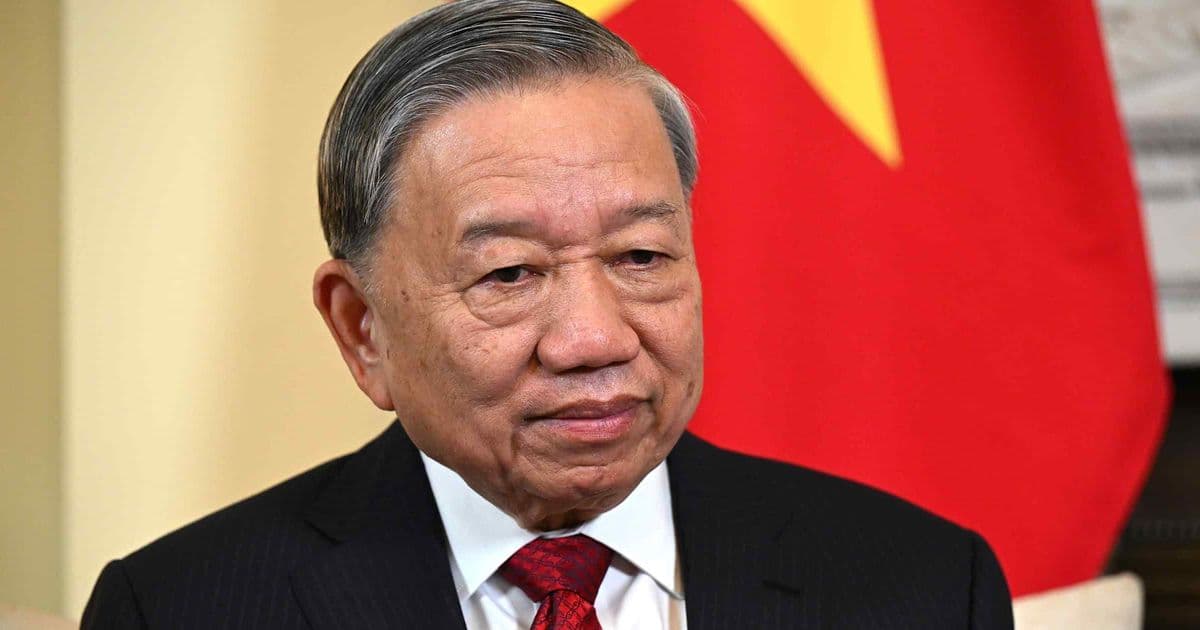
Vietnamese President To Lam's first state visit to China comes amid warming economic ties but persistent South China Sea disputes, while India faces economic fallout from the Iran conflict and China hosts its major trade fair.
Vietnamese President To Lam's first state visit to China marks a significant diplomatic moment as two of the world's remaining communist party leaders meet amid complex regional dynamics. The visit, scheduled for this week, comes as Vietnam and China navigate warming economic cooperation while maintaining their territorial disputes in the South China Sea.
Vietnam-China Relations at a Crossroads
To Lam, who holds the rare distinction of leading both Vietnam's Communist Party and serving as president, travels to Beijing on the invitation of Chinese President Xi Jinping. This dual leadership role mirrors Xi's own position as both Chinese president and Communist Party general secretary, creating an unusual parallel between the two nations' power structures.
The timing is particularly noteworthy as Vietnam-China relations have been steadily warming in recent years, with increased business cooperation and trade ties. However, the South China Sea dispute remains a persistent thorn in bilateral relations, with both nations maintaining competing claims over strategic waterways and resources.
India's Economic Vulnerability Exposed
While regional diplomacy takes center stage, India faces significant economic challenges stemming from the ongoing Iran conflict. The nation, as the world's third-largest importer of crude oil, finds itself extremely sensitive to energy price fluctuations triggered by Middle East tensions.
Recent data shows India's February inflation rate at 3.2%, still within the central bank's tolerance band of 2% to 6%. However, the conflict's impact on energy prices and various industrial inputs raises questions about whether this low inflation rate will begin to tick upward. The central bank's decision to hold its key policy rate steady reflects these complex economic calculations.
The trade impact extends beyond energy prices. India's March consumer inflation data and trade balance figures, set to be released this week, will provide crucial insights into how the conflict affects both domestic prices and international trade flows, particularly shipments to Middle Eastern markets.
China's Canton Fair Opens Amid Global Uncertainty
As diplomatic meetings unfold, China opens its largest trade show, the Canton Fair, in Guangzhou. Running until early May, this spring's expo comes at a particularly challenging time as companies worldwide grapple with supply chain disruptions caused by the Iran war.
The fair showcases everything from vehicles and electronics to furniture and toys, serving as a barometer for global trade sentiment. The timing is critical as businesses reassess their supply chain strategies in light of geopolitical tensions and trade uncertainties.
Tech Industry Under Pressure
Taiwan Semiconductor Manufacturing Company (TSMC) announces first-quarter earnings Thursday, with analysts closely watching for updates on capital expenditure plans and AI demand outlook. As the world's largest contract chipmaker, TSMC has been a major beneficiary of the artificial intelligence boom, logging record annual profits for 2025.
However, the Middle East conflict poses new challenges for the tech industry. Investors will be particularly interested in how TSMC and other semiconductor companies anticipate and plan for potential disruptions to their operations and supply chains.
Regional Banking Sector Faces Scrutiny
Indian banking heavyweights HDFC and ICICI report earnings Saturday as the sector recovers from recent controversies. The unexpected resignation of HDFC Bank Chairman Atanu Chakraborty triggered billions in market capitalization losses, while fraud at an IDFC First Bank branch jolted the industry.
The Reserve Bank of India has been forced to provide assurances that the banking system faces no systemic risks, highlighting the delicate balance between maintaining investor confidence and addressing genuine concerns about governance and risk management in the financial sector.
Broader Economic Implications
The week's events underscore the interconnected nature of regional economies and the cascading effects of geopolitical tensions. From diplomatic meetings to trade fairs, from central bank decisions to corporate earnings, each element reflects the broader challenges facing Asian economies in an increasingly complex global environment.
The Iran conflict serves as a stark reminder of how regional instability can have far-reaching economic consequences, affecting everything from energy prices to trade flows to corporate earnings. As countries like India and Vietnam navigate these challenges, their responses will likely shape regional economic patterns for months to come.
Looking Ahead
The convergence of diplomatic, economic, and corporate events this week provides a comprehensive snapshot of Asia's current state. Vietnam's diplomatic outreach to China, India's economic vulnerability, China's trade showcase, and the tech industry's earnings season all point to a region in transition, adapting to new geopolitical realities while seeking to maintain economic growth and stability.
As these events unfold, the business community will be watching closely for signals about regional cooperation, economic resilience, and the ability of Asian economies to weather global storms. The outcomes could have lasting implications for trade patterns, investment flows, and regional power dynamics in the months and years ahead.
Comments
Please log in or register to join the discussion