
For years, tech enthusiasts predicted 3D printing would decimate Games Workshop's Warhammer empire by enabling cheap miniatures. Instead, the hobby thrives, exposing a critical flaw in tech forecasting: misunderstanding the irrational, time-intensive human rituals that define a hobby. This is a case study in why spreadsheets can't capture passion.
Tech predictions often crash against the rocks of reality. Remember VR replacing reality by 2018? Self-driving cars filling driveways "within five years"? The pattern repeats: technologists confidently declare disruption based on perceived inefficiencies, while fundamentally misunderstanding the humans involved. Few failures illustrate this gap more vividly than the persistent prediction that 3D printing would dismantle Games Workshop's Warhammer 40,000 empire.
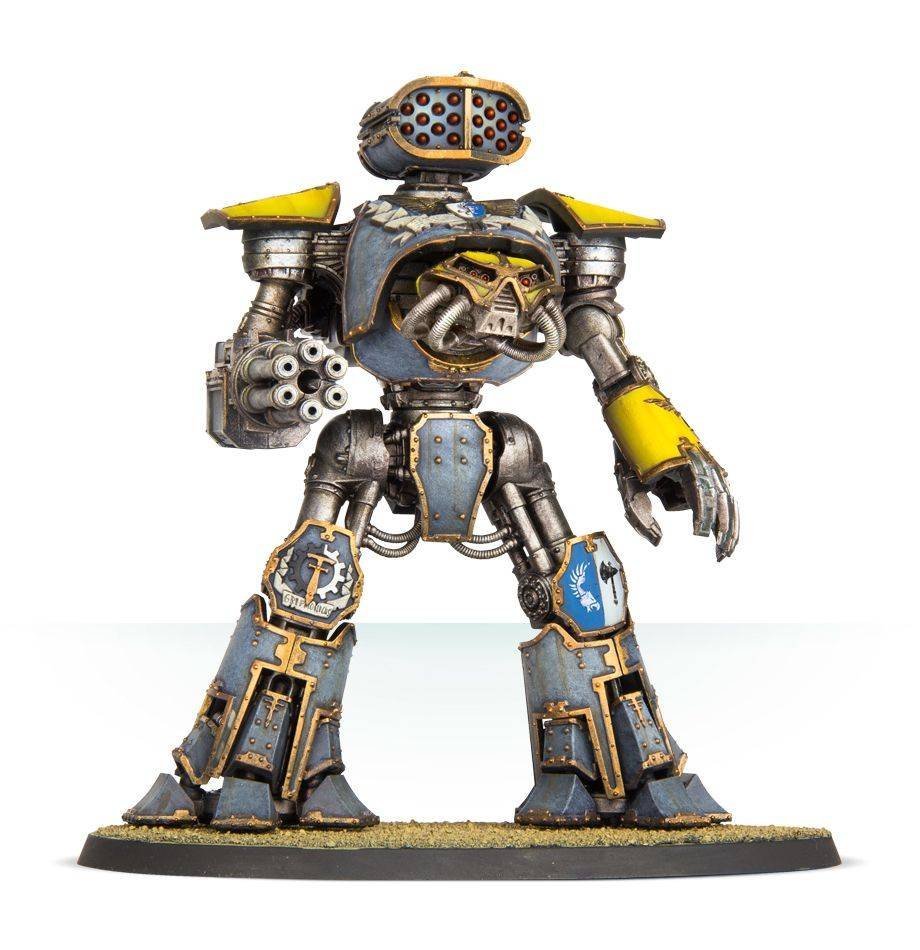
Warhammer 40k is a behemoth of tabletop wargaming. Players invest heavily – often exceeding $1,000 – assembling armies of meticulously painted miniature figures. They spend countless hours trimming plastic, applying primer, painting intricate details, and mastering rulebooks denser than some legal codes. They gather in game shop basements, arguing over millimeters and dice rolls, immersed in a shared universe of grimdark lore. 
"Games Workshop is doing fine. Games Workshop will be selling overpriced plastic crack to emotionally vulnerable adults long after the sun has consumed the Earth." - Mat Duggan
To tech optimists, this screamed inefficiency. Miniatures were expensive! Supply was sometimes scarce! Surely, affordable 3D printers enabling home production would democratize the hobby and cripple Games Workshop? When resin printers arrived, producing smoother, more detailed figures, the hype peaked. Enthusiasts envisioned game shops transforming into print farms; players effortlessly churning out any model they desired.
The reality proved starkly different. Printing miniatures wasn't plug-and-play:
- Operational Burden: Resin printers demand serious safety measures – ventilation, gloves, hazardous chemicals, UV curing stations. It resembles a small-scale chemical lab, not a convenient appliance.
- Time Sink: Printing even a single infantry model takes hours. Post-processing involves washing in isopropyl alcohol, removing supports (often snapping delicate parts), and curing. This adds significant active effort before painting even begins.
- Skill & Quality Hurdles: Finding reliable STL files, mastering slicing software, and troubleshooting failed prints requires dedication. While quality improved, achieving near-Games Workshop fidelity consistently remained challenging.
Tech predictors saw eliminating the plastic cost and scarcity as the win. They fundamentally misunderstood the Warhammer hobby's core drivers:
- The Bottleneck Isn't Plastic, It's Time: "Frankly, the money I pay to Games Workshop is the easiest part of the entire process," the source notes. Painting a standard army consumes roughly 150+ hours – a massive investment for adults with jobs and families. 3D printing added complexity upfront without alleviating this time sink. Unpainted plastic, official or printed, still piles up in the infamous "pile of shame."
- Community & Ritual: The hobby thrives on shared experience – painting nights, rule debates, the atmosphere of the game store basement.
 3D printing is a solitary, technical pursuit preceding the social ritual.
 - Legitimacy & Value Perception: For serious painters investing 10+ hours per model, official miniatures carry legitimacy. "Nobody wants to see a 3D-printed forgery... It's like showing up to a car show with a kit car that looks like a Ferrari... it's uncomfortable for everyone." Shops won't display printed proxies.
- Game Shop Economics: Local game stores survive on impulse buys (boosted by visible inventory) and card game revenue (Magic, Pokémon). Wargamers are a passionate niche, not the primary profit center. On-demand printing setups are impractical for their thin-margin business model.
The parallel to the perennial "Year of the Linux Desktop" is apt. Both represent technologists projecting their values (efficiency, customization, cost-saving) onto users who prioritize different things – convenience, ecosystem, or, in Warhammer's case, the deeply ingrained rituals and community validation.
"They looked at the price of miniatures and saw inefficiency. They looked at the scarcity and saw opportunity. What they didn't see was that the price and the scarcity were almost beside the point," the analysis concludes. "The hobby is about what you do with the plastic after you acquire it... The hobby is about descending into a basement lit by three naked bulbs and finding your people. You can't 3D print that."
This story transcends miniatures. It's a stark reminder for developers and tech leaders: Disruption predictions fail when they ignore the irrational, human elements – the time invested, the community formed, the sense of legitimacy, and the sheer passion – that define why people engage with a product or hobby. Before declaring a technology disruptive, ask: does it truly understand the why behind the user's journey, or is it just optimizing a metric on a spreadsheet? History suggests the latter approach leads straight into that glass door.
Source: The Year of the 3D Printed Miniature (And Other Lies We Tell Ourselves) by Mat Duggan
Comments
Please log in or register to join the discussion