
Amidst democratic strain, local journalism provides irreplaceable community accountability and civic orientation that national media cannot replicate.
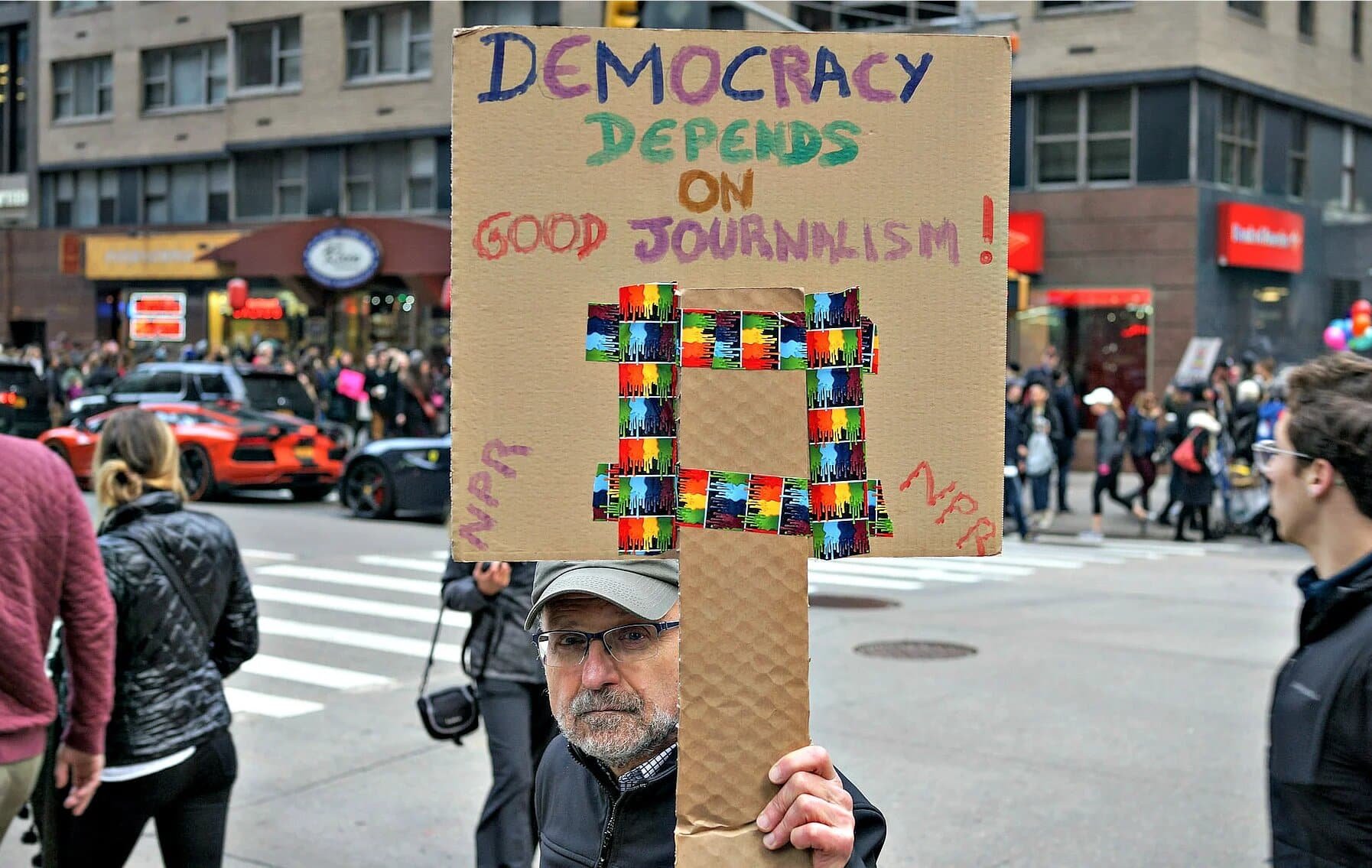
Democracy's most vital functions unfold not in grand legislative halls but in the everyday spaces where communities govern themselves—school board meetings, zoning hearings, municipal budget sessions, and local courtrooms. As Stu Faigen argues in a recent Bucks County Beacon opinion piece, when local journalism atrophies, citizens lose more than information; they lose the connective tissue that makes democratic participation meaningful.
The erosion occurs subtly. Without journalists attending routine meetings, reviewing public records, and tracking policy consequences over time, civic processes become opaque. Power doesn't vanish—it simply operates without scrutiny. Faigen observes this creates a dangerous disorientation: 'People don't just lose information—they lose orientation. It becomes harder to tell where influence actually lives.' What appears as apathy is often resignation, bred from the perception that engagement yields no tangible results.
National media cannot fill this void. While crucial for broader narratives, it operates at a scale disconnected from the granular realities of community governance. Local journalism's unique value lies in its proximity—it documents how policies manifest in daily life and connects decisions to specific officials and neighborhoods. When the Bucks County Beacon reports on education funding or development plans, it creates what Faigen calls 'legibility': showing citizens not just what happened, but why it matters locally.
The consequences extend beyond information gaps. As local newsrooms shrink—over 2,000 newspapers have closed since 2005 in the U.S.—communities see increased polarization, lower voter turnout, and heightened corruption risks. Studies confirm that areas lacking local coverage experience reduced civic engagement precisely because residents lose the contextual understanding needed to participate effectively.
Faigen reframes support for local journalism not as charity but as civic infrastructure investment: 'Subscribing, donating, and sharing credible reporting are practical ways citizens invest in the health of their communities.' This perspective shifts the responsibility from journalists alone to collective civic action. Publications like the Bucks County Beacon exemplify this through transparent sourcing, avoidance of sensationalism, and commitment to documenting local power structures—work that counters the outrage-driven cycles dominating broader media.
Engagement extends beyond financial support. Citizens strengthen local journalism by providing context, sharing lived experiences, and participating in nuanced dialogue. These actions foster what Dr. Anita Varma terms 'solidarity journalism'—coverage that emphasizes shared community interests over conflict.
As Faigen concludes, defending local journalism represents a profoundly practical form of democratic preservation. In an era of fragmented attention and institutional distrust, it maintains the essential feedback loop between citizens and power. The survival of outlets like the Bucks County Beacon hinges on recognizing that democracy, at its core, is built not on abstract ideals but on visible, accountable governance within walking distance of home.
For further reading: Explore the Bucks County Beacon's coverage or revisit Dr. Anita Varma's research on Solidarity Journalism.
Comments
Please log in or register to join the discussion