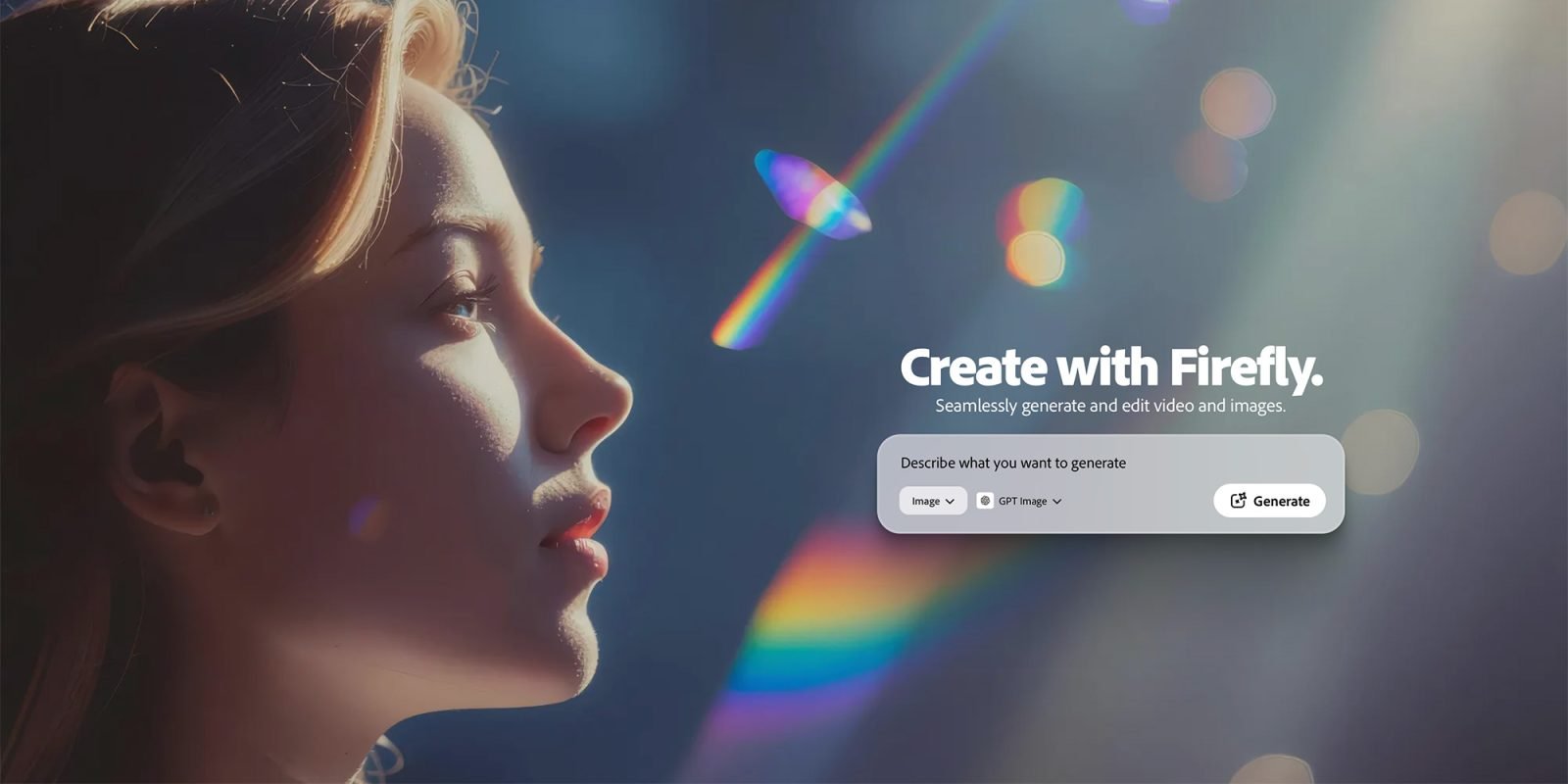
Adobe is integrating OpenAI's latest image model into Firefly, giving subscribers unlimited access to GPT-Image 1.5 through January 15 as part of a broader expansion of its multi-model AI platform.
Adobe has quietly become the Switzerland of generative AI platforms. While competitors like Midjourney and DALL-E operate as standalone services, Firefly's strategy is aggregation—embedding models from OpenAI, Runway, Black Forest Labs, Pika, Ideogram, and Google alongside Adobe's own in-house models across Creative Cloud apps. The latest addition is OpenAI's GPT-Image 1.5, which became available in Firefly this week.
To mark the integration, Adobe is offering Firefly Pro and Premium subscribers unlimited image generation using GPT-Image 1.5 through January 15. Normally, all Firefly generations consume monthly generative credits based on your subscription tier. The timing aligns with OpenAI's release of GPT-Image 1.5 late last year, which brought notable improvements in photorealism, text rendering, and prompt adherence compared to earlier versions.
How Firefly's credit system works
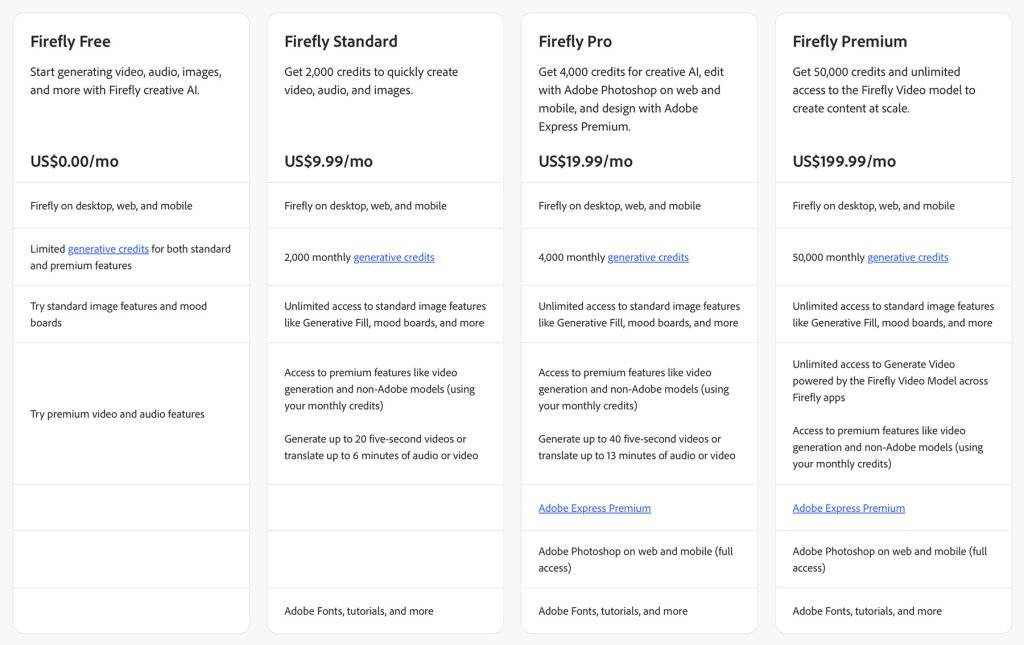
Adobe's approach to AI monetization is fundamentally different from subscription-only services. Firefly operates on a credit-based model where each generation consumes tokens, regardless of which underlying model you use. This creates a clear cost structure but also forces users to budget their AI usage across different tools.
The Free tier offers limited credits, while paid plans scale significantly:
- Standard ($9.99/month): 2,000 monthly generative credits
- Pro ($19.99/month): 4,000 monthly generative credits
- Premium ($199.99/month): 50,000 monthly generative credits
Adobe defines generative credits as "tokens you can use to generate high-quality image, vector, video, and audio outputs" across most Creative Cloud products. When you generate an image using Text to Image on the Firefly website or use AI-powered features in Photoshop, Illustrator, or Express, credits are consumed based on the complexity of the generation and the model used.
This model has both advantages and trade-offs. On one hand, it provides flexibility—you're not locked into a single AI model. If GPT-Image 1.5 doesn't produce the right style for a particular project, you can switch to Google's Imagen, Ideogram's text rendering, or Adobe's own Firefly models without leaving your workflow. On the other hand, credit consumption can add up quickly, especially for professional users generating hundreds of variations.
The multi-model strategy
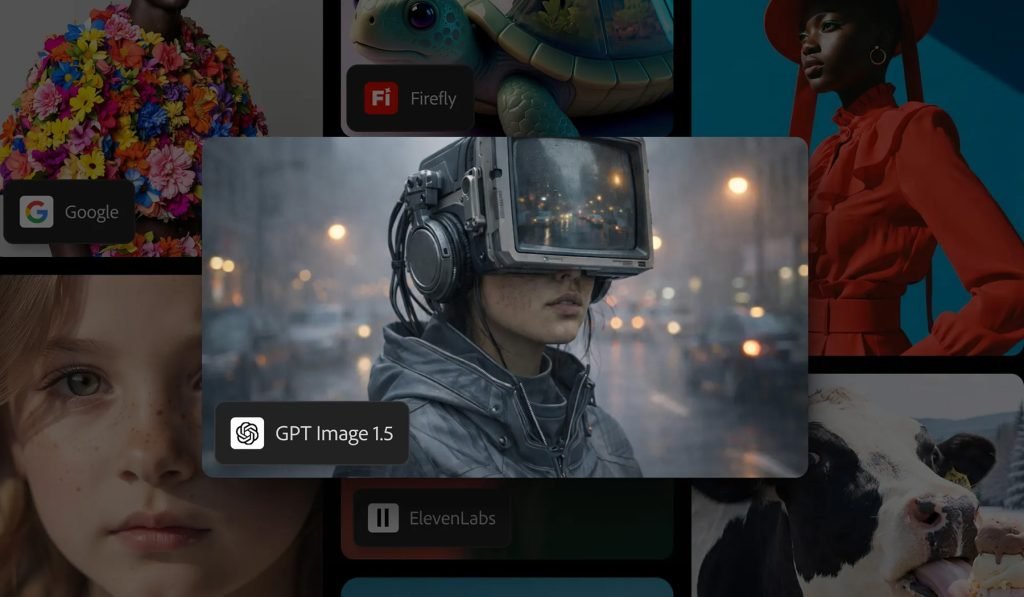
Adobe's integration of GPT-Image 1.5 fits into a broader pattern of ecosystem expansion that has accelerated over the past few months. The company recently brought Photoshop, Express, and Acrobat tools to ChatGPT, signed a multi-year partnership with Runway for video AI, and added new AI-powered video editing capabilities to Firefly itself.
This approach addresses a key weakness in Adobe's position. While Firefly's own models have improved, they still lag behind specialized leaders in certain areas. OpenAI's GPT-Image 1.5 excels at understanding complex prompts and generating coherent scenes. Runway leads in video generation. Ideogram handles text in images better than most competitors. By integrating these models rather than trying to beat them all, Adobe keeps Creative Cloud users in its orbit even as specialized AI tools proliferate.
For users, this means access to best-in-class models without managing multiple subscriptions or switching between platforms. A designer can generate a base image with GPT-Image 1.5, refine it in Photoshop using Firefly's Generative Fill, and then add video elements using Runway's models—all within Adobe's ecosystem.
What GPT-Image 1.5 brings to Firefly
OpenAI's latest image model represents a meaningful step forward from DALL-E 3. The 1.5 version improved particularly in three areas:
Photorealism: Human subjects, especially faces and hands, show fewer artifacts. Lighting and materials appear more natural, making it suitable for product mockups and marketing materials.
Text rendering: GPT-Image 1.5 can generate legible text within images, a notoriously difficult problem for diffusion models. This opens up use cases like creating signs, posters, or branded graphics where text needs to be accurate.
Prompt adherence: The model better understands complex, multi-part prompts. If you ask for "a red sports car parked in front of a modern glass building at sunset with long shadows," it's more likely to get all the elements right in their proper relationships.
These improvements matter for professional workflows. Previous models often required extensive post-processing to fix text errors, unnatural poses, or missing elements. GPT-Image 1.5 reduces that iteration time, though it still isn't perfect.

Credit consumption and the unlimited window
During the promotional period through January 15, Pro and Premium subscribers can generate unlimited images with GPT-Image 1.5 without dipping into their regular credit allocations. This is a smart way to encourage experimentation with the new model. Once the promotion ends, each GPT-Image 1.5 generation will consume credits like any other Firefly model.
For professional users, this window is an opportunity to stress-test the model on real projects. Generate your backlog of marketing graphics, social media posts, or concept art without worrying about credit depletion. For casual users, it's a chance to explore whether the improvements justify upgrading from the Free or Standard tiers.
The unlimited access also highlights an interesting tension in Adobe's business model. Credits create a predictable revenue stream and prevent runaway AI costs, but they also create friction. Users must think about whether a particular generation is "worth" the credits. During promotions like this, that friction disappears, revealing what a truly open AI workflow feels like.
Integration across Creative Cloud
Because Firefly is embedded directly in Adobe's core apps, GPT-Image 1.5 isn't just available on the Firefly website. It's accessible through:
- Photoshop: Generate images or expand canvases using the Firefly-powered Generative Fill and Expand tools
- Illustrator: Create vector graphics and illustrations with text-to-image prompts
- Adobe Express: Quick social media graphics, posters, and marketing materials
- InDesign: Generate images for layouts without leaving the publishing workflow
- Lightroom: Enhance photos with AI-powered editing
- Substance 3D: Generate textures and materials for 3D models
This integration is Firefly's main advantage over standalone AI tools. You don't need to export images from one app and import them into another. The AI generation happens contextually within your existing workflow.
The bigger picture
Adobe's multi-model approach reflects a maturing understanding of the generative AI landscape. Rather than betting everything on their own models, they're becoming the platform that orchestrates the best AI tools available. For users, this means staying current with AI advances without constantly retraining on new platforms.
The GPT-Image 1.5 integration is available now for Firefly Pro and Premium subscribers. The unlimited generation promotion runs through January 15, 2026. After that, all generations will consume credits according to your subscription tier.
Learn more about Adobe Firefly and its model integrations on Adobe's official site.
Comments
Please log in or register to join the discussion