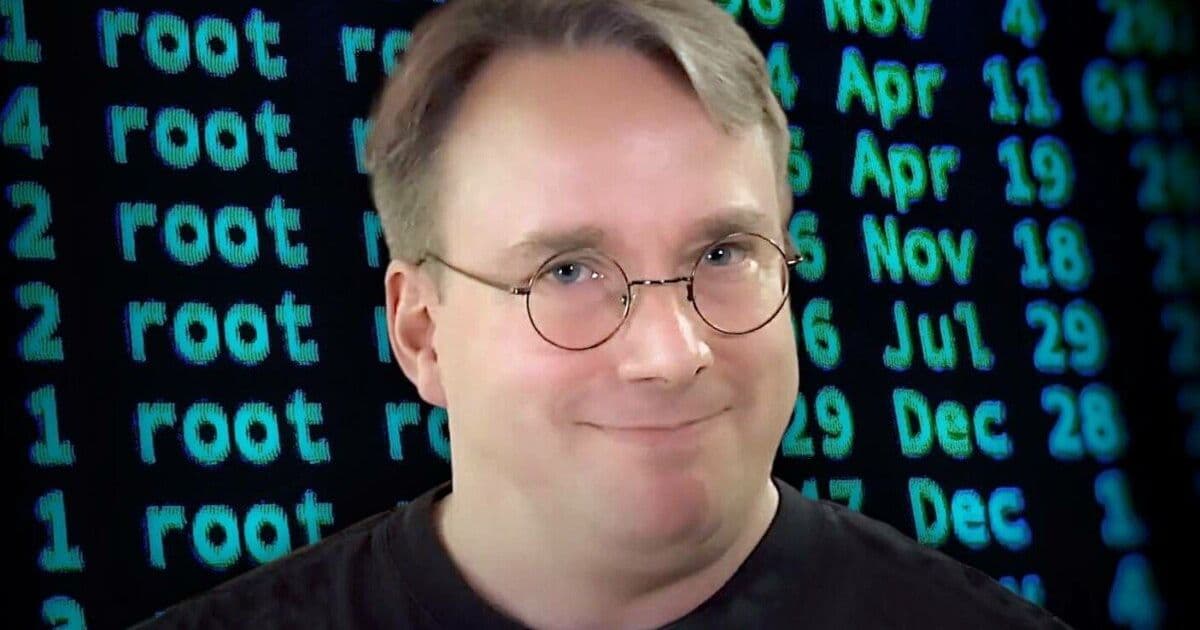
Linus Torvalds has declared the Linux security mailing list 'almost entirely unmanageable' due to duplicate AI-generated bug reports, calling for more responsible use of AI tools in software development.
Linux kernel creator Linus Torvalds has issued a stark warning about the impact of AI-powered bug hunting on the open source project's security processes, declaring the security mailing list has become 'almost entirely unmanageable' due to duplicate reports generated by similar AI tools.
In his weekly state of the kernel announcement for Linux 7.1 release candidate four, Torvalds pointed developers to updated documentation addressing the 'continued flood of AI reports' that has created 'enormous duplication due to different people finding the same things with the same tools.'
The Linux kernel, which powers everything from Android devices to supercomputers and critical infrastructure, relies on a coordinated security response process. The security mailing list serves as a crucial coordination point for identifying and addressing vulnerabilities before they can be exploited.
'The problem is that multiple researchers are using the same AI tools to find the same bugs, then reporting them independently,' explained Torvalds. 'People spend all their time just forwarding things to the right people or saying "that was already fixed a week/month ago" and pointing to the public discussion.'
This creates what Torvalds describes as 'entirely pointless churn' that wastes valuable developer time. He notes that AI-detected bugs are 'pretty much by definition not secret,' making private discussions counterproductive since reporters can't see each other's work.
The implications extend beyond mere inconvenience. When security researchers waste time on duplicate reports, the time they could spend finding genuinely novel vulnerabilities decreases. This could potentially leave critical security issues undiscovered while the community deals with AI-generated noise.
Torvalds didn't call for banning AI tools outright but rather urged more responsible usage. 'AI tools are great, but only if they actually help, rather than cause unnecessary pain and pointless make-believe work,' he wrote.
His specific recommendations include:
- Reading existing documentation before reporting bugs
- Creating patches alongside bug reports
- Adding real value beyond what AI already provides
- Avoiding 'drive-by reports with no real understanding'
These suggestions reflect a growing need for establishing best practices as AI becomes more prevalent in software development workflows.
Torvalds' remarks stand in contrast to comments from fellow kernel maintainer Greg Kroah-Hartman, who recently described AI as an 'increasingly useful tool for the FOSS community.' This divergence highlights the ongoing debate about AI's role in open source development.
The Linux kernel's response to this challenge could set a precedent for other open source projects grappling with similar issues as AI tools become more sophisticated and widely adopted. The community will need to balance the efficiency gains from AI-assisted bug hunting with the need for coherent, non-duplicative security processes.
For now, Torvalds has made his position clear: either add value beyond what AI can do, or refrain from contributing to the noise. As the Linux kernel continues to evolve, finding the right balance between human expertise and AI assistance will be crucial to maintaining both security and development velocity.
Comments
Please log in or register to join the discussion