Thorsten Ball's latest tech digest explores the delicate balance between AI-assisted coding and manual craftsmanship, critiques the proliferation of JavaScript runtimes, and examines terminal tool controversies - revealing critical insights for modern developers navigating an evolving toolchain.
The AI Coding Tightrope: Knowing When to Trust the Machine
Developers are increasingly navigating a complex dance between AI-generated code and manual craftsmanship. Thorsten Ball's observations about his workflow with AI tool Amp reveal a critical insight: The true skill isn't in using AI, but in knowing when to use it. As Ball notes, some days see 80% AI-generated code, while others require 90% manual implementation. This mirrors the perspective from a Claude Code experiment comparing this era to photography's disruptive emergence: "Painting by hand just doesn't have the same appeal anymore when a single concept can just appear and you shape it into the thing you want."
Armin Ronacher's warnings about "Agentic Coding Things That Didn't Work" serve as crucial counterbalance. The temptation to treat LLMs as deterministic systems leads to fundamental flaws. Ball emphasizes: "Do not pretend the model isn't an unreliable narrator." This aligns with Geoffrey Litt's call for AI HUDs over copilots - transparent interfaces that show system state without promising magic.
JavaScript's Runtime Overload
A startling survey of The many JavaScript runtimes reveals an ecosystem approaching saturation. Beyond Node.js and Deno, the list includes lesser-known contenders like Bun, WinterJS, and LLRT. This fragmentation reflects JavaScript's relentless expansion beyond browsers but raises critical questions: At what point does choice become fragmentation? The runtime explosion creates compatibility challenges and learning overhead, forcing developers to constantly evaluate new contenders against established options.
Terminal Wars: tmux Alternatives and Apple's Wounded Hippopotamus
The terminal ecosystem simmers with controversy. Ball's abandonment of tmux after years of use spotlights shifting priorities: "Ghostty is faster without it, looks better without it." This shift toward integrated terminal solutions challenges traditional workflows. Meanwhile, a blistering code comment about Apple Terminal surfaces industry frustration, describing it as:
"a wretched piece of shit that can't handle even the most basic of queries, instead bleeding them through to stdout like a great wounded hippopotamus"
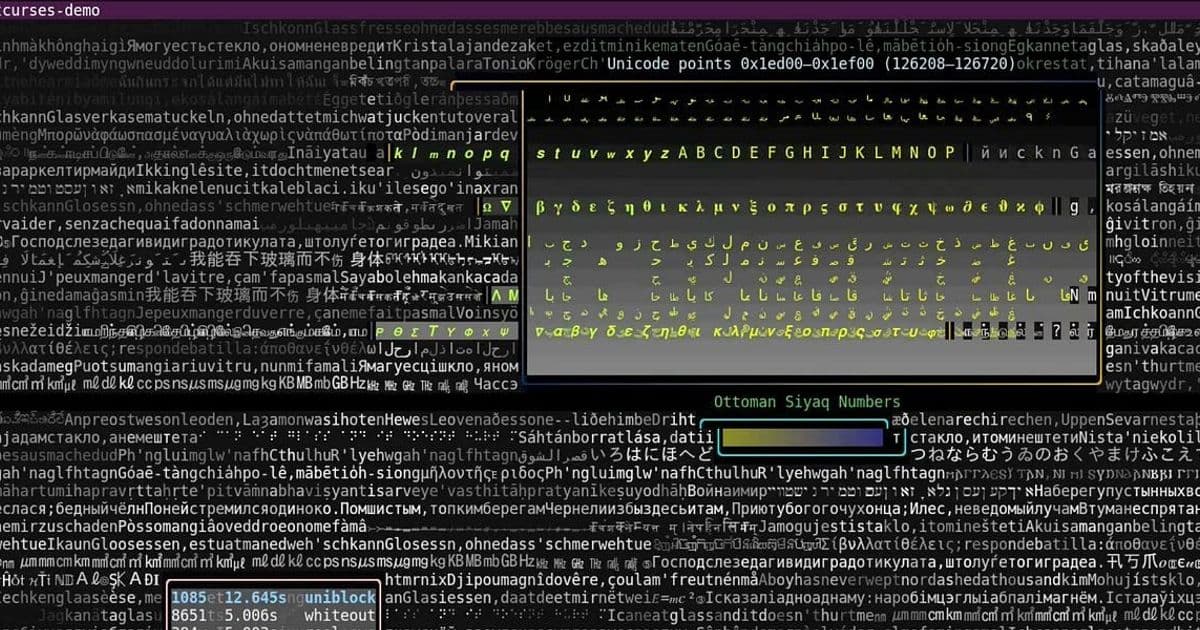
This colorful critique underscores the tension between aesthetic refinement and core functionality in developer tools. Contrast this with projects like notcurses - terminal libraries pushing boundaries of what's possible in CLI interfaces, embodying Paul Valéry's observation that "profound changes are impending in the ancient craft of the Beautiful."
The New Age of Self-Ware
Ball's closing insight captures a paradigm shift: "We are in the age of self-ware. Small throwaway utility software for an audience of one." This trend toward hyper-personalized tooling reflects developers' growing ability to rapidly craft solutions for niche problems. Combined with AI-assisted workflows and specialized runtimes, it points toward increasingly individualized development ecosystems where shared standards compete with personalized productivity enhancers.
Source: Insights curated from Thorsten Ball's Joy & Curiosity #48 newsletter.
Comments
Please log in or register to join the discussion