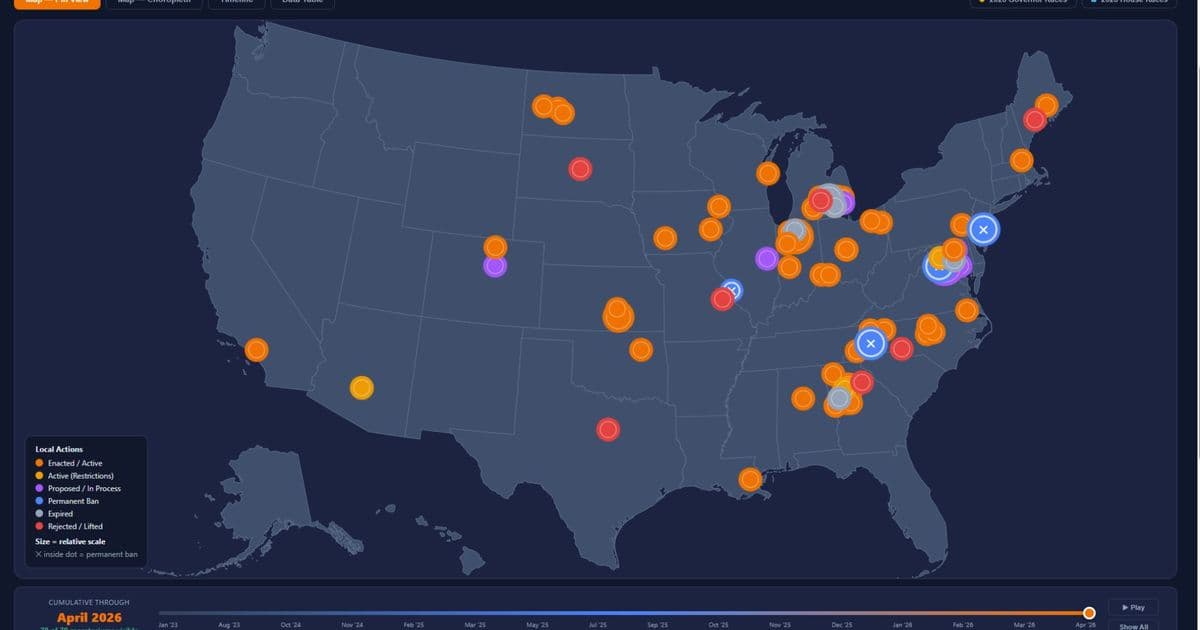
The US is experiencing a rapid proliferation of data center moratoriums, with 69 jurisdictions now blocking new builds amid concerns over resource shortages, electricity costs, and environmental impacts that threaten the expansion plans of AI hyperscalers.
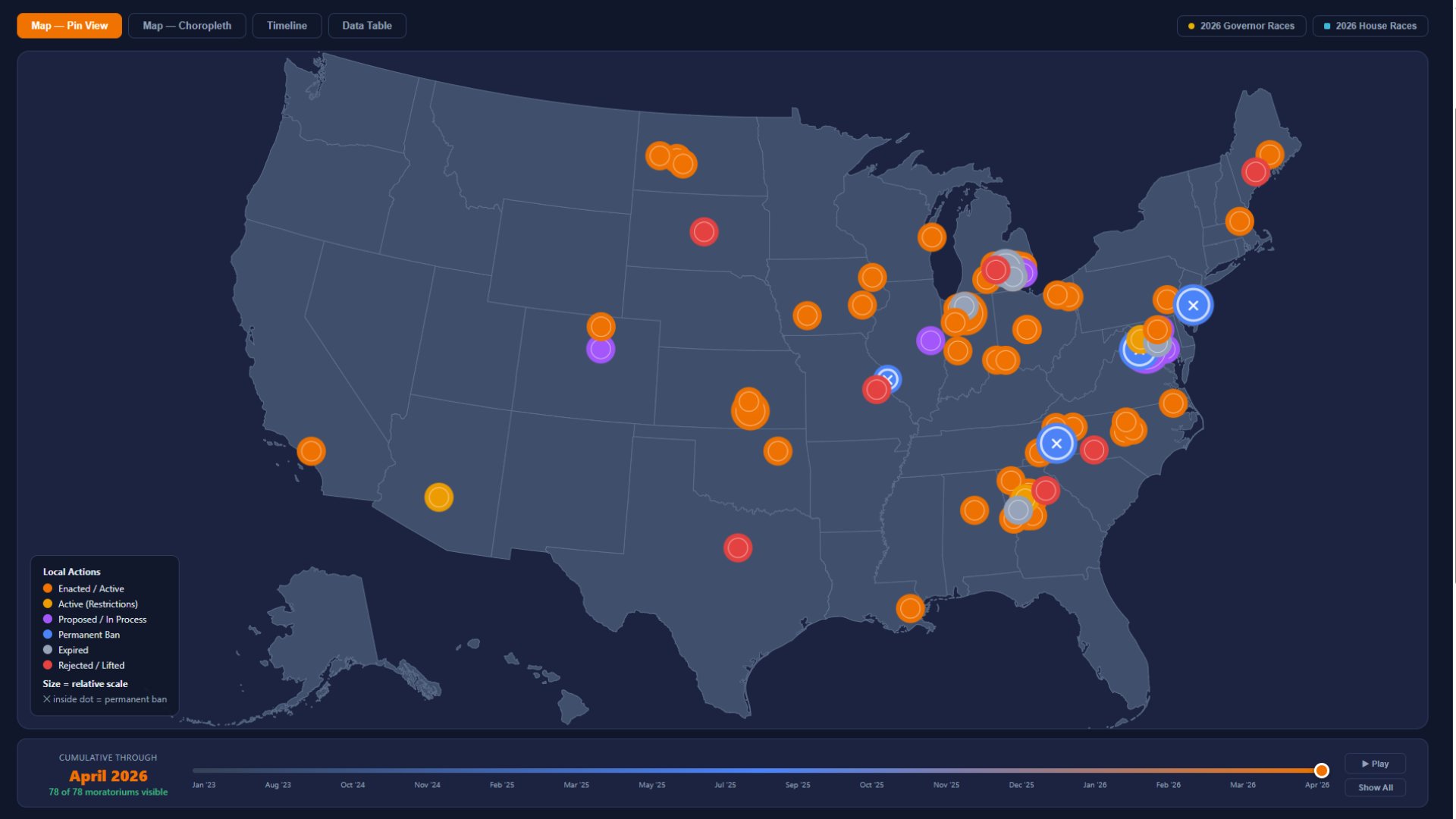
The number of jurisdictions enacting bans against new data centers is accelerating across the United States, creating significant challenges for AI companies racing to build infrastructure. According to the US Data Center Moratorium Tracker, 14 new bans were implemented between March and April alone, bringing the total to 69 active restrictions across different jurisdictions. Four local governments have now enacted permanent bans in their areas, with three additional proposed bans currently in various stages of consideration.
The surge in restrictions represents a dramatic shift from just one year ago, when only eight moratoriums were recorded as of May 2025. This exponential growth reflects mounting concerns about the rapid expansion of AI data centers and their impact on local communities and resources.
Resource Pressures Drive Regulatory Response
The primary catalyst for these restrictions stems from tangible resource shortages resulting from unbridled data center construction. The semiconductor industry is currently experiencing a massive memory and storage chip shortage, with CPU shortages potentially emerging as AI inference workloads continue to increase. Data centers represent some of the most intensive consumers of these components, with each hyperscale facility requiring millions of chips for operation.
Beyond semiconductor constraints, the construction boom is straining local infrastructure. Wholesale electricity prices have skyrocketed by up to 267% in the past five years as utility providers are forced to upgrade infrastructure to handle the increased demand from data centers. Critically, these upgrade costs are being passed on equally to both data centers and average consumers, resulting in higher utility bills across communities hosting these facilities.
Political Response and Community Backlash
The electricity cost concerns have prompted political intervention at the highest levels. President Donald Trump recently met with major AI technology companies at the White House, securing a "ratepayer protection pledge" that compels them to "pay their own way" regarding infrastructure costs. This theoretically reduces the financial burden on average American consumers but does little to address underlying resource constraints.
Community resistance has become increasingly vocal and, in some cases, violent. Nearly half of all Americans express opposition to having data centers near their homes, with debates around AI infrastructure becoming particularly heated. One notable incident involved an Indiana politician's home being shot at by an unknown assailant who left a "NO DATA CENTERS" note at the residence. Additionally, town council members who approved these projects have faced ousting or resignation as community members revolt against perceived threats to their lifestyles and environments.
Market Implications for AI Expansion
The proliferation of moratoriums creates significant obstacles for AI hyperscalers already grappling with delays caused by hardware shortages and power infrastructure constraints. With investors committing billions, if not trillions, of dollars to AI infrastructure development, these regulatory delays could spook investors and potentially dry up funding that many AI startups rely on for growth.
The situation creates a complex market dynamic where the demand for AI infrastructure continues to grow at an exponential rate, while the supply of suitable locations with adequate resources and community acceptance becomes increasingly constrained. This imbalance threatens to slow the deployment of next-generation AI capabilities, potentially creating bottlenecks in the broader AI development timeline.
Regional Disparities in Regulatory Approaches
The moratoriums are not uniformly distributed across the country but are concentrated in smaller jurisdictions where residents feel more directly impacted by data center development. These local governments, often with less regulatory experience than their state-level counterparts, are enacting bans with little precedent or comprehensive planning for alternative approaches to managing data center growth.
The situation highlights a growing tension between national AI development goals and local community interests, with no clear resolution in sight. As the technology continues to evolve and resource constraints become more acute, the regulatory landscape will likely continue to shift, creating both challenges and opportunities for companies navigating the complex intersection of AI development, community relations, and resource management.
Comments
Please log in or register to join the discussion