
Generative AI promises to revolutionize programming, but it falls short in high-stakes areas like security, innovation, and proprietary systems. This deep dive reveals why human oversight is non-negotiable for avoiding vulnerabilities, legal risks, and eroded competitive advantages in software development.
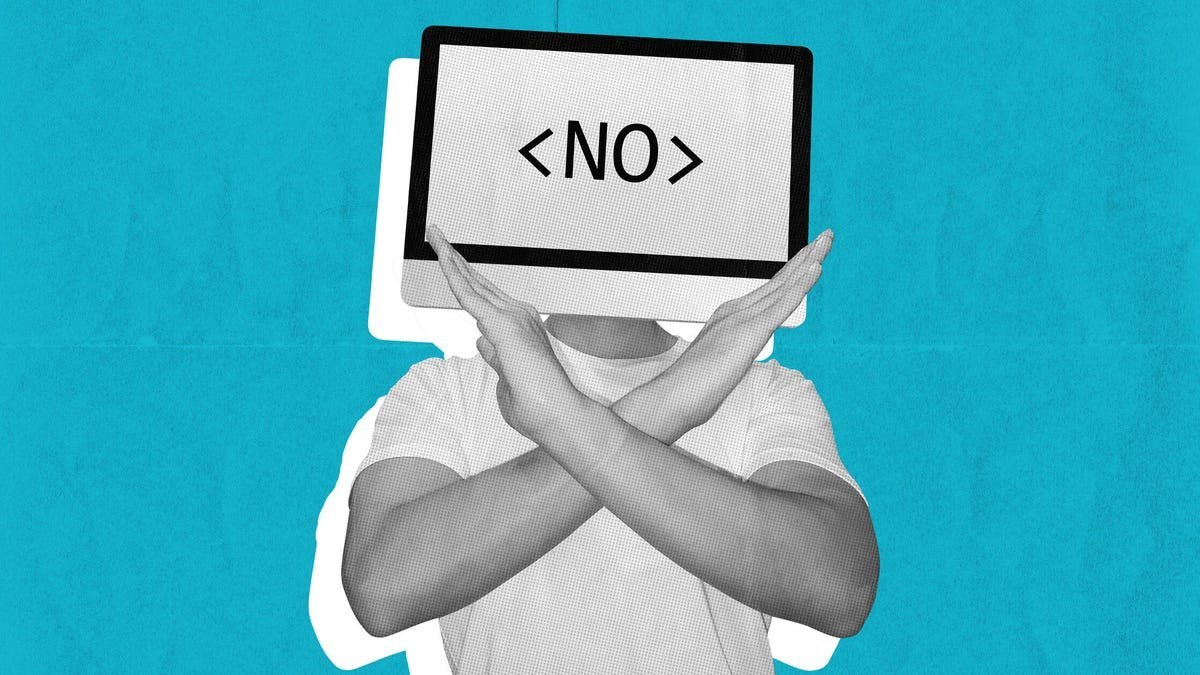
As AI coding assistants like ChatGPT surge in popularity, a dangerous narrative has taken hold: that developers can offload their work to algorithms and reap effortless rewards. Yet, this overlooks AI's fundamental limitations—it’s essentially "super-smart auto-complete," as David Gewirtz, Senior Contributing Editor at ZDNet, puts it. Based on extensive analysis, here are nine scenarios where relying on AI isn't just risky; it could sabotage your projects, security, and career.
1. Complex Systems and High-Level Design
AI lacks contextual intelligence for architecting intricate systems. It might generate syntactically correct code, but it can't grasp trade-offs, business goals, or unique constraints. When designing distributed architectures or microservices, human experience is irreplaceable for making judgment calls that align with long-term scalability.
2. Proprietary Codebases and Migrations
Trained on public repositories, AI struggles with internal logic. Gewirtz warns: "Don't delegate your unique value add to a brainy mimeograph machine." Migrating legacy systems? AI might inject plausible but dysfunctional code, turning what should be an upgrade into a debugging nightmare.
3. Innovative Algorithm Development
For groundbreaking work—like novel machine learning models or game mechanics—AI is a creativity void. It excels at repackaging existing patterns but can't make intellectual leaps. True innovation requires human intuition to explore uncharted paths and secure competitive edges.
4. Security-Critical Programming

A Georgetown University study found nearly half of AI-generated code contains exploitable bugs. Gewirtz’s own tests show only 5 of 14 top LLMs passed basic coding challenges. For cryptography, authentication, or patching zero-days, AI’s hallucinations pose unacceptable risks. As Gewirtz starkly advises: "Don't trust an AI with anything really important."
5. Legally Compliant Code
In regulated industries like healthcare (HIPAA) or finance, AI’s opacity is a liability. Cloud-based LLMs may inadvertently expose sensitive data, and hallucinations could violate compliance. Human legal oversight is essential to navigate this minefield and avoid costly litigation.
6. Domain-Specific Business Logic
AI can’t replicate your company’s internal knowledge—trade secrets, workflows, or cultural nuances. Offloading this risks generating fabricated solutions that ignore operational realities. Gewirtz compares it to a new hire struggling to "grok" your business: AI will fail silently, producing garbage code.
7. Low-Level Optimization
Performance tuning for embedded systems or kernel development demands microarchitectural expertise AI lacks. It might suggest "optimizations" that actually degrade performance, and its confabulations obscure critical flaws. Only seasoned engineers can deliver the fine craftsmanship needed here.
8. Educational Assignments
While AI can aid learning (e.g., Harvard’s CS50 duck tool), over-reliance cheats students of foundational skills. Gewirtz notes it’s a "middle ground": useful for support but detrimental if it replaces hands-on problem-solving that cements knowledge.
9. Collaborative Problem-Solving
AI can mimic collaboration in Slack-like exchanges, but it can’t replicate human synergy. Teams that "fire on all cylinders" drive innovation through dynamic idea exchanges—something AI agents can’t match. As Gewirtz quips: "I’ve never met an AI that can make Mr. Amontis' moussaka."
The Ownership Wildcard
A critical bonus: AI-generated code muddies copyright ownership. Gewirtz cites legal ambiguities—courts may not protect outputs lacking "human hands." For proprietary projects, this uncertainty alone justifies keeping AI at arm’s length.
Why This Matters for Developers
The allure of AI efficiency is real, but as Gewirtz’s analysis underscores, it’s a tool—not a replacement. In an era where giants like Microsoft are laying off coders, this distinction is existential. Developers must champion their irreplaceable role in high-impact areas, using AI for rote tasks while safeguarding innovation, security, and ethics. The future isn’t human vs. machine; it’s humans wielding machines wisely.
Source: Adapted from David Gewirtz's analysis on ZDNet (July 2025).
Comments
Please log in or register to join the discussion