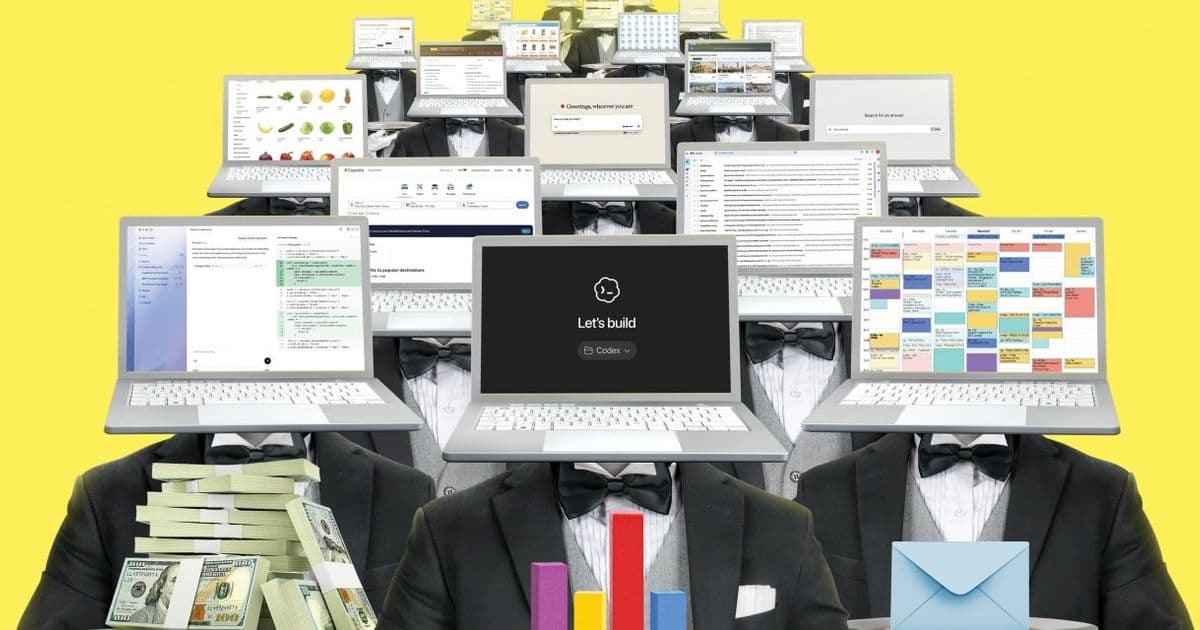
AI tools like Claude Code are revolutionizing how developers work, prompting AI labs to expand their focus toward automating tasks for non-technical users and building personal AI concierges.
The AI sprint is hurtling toward a world where anyone can build personal concierges to do everything from executive presentations to March Madness brackets. This shift represents a fundamental change in how AI companies view their market opportunity, moving beyond the developer tools that have been their initial beachhead.
The Developer Revolution: Claude Code's Impact
AI tools like Claude Code have transformed coders' lives in ways that are hard to overstate. What started as code completion and debugging assistance has evolved into full-fledged development partners that can write entire applications, debug complex systems, and even architect software solutions. Developers report spending less time on boilerplate code and more time on creative problem-solving, with AI handling the repetitive tasks that once consumed hours of their day.
The transformation goes beyond simple productivity gains. Developers are now able to prototype ideas in minutes rather than days, experiment with multiple approaches simultaneously, and maintain codebases with unprecedented efficiency. This has created a new development paradigm where human developers act more as directors and reviewers than traditional coders.
The Bigger Goal: Automating Everyone's Lives
AI labs are now eyeing a bigger goal: automating everyone's lives and winning the non-coder market. This represents a significant strategic pivot from the current focus on developer tools and enterprise applications. The vision is to create AI systems that can handle the full spectrum of knowledge work, from scheduling meetings and managing emails to creating marketing materials and analyzing business data.
This expansion into non-technical markets is driven by several factors. First, the developer tools market, while lucrative, is relatively small compared to the potential market for general-purpose AI assistants. Second, as AI capabilities improve, the barriers to entry for non-technical users are rapidly falling. Third, there's a recognition that the real economic impact of AI will come from transforming how everyone works, not just how developers code.
Building Personal AI Concierges
The concept of personal AI concierges represents the next frontier in AI development. These systems would act as intelligent agents that understand a user's preferences, work habits, and goals, then proactively assist with tasks across multiple domains. Imagine an AI that not only schedules your meetings but also prepares briefing documents, follows up on action items, and even drafts responses to routine communications.
This vision extends to specialized use cases as well. AI assistants could handle everything from creating executive presentations with appropriate data visualizations to managing complex workflows like March Madness bracket analysis, where they would track team statistics, predict outcomes, and even place bets based on sophisticated models.
The Competitive Landscape
Several major AI labs are racing to dominate this emerging market. Companies like OpenAI, Anthropic, and Google DeepMind are investing heavily in making their models more capable of handling open-ended tasks and understanding complex instructions. The competition is intense, with each company trying to differentiate through unique capabilities, integration options, or pricing models.
The stakes are enormous. The company that successfully captures the non-coder market could establish itself as the default AI platform for billions of users, creating network effects and data advantages that would be difficult for competitors to overcome. This is why even companies that have found success in developer tools are aggressively pursuing this broader vision.
Challenges and Considerations
Despite the excitement, there are significant challenges to overcome. Non-technical users have different needs and expectations than developers, requiring AI systems that are more intuitive, reliable, and capable of handling ambiguous instructions. There are also concerns about privacy, data security, and the potential for AI systems to make mistakes that could have serious consequences.
Another consideration is the potential impact on employment. As AI systems become capable of handling more tasks, there are legitimate questions about how this will affect knowledge workers across various industries. While proponents argue that AI will augment rather than replace human workers, the transition could be disruptive for many professionals.
The Path Forward
The race to automate everyone's lives is just beginning, but the trajectory is clear. AI labs that have already transformed how developers work are now setting their sights on a much larger prize. The next few years will likely see rapid advancements in AI capabilities, with systems becoming increasingly adept at handling complex, open-ended tasks that currently require human expertise.
For users, this could mean a future where everyone has access to AI assistants that can handle a wide range of tasks, freeing up time for more creative and strategic work. For businesses, it could mean new levels of productivity and efficiency. And for AI companies, it represents the opportunity to create truly transformative products that change how billions of people work and live.
The transformation of developer workflows through tools like Claude Code was just the beginning. The real revolution may be yet to come, as AI labs work to bring the power of intelligent automation to everyone, regardless of their technical expertise.
Comments
Please log in or register to join the discussion