A Guardian column argues that AI needs to enhance human capabilities rather than replace workers, or risk losing social acceptance and causing widespread economic disruption.
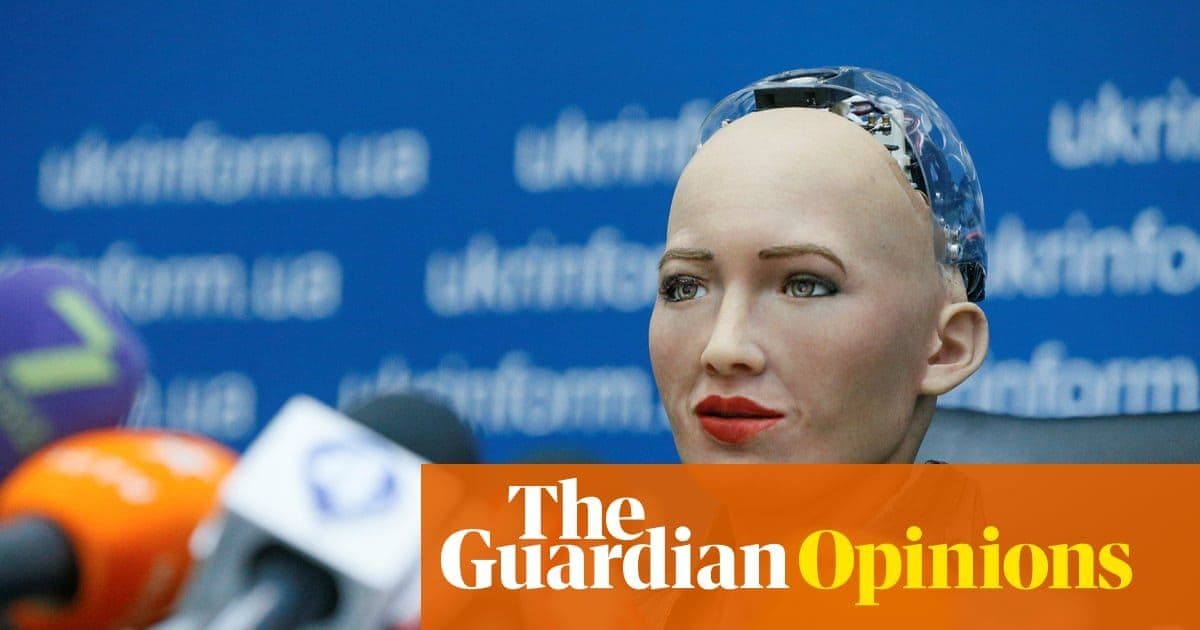
A humanoid robot at a news conference. Policymakers are being urged to nudge companies to put checks in place on powerful AI tools. Photograph: Valentyn Ogirenko/Reuters
Heather Stewart's recent column in The Guardian raises urgent concerns about the trajectory of artificial intelligence development and its impact on human workers. The piece argues that unless AI technology is designed to augment human capabilities rather than replace them, we risk losing the social acceptance that has enabled rapid AI adoption while potentially dooming millions of workers to economic displacement.
The core thesis is straightforward but consequential: technology loses its social license when it fails to demonstrably improve people's lives. Stewart points to growing calls from trade unions for an "urgent conversation" about AI's role in the workplace, suggesting that the current path of AI development—focused heavily on automation and replacement—may be unsustainable both socially and economically.
This perspective challenges the dominant narrative in much of the tech industry, where AI is often positioned as a tool for eliminating human labor entirely. Companies like OpenAI, Anthropic, and major tech corporations have invested billions in developing AI systems that can perform tasks traditionally done by knowledge workers, from writing and coding to analysis and customer service.
However, Stewart's argument aligns with a growing body of economic research suggesting that the most successful integration of AI into the workforce occurs when it enhances human capabilities rather than substitutes for them. Studies of AI adoption in fields like healthcare, education, and creative industries consistently show better outcomes when AI serves as a tool that amplifies human judgment and expertise rather than replacing the human entirely.
The column also touches on the broader economic policy implications. As AI systems become more capable, policymakers face increasing pressure to implement safeguards that ensure technological progress benefits society broadly rather than concentrating wealth and opportunity in the hands of those who control the technology. This includes considerations around worker retraining, income support during transitions, and regulations that encourage augmentation-focused AI development.
Stewart's piece comes amid heightened debate about AI's societal impact, with figures like Elon Musk and companies like Meta facing scrutiny over their AI strategies. The timing is significant, as 2024 has seen accelerated deployment of AI systems across industries, from customer service chatbots to AI-assisted medical diagnosis tools.
The urgency in Stewart's writing reflects a growing consensus among labor economists and social scientists that the window for shaping AI's impact on work is narrowing. Without deliberate policy choices and industry practices that prioritize human augmentation, the risk of widespread worker displacement could undermine public support for AI technology entirely.
This debate extends beyond economics into questions of human dignity and purpose. Work provides not just income but identity, social connection, and meaning for many people. AI systems designed primarily for replacement rather than enhancement risk disrupting these fundamental aspects of human life, potentially leading to social instability even if the economic metrics appear favorable.
The column concludes by emphasizing that the choice between augmentation and replacement is not predetermined by technology itself but by the decisions of companies, policymakers, and society. The path forward requires active engagement from all stakeholders to ensure AI development serves human flourishing rather than human obsolescence.
As AI capabilities continue to advance at a rapid pace, Stewart's warning serves as a reminder that technological progress without corresponding social and economic adaptation risks creating more problems than it solves. The future of work—and perhaps the future of human dignity in an automated world—may depend on whether we choose to build AI systems that work with us rather than instead of us.
Comments
Please log in or register to join the discussion