
A flood of low-effort AI-generated content is overwhelming online tech communities, eroding meaningful discussion and driving contributors away as accessible agentic coding tools make it trivial to produce blog posts, code repositories, and forum posts with minimal human oversight.

AI Slop is Killing Online Communities
The early 2026 release of Anthropic's Claude Opus 4.5 marked a turning point for agentic coding tools, making it possible for anyone to generate functional code, blog posts, ebooks, and forum content with minimal human input. Eighteen months later, online tech communities are grappling with the unintended consequence of that accessibility: a flood of low-effort, AI-generated material that contributors now call "AI slop", content that adds little value and risks drowning out meaningful discussion.
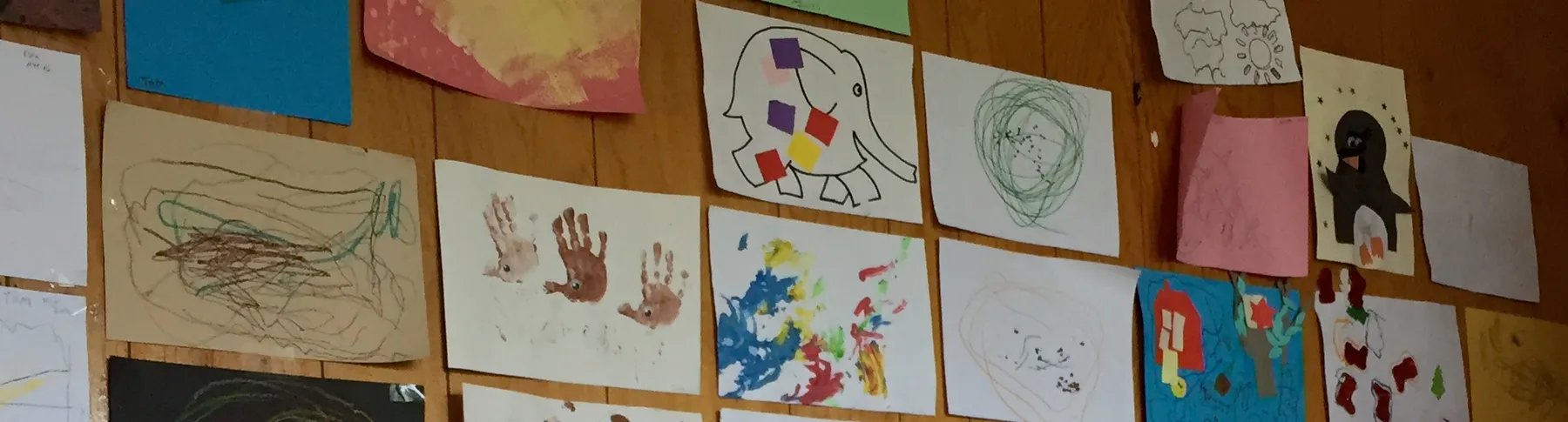
The term, originally used to describe low-quality AI outputs pushed to audiences with no benefit, has become a common refrain in subreddits, Slack groups, and developer forums. The pattern repeats across communities: a developer discovers agentic coding tools, generates a project with a few prompts, uploads it to GitHub, then uses an LLM to write a breathless blog post promoting the work, which they share to every relevant forum they can find. Few of these projects see updates after the initial post. Documentation is thin, bugs go unfixed, and the code is rarely used by anyone other than the creator.
"It’s not that AI-assisted work is bad," says Robin Moffatt, a developer advocate and author of the blog post that popularized the term in tech circles. "It’s that people are treating the output of a prompt as a finished product, then spamming it to every community they can find. Like a child bringing home crayon drawings from kindergarten, that work belongs on your personal fridge, not on public forums where people come to learn and discuss."
 Stick-figure crayon drawings, like this one, mirror the low-effort AI outputs flooding online communities.
 Children’s abstract paintings, which belong on a kitchen fridge rather than public tech forums.
Moffatt’s analogy rings true for many long-time community members. On Reddit alone, moderators report a 300% increase in AI-generated posts in the past year, most of which are removed for violating community guidelines. The problem extends to open-source projects: maintainers of popular repos say they now spend up to 40% of their time reviewing low-quality PRs generated by AI, time that used to go toward mentoring new contributors or building new features.
This creates what developer Alberto Brandolini calls the asymmetry of bullshit: "The amount of energy needed to refute bullshit is an order of magnitude bigger than that needed to produce it." A developer can generate a 1,000-word blog post in seconds, but a reader has to spend 10 minutes reading it to realize it contains no original insight. A contributor can generate a 500-line PR in minutes, but a maintainer has to spend hours reviewing it, only to reject it for fundamental flaws.
The impact on communities is measurable. Lobste.rs, a popular aggregator for tech news, has seen a 15% drop in active commenters over the past six months, with many citing the rising noise level as their reason for leaving. Smaller Slack groups focused on niche topics like Apache Kafka or COBOL have shut down entirely, overwhelmed by automated posts promoting "Kafka rewritten in COBOL" or AI-generated ebooks on the same topics.
 Bindweed, a fast-spreading invasive plant, serves as a metaphor for AI slop choking online communities. Photo by Joshua Ralph on Unsplash.
The metaphor of bindweed, an invasive plant that chokes out native species, fits here. AI slop spreads quickly, requires little effort to produce, and strangles the organic discussion that makes communities valuable. If left unchecked, Moffatt argues, communities will either wither entirely or evolve into "dystopian but banal" spaces like the hypothetical MoltBook, where AI agents talk to each other with no human participants.
Not all AI-assisted work falls into the slop category. Gunnar Morling, a software engineer, spent four months building Hardwood, a new parser for Apache Parquet, using Claude to speed up routine tasks. The project has a public roadmap, active contributors, and thorough documentation. Morling outlined his approach in a blog post titled Built with AI, not by AI, arguing that AI is a tool, not a replacement for human judgment.
"The difference is intent and effort," Morling says. "If you’re using AI to do work you couldn’t do before, and you’re putting in the time to vet, maintain, and improve the output, that’s a net positive. If you’re just prompting an LLM to generate something so you can claim you ‘built’ it, that’s slop."
Communities are testing solutions to the problem. Vouch, a new project, verifies that contributors are human and that their work meets basic quality standards before allowing them to post. Some forums now require contributors to disclose how they used AI in their work, while others have banned AI-generated content entirely. The risk, Moffatt notes, is that overcorrection could shut out legitimate contributors who use AI tools to participate in communities they couldn’t otherwise join.
"The standard for sharing content hasn’t changed, even if the tools have," Moffatt says. "Lurk in a community first, understand what’s valuable there, and only share work that adds something new. If you wouldn’t read it yourself, don’t post it. Save the crayon pictures for your kitchen fridge."
Bindweed photo by Joshua Ralph on Unsplash. All other images courtesy of Robin Moffatt’s children, whose drawings inspired the central analogy.
Comments
Please log in or register to join the discussion