
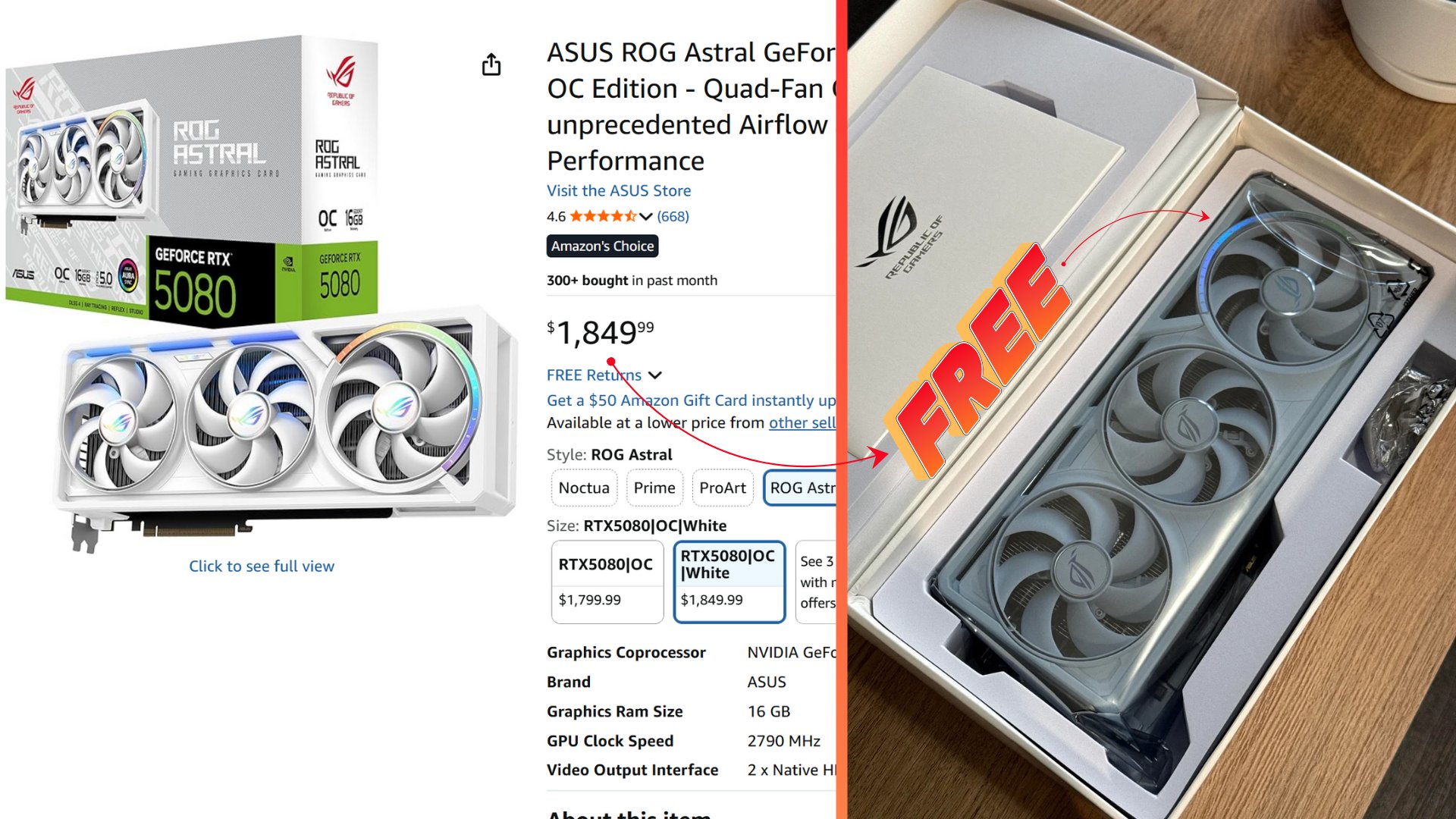
A Reddit user's cancelled Amazon order for an Asus ROG Astral RTX 5080 White OC resulted in a $1,850 refund and a free GPU after the retailer instructed them to keep the card. The incident highlights the operational scale of e-commerce giants, where shipping delays and system complexities can occasionally benefit consumers.
A recent Reddit post from user u/spaceman293 in the r/ASUSROG subreddit has captured the attention of the hardware community, detailing a rare and favorable outcome from a standard e-commerce transaction. The user reported purchasing an Asus ROG Astral RTX 5080 White OC, a high-end graphics card, from Amazon. However, after finding the same GPU in stock at a local Micro Center, they cancelled their Amazon order and received a full refund of $1,850. The story took a surprising turn when the cancelled GPU arrived at their doorstep days later.
Upon contacting Amazon to report the erroneous delivery, the user was informed by customer service that they could keep the card. This outcome stands in stark contrast to the more common narratives of shipping errors that disadvantage customers, such as the recent case where an RTX 5080 buyer received a relabeled and inferior RTX 5060 Ti. Both scenarios, however, stem from the same underlying cause: the immense scale and complexity of Amazon's logistics network.
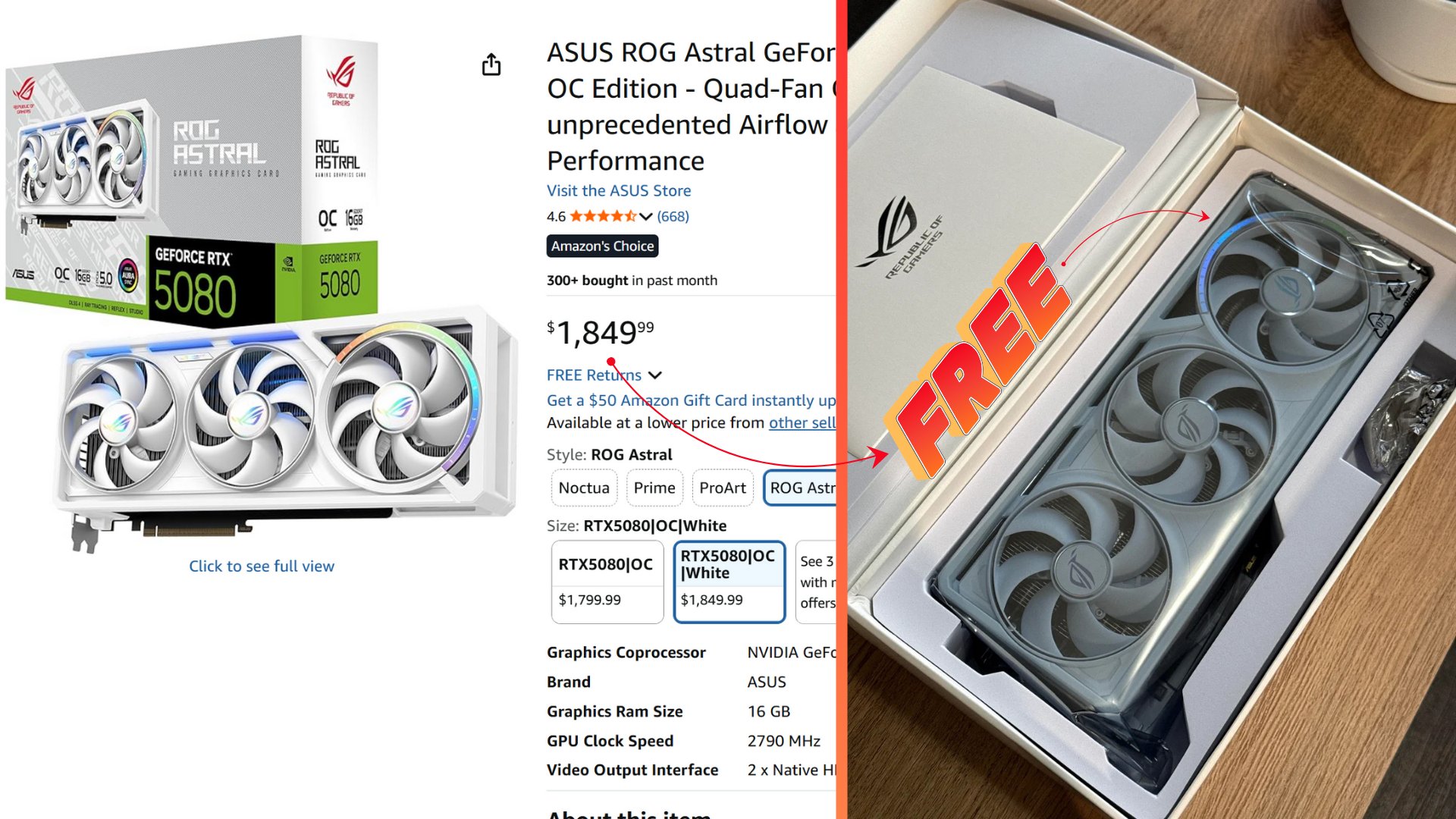
The core of this incident lies in the timing and coordination within Amazon's fulfillment system. When a customer places an order, the item is often picked, packed, and dispatched within hours. The cancellation process, while immediate on the user's end, may not instantly halt the physical shipment if the package is already in the final stages of the shipping pipeline. By the time u/spaceman293 cancelled the order, the RTX 5080 was likely already loaded onto a delivery vehicle or in transit to the local distribution center. For a multi-trillion-dollar corporation, the cost and logistical effort required to intercept a single, high-value package in transit often outweighs the value of the item itself. The cost of customer service time, potential shipping recalls, and the risk of damaging customer relations makes it more efficient to absorb the loss and maintain goodwill.
This event also underscores the current state of the high-end GPU market. The Asus ROG Astral RTX 5080 White OC represents the pinnacle of consumer graphics technology, with a launch price of $1,850. Such cards are not only expensive but also in high demand, often selling out quickly upon release. The fact that a customer could find the same card in stock at a physical retailer like Micro Center suggests that supply chains for these flagship products are beginning to stabilize, though availability remains tight. The user's decision to cancel the Amazon order in favor of an immediate purchase at a brick-and-mortar store reflects a common consumer behavior: prioritizing immediate availability over waiting for a potentially delayed shipment.

From a supply chain perspective, this incident is a microcosm of the challenges facing large-scale e-commerce. Amazon's logistics are a marvel of modern engineering, capable of delivering millions of packages daily with remarkable accuracy. However, the system's sheer volume means that edge cases—like a cancelled order still being shipped—are inevitable. These anomalies are a byproduct of the same efficiency that enables two-day shipping. The company's decision to let the customer keep the GPU and the refund is a calculated business move. The cost of the card is negligible on their balance sheet, and the positive publicity from such stories can enhance brand perception and customer loyalty.
For the hardware enthusiast community, this story serves as a reminder of the unpredictable nature of high-demand product launches. While most stories focus on scalpers, stock shortages, and shipping fraud, this anecdote highlights a positive, if accidental, outcome. It also illustrates the importance of consumer vigilance. Had the user not been proactive in contacting Amazon, they might have been charged for the card upon its delivery, or faced a more complicated return process. By immediately reporting the error, they ensured a swift and favorable resolution.
In the broader context of consumer electronics retail, this event reinforces the idea that large corporations often prioritize customer retention over recovering minor losses. The same operational scale that can lead to shipping errors also provides the financial buffer to absorb them. For customers, this means that while systemic issues can cause problems, they can also occasionally result in unexpected benefits. As the GPU market continues to evolve with new architectures and manufacturing processes, stories like this will remain a fascinating footnote in the relationship between consumers, retailers, and the complex supply chains that connect them.
Comments
Please log in or register to join the discussion