Amazon shares rose 1.2% Tuesday, ending a nine-day losing streak that erased over $450B in market value amid investor concerns about the company's plan to spend $200B on capital expenditures in 2026.
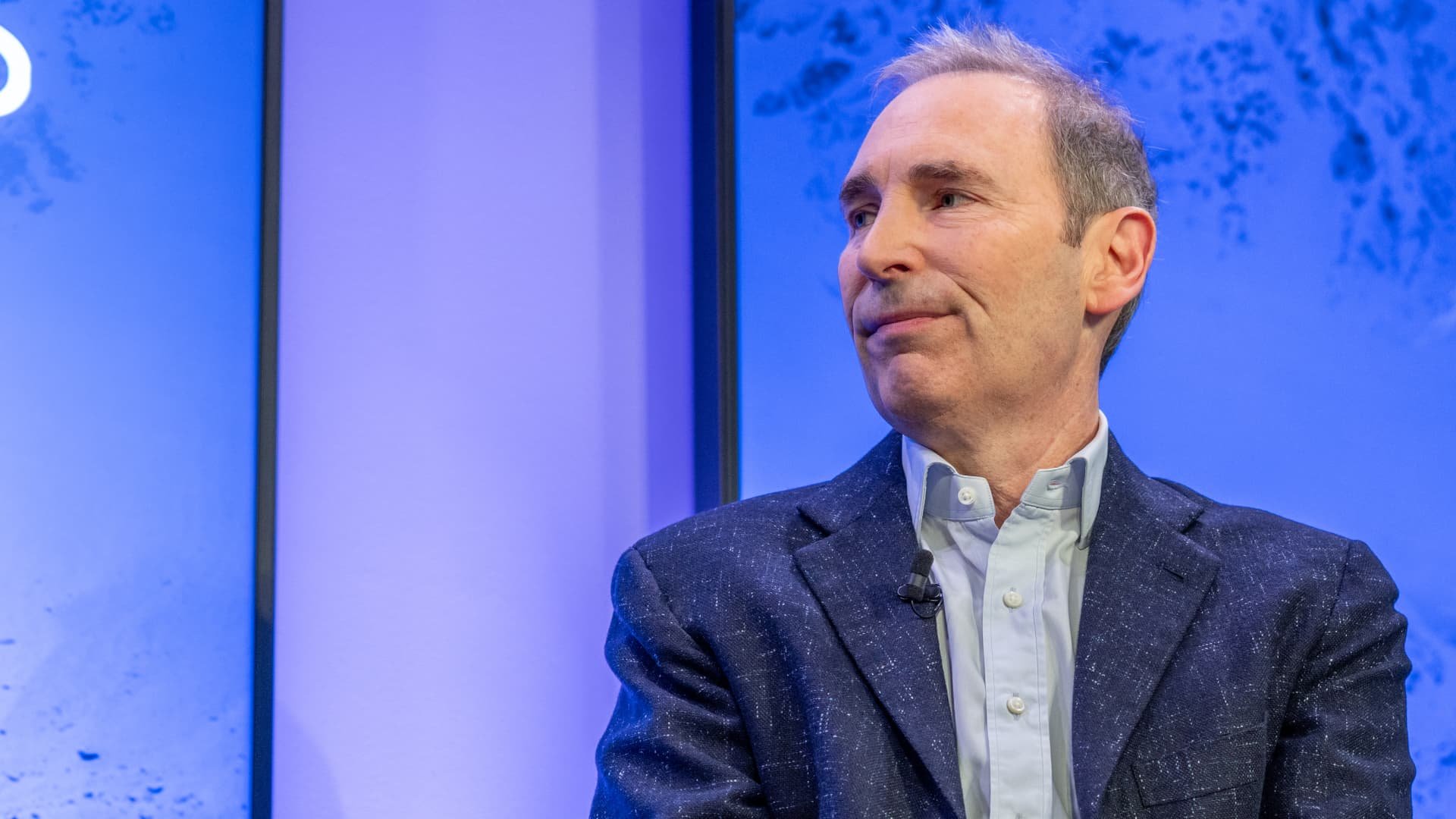
Amazon shares closed up 1.2% on Tuesday, halting a brutal nine-day slide that vaporized over $450 billion in market valuation. The selloff was primarily driven by investor apprehension about Amazon's disclosed plan to allocate approximately $200 billion toward capital expenditures (capex) in 2026 – a figure representing nearly double its projected 2025 capex of $110-$120 billion.
The scale of the proposed expenditure is staggering even for Amazon. For context, the company's total capex between 2020-2024 averaged roughly $60 billion annually. The $200 billion figure represents approximately 40% of Amazon's current market capitalization and exceeds the GDP of many countries. Investor concerns center on whether this massive outlay – likely targeting accelerated AI infrastructure buildout, fulfillment network expansion, and cloud computing capacity – can generate sufficient returns against rising competitive pressures and narrowing margins.
While Amazon has historically justified heavy investments through dominant market share gains (as seen with AWS and Prime), the current environment differs significantly. Core retail margins remain thin, AWS faces intensified competition from Microsoft Azure and Google Cloud, and AI infrastructure requires astronomical upfront costs with uncertain monetization timelines. Analysts note that the projected $200B capex could depress free cash flow by 25-30% in 2026-2027 based on current models, delaying shareholder returns.
The Tuesday rebound appears driven partly by bargain hunting and technical factors after the extreme selloff, but also reflects acknowledgment that Amazon's growth has always been fueled by aggressive reinvestment. As noted in Amazon's 2025 Annual Report, "We prioritize long-term market leadership over short-term profitability." However, the sheer magnitude of the 2026 target introduces new risks: execution challenges in deploying capital efficiently, potential overcapacity if AI demand projections falter, and increased exposure to interest rate fluctuations given likely debt financing.
Crucially, Amazon hasn't detailed the exact allocation of the $200B capex. Industry analysts speculate 60-70% will target data center expansion for AWS and AI workloads, 20-25% toward logistics automation and robotics, and the remainder on new initiatives like Project Kuiper satellite broadband. The lack of granularity fuels uncertainty – without transparent ROI metrics for each segment, investors struggle to model the payoff horizon. As Bernstein analyst Mark Shmulik observed, "Amazon’s capex cycles usually precede massive profit waves, but betting $200B on unproven AI monetization is uncharted territory."
The episode underscores a broader tension in tech investing: growth expectations increasingly demand colossal infrastructure investments, yet capital markets grow wary of sunk costs in a higher-rate environment. Amazon’s trajectory will test whether even tech giants can sustainably absorb such unprecedented expenditures without compromising financial flexibility.
Comments
Please log in or register to join the discussion