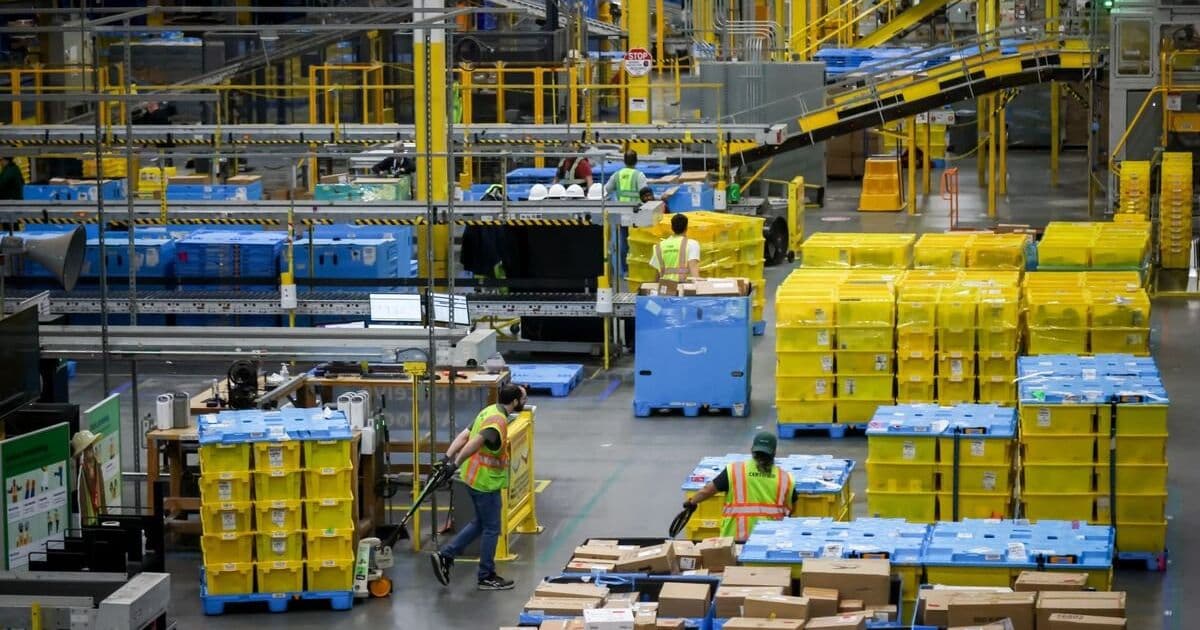
Amazon's ascension to the world's largest company by revenue signals a fundamental shift in economic power, but profitability metrics, regulatory pressures, and divergent business models reveal a more complex competitive landscape.
Amazon's reported $717 billion in 2025 revenue marks a symbolic transition point in global commerce, officially dethroning Walmart's $713.2 billion after decades of brick-and-mortar dominance. This milestone crystallizes e-commerce's relentless encroachment on traditional retail, accelerated by Amazon's dual engines: its core marketplace and AWS cloud infrastructure. Yet beneath the headline figures lies a nuanced battleground where measurement methodologies and strategic priorities diverge significantly.
The Engine Behind the Numbers
Amazon's revenue surge stems from structural advantages beyond retail:
- AWS profitability: Cloud computing delivers operating margins exceeding 30%, subsidizing retail operations
- Third-party marketplace fees: Representing over 20% of revenue with minimal overhead
- Advertising growth: A $50B+ business leveraging captive audience data
Walmart counters with physical scale (5,300+ U.S. stores enabling same-day delivery) and grocery dominance (accounting for 56% of U.S. food sales). Crucially, Walmart employs 2.1 million people globally versus Amazon's 1.5 million—highlighting divergent automation strategies.
The Profitability Paradox
Revenue leadership obscures stark efficiency contrasts:
- Walmart's net income margin (2.9%) triples Amazon's (0.9%) due to lower fulfillment costs
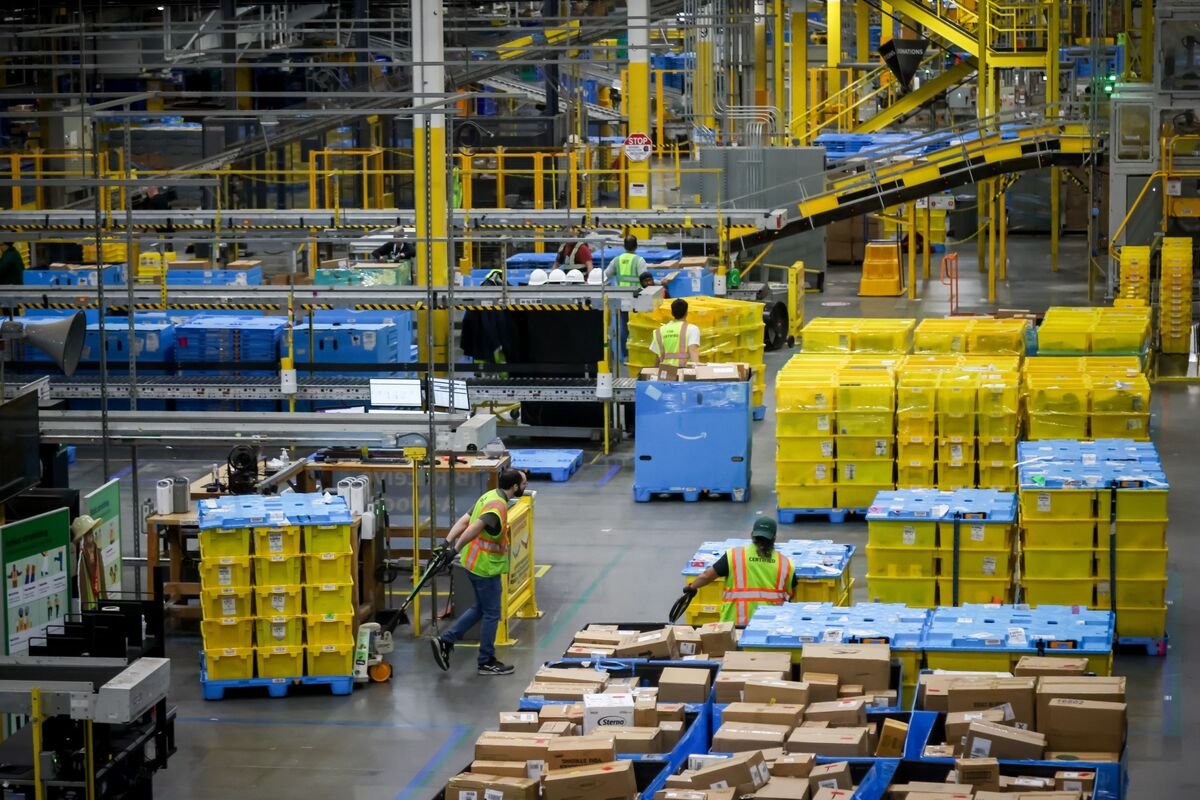
- Amazon's $35B annual logistics expenditure exceeds Walmart's entire R&D and capex combined
- Physical stores generate $600/sqft vs. Amazon's $1,100/sqft warehouse productivity—but require radically different capital allocation
Regulatory Headwinds Mount
Amazon's victory coincides with escalating scrutiny:
- FTC's antitrust lawsuit targeting bundled Prime subscriptions
- EU's Digital Markets Act compliance costs exceeding $20B annually
- New UK online safety laws threatening 10% revenue fines
Walmart faces comparatively fewer platform-specific regulations, though labor disputes persist at both companies.
Divergent Futures
The revenue crown may prove ephemeral as strategies bifurcate:
- Amazon bets on AI (Project Malibu smartwatch, Alexa upgrades) and healthcare
- Walmart prioritizes automation (distribution center robots handling 40% of packages) and financial services (checking accounts launching Q3)
Market valuations reflect this divergence: Amazon trades at 40x forward earnings versus Walmart's 25x—suggesting investors still price tech disruption above retail fundamentals.
While Amazon's revenue leadership signifies digital economy ascendancy, Walmart's persistent profitability and physical omnipresence underscore why retail's next decade will be defined by hybrid models rather than pure-play victors. The true test lies in which giant better integrates AI across fulfillment, personalization, and labor efficiency without triggering regulatory blowback.
Comments
Please log in or register to join the discussion