While AMD's mainstream AMDGPU driver lacks HDMI 2.1 support due to HDMI Forum licensing restrictions, the company's AMD-Xilinx driver for ZynqMP/Versal SoCs shows partial implementation. This disparity highlights hardware-firmware differences that sidestep open-source challenges faced by discrete GPUs. Developers and Linux users await potential shifts in licensing or hardware design to bridge the gap.
AMD's Open-Source Drivers: No HDMI 2.1 for Radeon, Partial Support in Xilinx Hardware
The open-source Linux graphics community has long grappled with AMD's inability to fully implement HDMI 2.1 support in its flagship AMDGPU driver. Blocked by the HDMI Forum's restrictive licensing requirements, AMD has been unable to upstream the necessary code for discrete Radeon GPUs. However, a recent observation has sparked discussion: AMD's AMD-Xilinx driver, targeting integrated display controllers in ZynxMP and Versal SoCs, includes some HDMI 2.1 functionality.
The HDMI Forum's Long-Standing Barrier
Phoronix readers familiar with the saga know the backstory. The HDMI Forum mandates proprietary licensing for certain HDMI 2.1 features, clashing directly with the open-source ethos of the Linux kernel's Direct Rendering Manager (DRM) subsystem. As a result, AMD's AMDGPU driver—powering millions of Radeon GPUs—remains stuck at HDMI 2.0 capabilities, frustrating users seeking higher bandwidth for 4K@120Hz, 8K, or advanced Variable Refresh Rate (VRR) features.
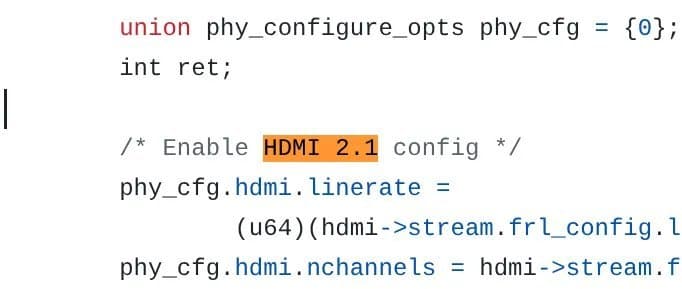
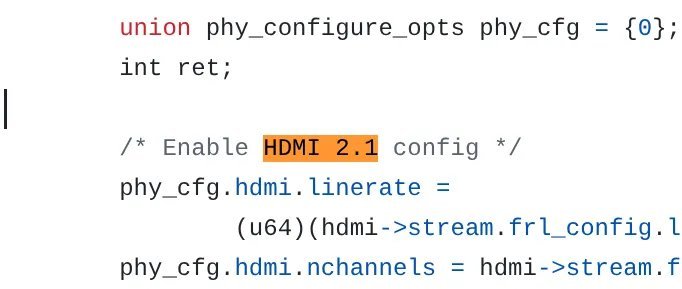
This week, DRM co-maintainer David Airlie of Red Hat highlighted on Mastodon that while AMDGPU lacks upstream HDMI 2.1, the AMD-Xilinx (Xlnx) DRM driver offers limited support, specifically for Fixed Rate Link (FRL) training—a core HDMI 2.1 mechanism for higher data rates.
{{IMAGE:2}}
Diving into the AMD-Xilinx Implementation
The AMD-Xilinx driver supports display controllers integrated into AMD's (formerly Xilinx) ZynqMP and Versal SoCs, distinct from the discrete Radeon graphics IP used in consumer GPUs. Currently out-of-tree, this driver includes code explicitly referencing HDMI 2.1 FRL handling:
/* HDMI 2.1 Fixed Rate Link (FRL) training */
// [Code snippet from AMD-Xilinx Xlnx driver]
{{IMAGE:3}}
Red Hat's Karol Herbst, after reviewing the code, noted a key distinction: the Xilinx hardware likely offloads much of the HDMI 2.1 logic to firmware or hardware, reducing the driver's role to basic control. This mirrors the situation with NVIDIA's open-source Nouveau driver, where firmware handles proprietary aspects (as detailed in prior Phoronix coverage on Nouveau HDMI 2.1 prospects).
Implications for Developers and Users
For Linux developers targeting AMD hardware, this revelation underscores a fragmented ecosystem. Discrete GPU users remain tethered to HDMI 2.0, potentially limiting high-end display setups in workstations or gaming rigs. Conversely, embedded systems using ZynqMP/Versal—common in industrial, automotive, and AI edge devices—gain a foothold in modern display protocols without upstream drama.
The disparity raises strategic questions for AMD: Will future Radeon GPUs shift more HDMI logic to firmware, evading Forum restrictions? Or might the HDMI Forum soften its stance amid growing open-source adoption? Without such changes, AMDGPU's HDMI 2.1 drought persists, pushing power users toward DisplayPort 2.0 or proprietary solutions.
This nuanced support in AMD-Xilinx serves as a reminder that open-source progress often hinges on hardware design choices. As Linux graphics drivers evolve, these firmware-reliant workarounds may pave the way for broader compatibility—or expose deeper tensions between industry standards and community-driven development.
Source: Phoronix - AMDGPU Driver Lacks HDMI 2.1 While AMD-Xilinx Driver Has Some HDMI 2.1 Support, 25 November 2025.
Comments
Please log in or register to join the discussion