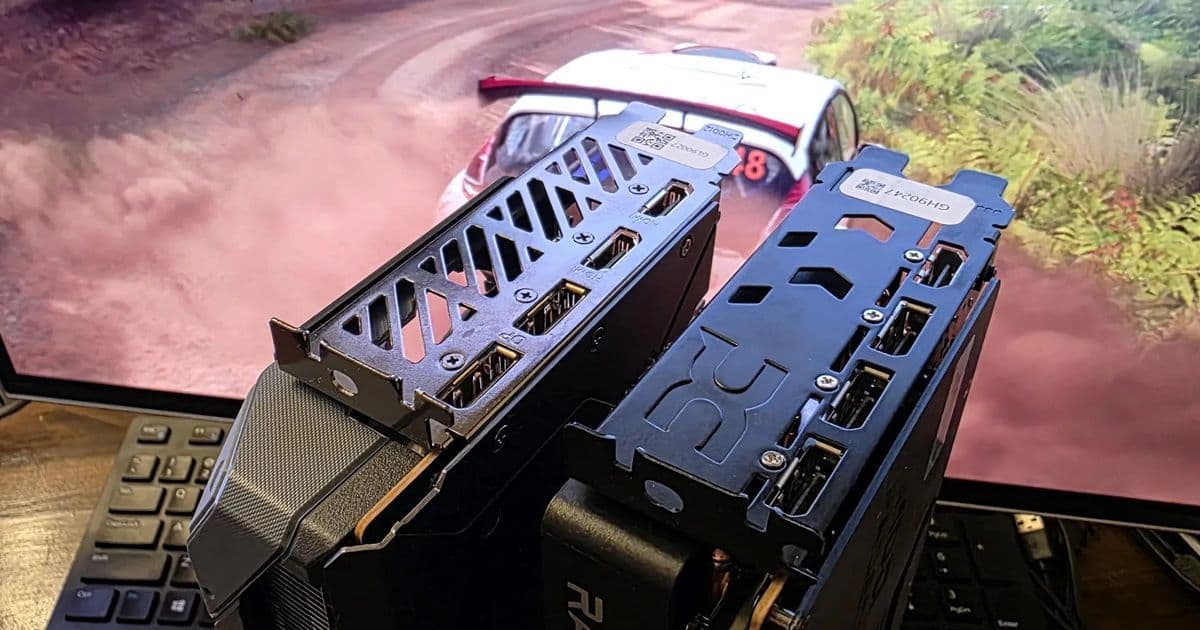
A second iteration of patches bringing HDMI Variable Rate Refresh and Auto Low Latency Mode support to AMD's open-source Linux driver has been posted for review, refining the implementation that circumvented HDMI Forum restrictions through reverse engineering.
The Linux gaming ecosystem is taking another step toward feature parity with Windows as AMDGPU driver developer Tomasz Pakuła posted a revised patch series implementing HDMI gaming features for Radeon graphics on Linux. These patches deliver HDMI Variable Rate Refresh (VRR) and Auto Low Latency Mode (ALLM) support—features that HDMI Forum licensing restrictions prevented from being implemented through official specification access.
The Reverse-Engineering Challenge
Unlike DisplayPort's open Adaptive-Sync standard that AMDGPU already supports via FreeSync, HDMI 2.1 gaming features required reverse engineering through trial-and-error methods. The original patch series demonstrated that VRR could work on HDMI displays despite the specification access limitations, but the initial implementation needed refinement.
The development process relied on limited public knowledge and extensive testing to determine how HDMI VRR signaling actually functions in practice. This approach mirrors how the community has historically added features when manufacturers lock down specifications, though it introduces risks of compatibility issues or subtle bugs that only emerge through real-world usage.
Second Revision: Refinements and New Controls
The updated patches address several critical issues identified during initial testing:
VRR Value Corrections: The maximum VRR value has been corrected to 1023, matching the 10-bit field maximum. This wasn't immediately obvious during initial development but became apparent through systematic testing of individual values.
ALLM Trigger Logic: The Auto Low Latency Mode implementation now uses more intelligent triggering. Rather than always activating ALLM, it only triggers when either VRR is active or when Content Type Hint indicates gaming content. This prevents unnecessary mode switches for non-gaming content, reducing potential display blanking or mode transition artifacts.
Module Parameters for User Control: Two new module parameters give users fine-grained control:
amdgpu.allm_mode=with three options:0: Disable ALLM entirely1: Dynamic triggering based on VRR/game state (default)2: Force ALLM always on
amdgpu.hdmi_vrr_desktop_mode=(boolean, defaulttrue)- Matches Windows FreeSync behavior with VRR always active
- Setting to
falsedisables the functionality
Code Organization: The HDMI VIC (Video Identification Code) mode checking has been consolidated into a single central function. Previously, 3D mode and ALLM checks were scattered across different locations, occasionally breaking the logic for translating HDMI VIC modes to CTA (Consumer Technology Association) VIC modes when translation was needed.
Desktop Mode Behavior
The hdmi_vrr_desktop_mode setting deserves special attention. When enabled (default), it keeps VRR active continuously, similar to how Windows handles FreeSync. This approach prevents the screen blanking and visual glitches that occurred when entering and exiting VRR mode with the previous implementation.
However, some users might prefer disabling this for specific scenarios:
- Desktop users who want guaranteed frame pacing without variable refresh
- Power-sensitive scenarios where maintaining VRR state might consume slightly more power
- Displays that exhibit flickering or other artifacts with continuous VRR
Timeline and Upstreaming Concerns
These patches are currently under review on the Linux kernel mailing list. Unfortunately, they missed the window for inclusion in Linux 6.20 (the next major kernel release), which means the earliest realistic merge target would be Linux 6.21 or 6.22, potentially arriving in summer 2026.
However, there's a significant caveat: legal review. AMD's legal team must approve these patches before AMD developers can upstream them to the mainline AMDGPU driver. Given that the implementation circumvents HDMI Forum restrictions through reverse engineering, there's inherent legal risk. The HDMI Forum could potentially object to these features being added through community development channels.
Impact for Linux Gamers
For users running AMD Radeon graphics on Linux, these patches represent meaningful progress toward display feature parity:
VRR Benefits: Variable Rate Refresh eliminates screen tearing and reduces stuttering without the input lag penalty of traditional vsync. This is particularly valuable for games running at inconsistent frame rates.
ALLM Advantages: Auto Low Latency Mode automatically switches displays to their lowest latency mode when gaming content is detected, reducing the display processing delay that can make controls feel sluggish.
Display Compatibility: These features work on HDMI displays that support them, expanding beyond DisplayPort-only setups. This matters for users with HDMI 2.1 gaming monitors or TVs who want to use AMD graphics on Linux.
Testing and Implementation
Users interested in testing these patches can track the Linux kernel mailing list for revisions. The patches modify the AMDGPU driver's HDMI handling code, specifically in the display core and FPLL (Fractional PLL) management sections.
Once merged, enabling the features will require either kernel command-line parameters or module loading options. Distributions may eventually expose these settings through GUI controls, but initial configuration will likely be manual.
Broader Context
This development highlights the ongoing tension between proprietary specifications and open-source implementation. While HDMI Forum restrictions create barriers, determined developers continue finding paths forward through reverse engineering and community collaboration. Similar approaches have enabled many features in Linux graphics drivers over the years, from early 3D acceleration to modern power management.
The success of these patches could also influence future HDMI feature development on Linux. If the reverse-engineered approach proves stable and legally defensible, it may serve as a template for implementing other HDMI 2.1 features that remain unavailable due to specification access restrictions.
For now, Linux users with AMD graphics can look forward to native HDMI gaming feature support arriving in future kernel releases, provided the legal review clears the path for upstream inclusion.
AMD continues advancing open-source graphics driver features despite specification access limitations.
Comments
Please log in or register to join the discussion