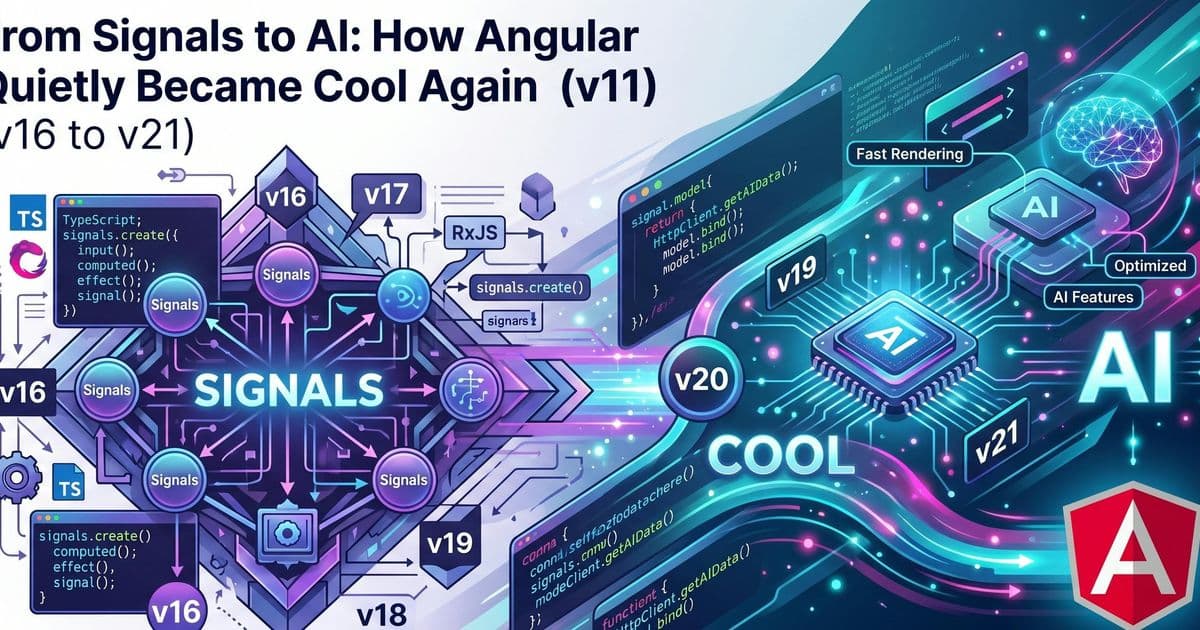
Angular’s recent releases have shifted the framework from a heavyweight, module‑centric stack to a lean, signal‑driven ecosystem. Version 21 consolidates those changes with Signal Forms, built‑in accessibility tools, and AI‑aware server integration, making the platform competitive for modern web development.
Angular Is Exciting Again, and v21 Proves It
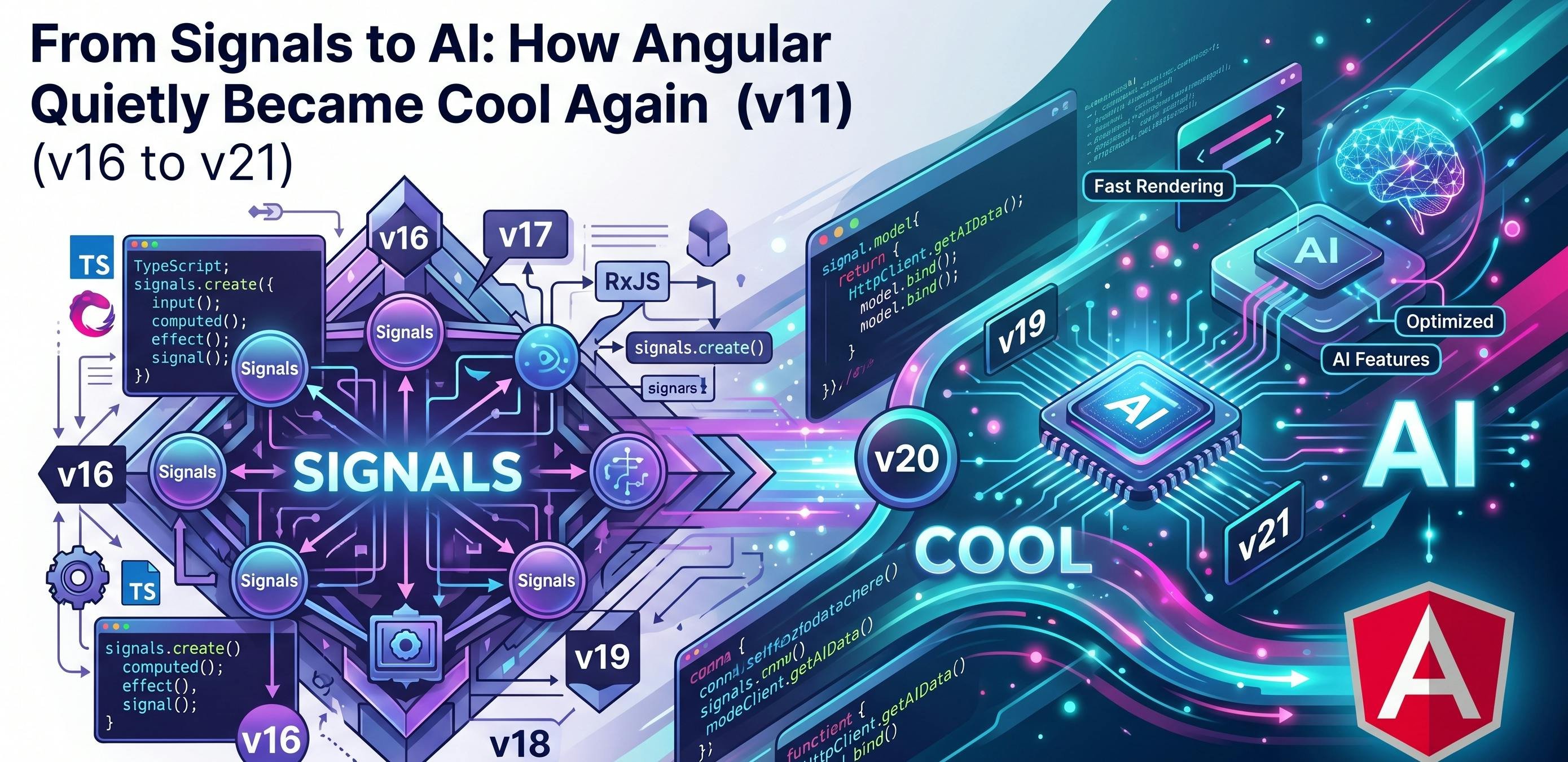
The Angular team has spent the last few years rewriting the core of the framework. What began as a series of incremental updates in v16 has turned into a coherent, developer‑friendly stack that finally feels comparable to the simplicity of newer libraries.
The problem Angular used to have
For a long time, Angular required developers to configure NgModules, rely on zone.js for change detection, and write templates that mixed HTML with structural directives like *ngIf. The result was a steep learning curve and build times that often eclipsed those of competing tools. Teams that valued strict typing and enterprise‑grade tooling sometimes chose Angular, but the day‑to‑day experience felt heavy.
The turning points
v16 – Signals preview
Angular introduced Signals as a lightweight reactivity primitive. Unlike RxJS observables, a Signal is a simple mutable value that automatically tracks dependencies. The preview was modest, but it demonstrated that the framework could move away from the zone‑based model.
v17 – New control‑flow syntax & Vite
Version 17 replaced the XML‑style structural directives with @if, @for, and @switch. The syntax reads like regular TypeScript, reducing mental overhead. At the same time, the default build pipeline switched from Webpack to Vite + esbuild, cutting typical build times by roughly two‑thirds.
v18/v19 – Zoneless change detection & standalone components
zone.js wrapped every asynchronous operation, which made debugging unpredictable. v18 offered an experimental zoneless mode that activates when an app runs entirely on Signals. By v19, standalone components became the default, and APIs such as linkedSignal and resource() gave developers a declarative way to handle loading, error, and data states without sprinkling RxJS operators throughout the code.
v20 – Stabilization
The reactive core—effect(), linkedSignal, and the zoneless APIs—graduated from experimental to production‑ready. Security defaults were tightened with automatic XSS/CSRF mitigation and stricter CSP enforcement. Dynamic component creation also became less verbose, removing the need for low‑level ViewContainerRef gymnastics.
v21 – The offense phase
The latest release introduces three features that address long‑standing pain points:
- Signal Forms – A re‑imagined form library built on Signals. Validation, value changes, and async status are all expressed as Signals, eliminating the need for nested
FormGroupandFormControlboilerplate. - Angular Aria Package – Accessibility primitives baked directly into the framework. Instead of relying on third‑party libraries or style‑guide checklists, developers get native ARIA attributes and utilities that work out of the box.
- MCP Server Integration – The Model Context Protocol (MCP) lets AI coding assistants understand an Angular project’s structure. This opens the door to context‑aware code generation, refactoring suggestions, and automated documentation.
These additions signal (pun intended) that Angular is no longer reacting to trends; it is shaping its own roadmap.
Market positioning
While React and Vue continue to dominate the startup scene, Angular retains a strong foothold in large enterprises that need a unified, opinionated stack. The recent performance gains and reduced boilerplate lower the total cost of ownership, making the framework more attractive to mid‑size companies that previously avoided it due to perceived complexity. Analysts note that Angular’s market share in the enterprise segment has held steady around 12 %, and the v21 release is expected to push that figure higher as teams reassess migration costs.
What this means for developers
- Faster iteration – Vite‑based builds and zoneless change detection translate to shorter feedback loops during development.
- Cleaner code – Signal‑driven APIs replace layers of RxJS plumbing, resulting in files that are easier to read and maintain.
- Future‑proofing – Built‑in accessibility and AI‑aware tooling prepare projects for upcoming compliance requirements and developer‑experience enhancements.
If you shelved Angular a few years ago because of its heavyweight reputation, the current version merits a fresh evaluation. The framework now feels like a modern, cohesive platform rather than a relic that clings to legacy patterns.
Author: TheJS PythonGuy Published: May 18 2026 Tags: #angular #signals #frontend #enterprise #ai‑tools
Comments
Please log in or register to join the discussion