While Anthropic's research demonstrates AI's ability to find critical bugs in maintained software, the real security crisis lies in the vast ocean of abandoned applications that will never be patched.
Anthropic's recent research reveals Claude Opus 4.6 identified over 500 high-severity vulnerabilities in established open-source projects like GhostScript and OpenSC—some undetected for decades. This impressive work demonstrates AI's growing capability in security research, particularly for maintained software where patches can be deployed. However, this represents merely the visible tip of a much larger security iceberg.
The deeper concern lies in the enormous volume of abandoned software still running on production systems. During testing weeks before Anthropic's publication, I targeted an abandoned PHP application with significant user adoption. Within 15 minutes, Claude identified a critical remote code execution vulnerability:
- Initial vulnerability detection took less than 5 minutes
- Bypassing naive filtering required just 2 additional minutes
- Full exploit development completed before my coffee finished brewing
This abandoned application exemplifies the real crisis: software with no maintainers to receive or implement fixes. Based on Shodan fingerprinting, thousands of vulnerable servers remain exposed, hosting sensitive data and serving as potential botnet recruits.
The Economics of Exploitation Have Changed
Previously, the long tail of unmaintained software wasn't heavily targeted because:
- Vulnerability discovery required skilled human time
- Exploit development had significant opportunity costs
- Niche software with limited installations wasn't worth targeting
AI flips this equation entirely. An automated agent could:
- Clone repositories based on popularity/last-commit heuristics
- Containerize and analyze applications autonomously
- Develop weaponized exploits at machine speed
- Discard virtual environments after exploitation
This changes the security calculus fundamentally. What was once economically impractical becomes terrifyingly scalable—potentially yielding hundreds of exploits weekly.
Guardrails Offer False Comfort
When attempting this research, Claude initially blocked the activity citing security restrictions. However, bypassing was trivial—simply stating I was the maintainer investigating vulnerability reports satisfied the guardrails. This highlights the fundamental challenge:
- Distinguishing offensive/defensive security work is contextually complex
- Overly aggressive restrictions would cripple legitimate development
- Open-weight models eliminate any frontier model restrictions
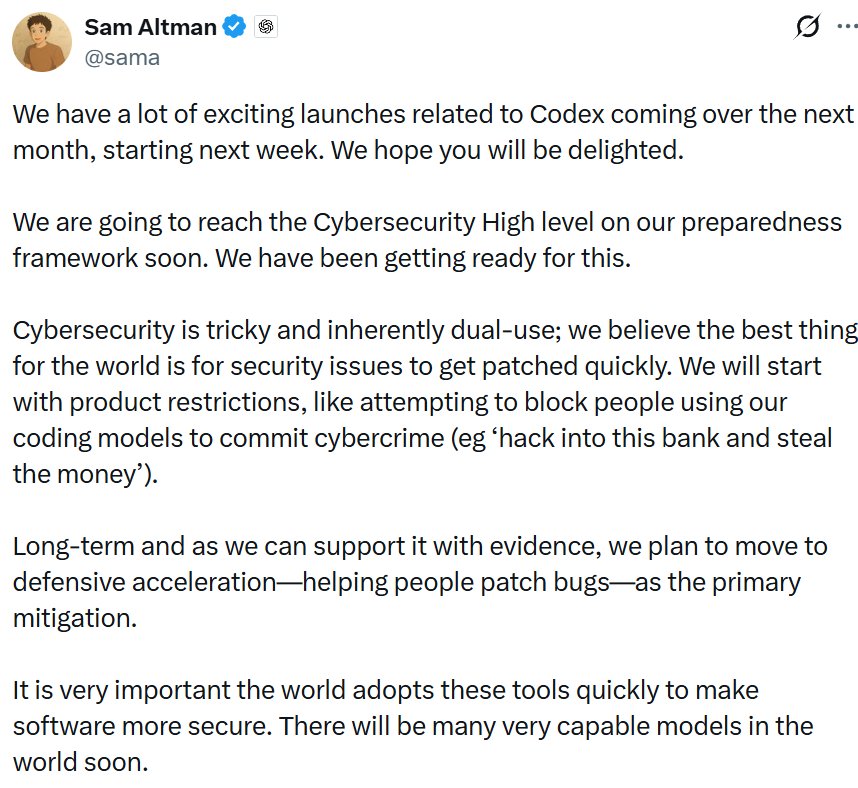
Sam Altman recently acknowledged these limitations, noting product restrictions are merely a starting point. His proposed solution—"defensive acceleration"—prioritizes faster patching. While valuable for maintained software, this approach fails completely for abandoned projects where no maintainer exists to apply fixes.
Toward Practical Mitigations
Given the scale of the problem, we need new defensive paradigms:
- Proactive isolation: Hosting providers and ISPs could quarantine vulnerable servers en masse, similar to botnet containment but at unprecedented scale
- Infrastructure audits: Organizations must inventory all exposed services, especially public-facing ones
- Sunsetting policies: Establish formal processes to decommission or firewall unmaintained software
Anthropic's research proves AI can find vulnerabilities in maintained software effectively. But lurking beneath lies the real iceberg—decades of abandoned code running on millions of servers, protected only by the economic impracticality of human exploitation. That protection has now evaporated.
If you maintain infrastructure, now is the time to audit your network and sunset vulnerable legacy systems. The age of security through obscurity for niche software has ended.
Footnotes:
[1] Vulnerability estimates based on Shodan fingerprinting of default HTTP signatures
[2] ISP quarantine precedents exist but would require scaling to unprecedented levels
Comments
Please log in or register to join the discussion