The Apitally SDK for Go introduces effortless API monitoring and analytics for Chi, Echo, Fiber, and Gin applications. With real-time metrics, error tracking, and alerting in just a few lines of code, it promises to transform how developers manage API reliability and performance.
In modern distributed systems, API reliability isn't a luxury—it's the bedrock of user trust. Yet instrumenting comprehensive monitoring often means wrestling with complex telemetry pipelines. The newly launched Apitally SDK for Go challenges this status quo by delivering production-grade observability for four major Go frameworks with near-zero configuration overhead.
The Observability Gap in Go API Development
While Go excels at building high-performance APIs, developers frequently cobble together metrics, logs, and traces from disparate tools. Apitally consolidates these needs into a unified toolkit purpose-built for API workloads. Its middleware automatically captures:
- Granular endpoint metrics: Response times, error rates, and traffic patterns per route
- Validation error diagnostics: Rule-specific client error tracking without manual instrumentation
- 5xx error forensics: Automatic stack traces and Sentry integration for server-side failures
- Consumer analytics: Usage patterns segmented by API keys or client identifiers
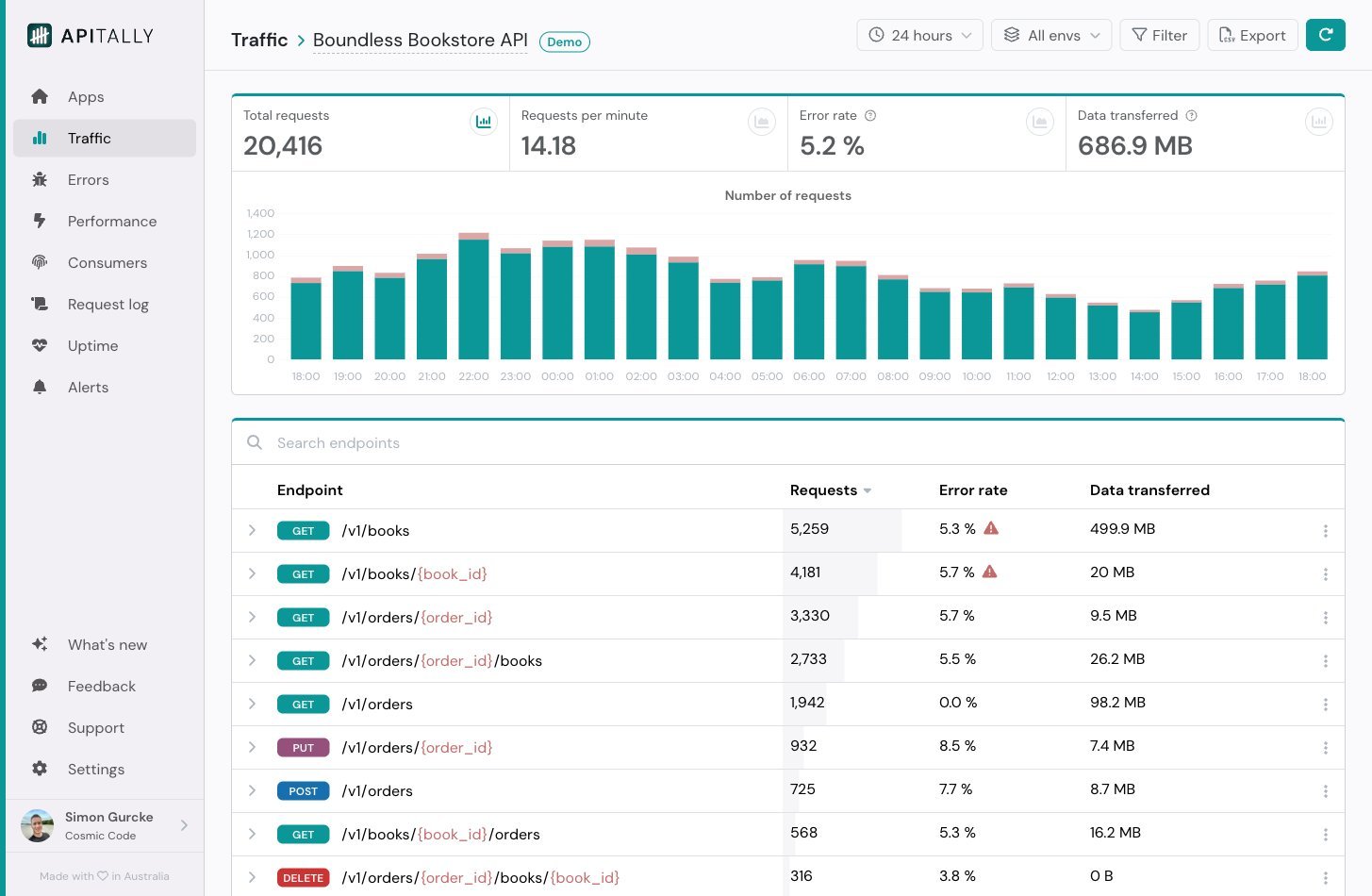 Apitally's dashboard turns raw API data into actionable insights (Source: Apitally)
Framework-Native Simplicity
What sets Apitally apart is its frictionless adoption. Developers using Chi, Echo, Fiber, or Gin can activate full observability with three added lines of code. The SDK's architecture respects Go idioms—no heavyweight agents or complex YAML configurations:
// Gin implementation example
import (
  apitally "github.com/apitally/apitally-go/gin"
  "github.com/gin-gonic/gin"
)

func main() {
  r := gin.Default()
  config := apitally.NewConfig("your-client-id")
  config.Env = "prod"
  r.Use(apitally.Middleware(r, config)) // Observability activated
}
Beyond Dashboards: The Alerting Advantage
Passive monitoring isn't enough for critical services. Apitally enhances traditional metrics with:
- Synthetic checks: Simulated transactions verifying endpoint availability
- Heartbeat monitoring: Instant downtime notifications via Slack/Teams
- Custom alert rules: Threshold-based triggers for latency spikes or error surges
This shifts observability from reactive debugging to proactive reliability engineering—crucial for teams practicing continuous deployment.
The Bigger Picture: API-Centric Observability
As microservices and third-party integrations multiply, understanding API interactions becomes strategic. Apitally's consumer analytics reveal which partners or internal services drive load, while request logging provides audit trails for compliance. By making these insights accessible without operational toil, the SDK empowers smaller teams to maintain enterprise-grade observability.
For Go developers wrestling with Prometheus exporters, log shippers, and error trackers, Apitally represents a compelling consolidation—proving that deep visibility shouldn't require complex plumbing.
Source: Apitally GitHub Repository
Comments
Please log in or register to join the discussion