
Apple has reportedly signed a third-party driver from Tiny Corp to enable AMD and Nvidia eGPU support for Apple Silicon Macs, specifically targeting AI research workloads rather than graphics acceleration.
Apple has taken a significant step in expanding the capabilities of its Silicon Macs by reportedly signing a third-party driver that enables support for external GPUs from AMD and Nvidia manufacturers. The driver, developed by Tiny Corp, represents a strategic shift in Apple's approach to high-performance computing on its hardware platforms, specifically targeting the growing AI research sector rather than traditional graphics acceleration.
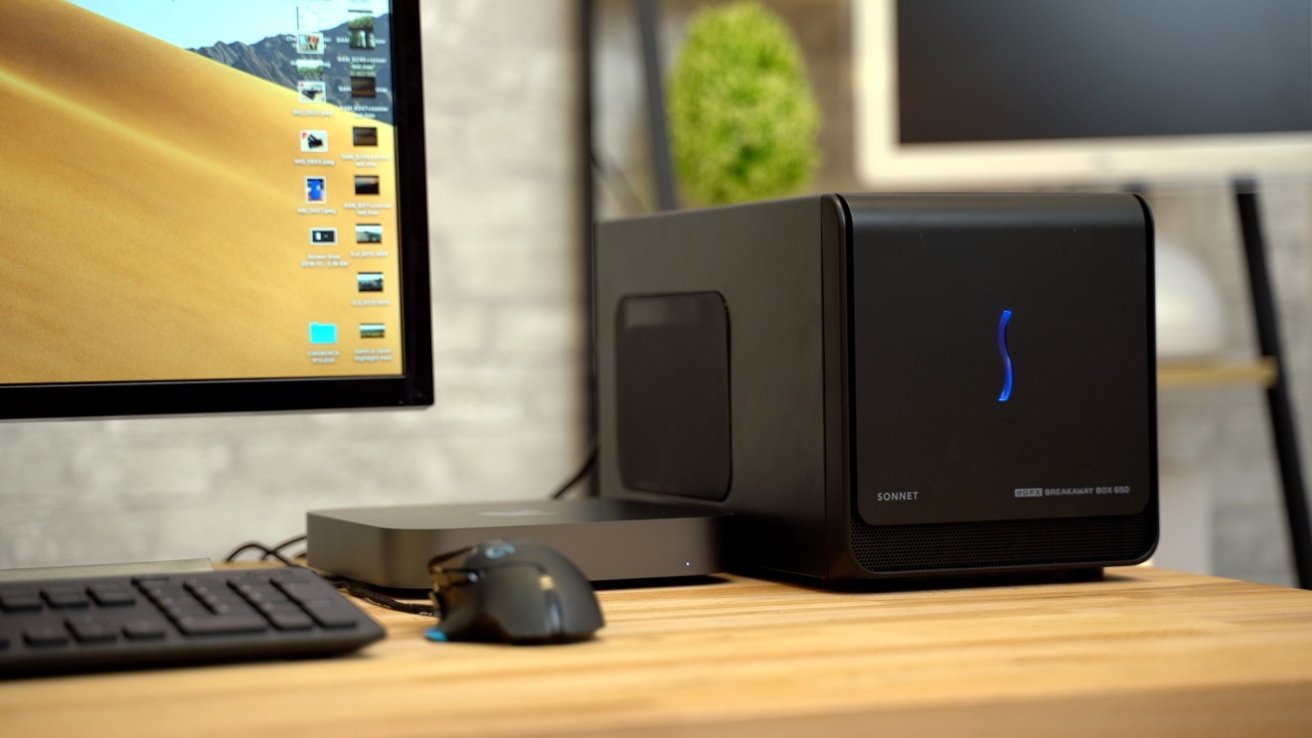
This development comes as Apple continues to position itself in the competitive AI landscape, where specialized hardware has become increasingly important for machine learning and data science workloads. While Apple Silicon has delivered impressive performance gains for many computing tasks, its limitations in handling certain AI model training and inference tasks have created opportunities for third-party solutions to fill the gap.
The Strategic Implications
Apple's decision to support third-party eGPUs through a signed driver rather than developing its own solution suggests a pragmatic approach to addressing a specific market need. This move aligns with Apple's strategy of maintaining tight control over its ecosystem while selectively opening up to specialized use cases that enhance the platform's value proposition for specific professional segments.
For researchers and developers working with large language models and other AI applications, the ability to leverage more powerful GPUs from AMD and Nvidia represents a significant expansion of the tools available on Apple platforms. This could help Apple attract more professionals in the AI research space who might otherwise choose Windows-based systems for their specialized hardware requirements.
Market Context
The AI hardware market has seen substantial growth in recent years, with companies like Nvidia dominating the high-performance GPU segment. Apple's M-series chips have delivered impressive performance for many machine learning tasks, particularly for inference on smaller models and certain training scenarios. However, researchers working with larger models or requiring specialized GPU architectures have often turned to Windows-based workstations with third-party GPUs.
This driver support could help Apple capture a larger share of the AI research market, which has become increasingly important as companies race to develop and deploy advanced AI models. The market for AI hardware is projected to grow significantly, with estimates suggesting the AI chip market could reach $400 billion by 2027, creating substantial opportunities for platform providers that can address the diverse needs of AI developers.
Technical Considerations
The Tiny Corp driver reportedly focuses on compute capabilities rather than graphics acceleration, which explains why it won't improve gaming or graphics performance on Apple Silicon Macs. Instead, it enables the use of eGPUs specifically for AI model training and other compute-intensive tasks that benefit from the parallel processing capabilities of high-end GPUs.
This approach reflects the different computational requirements of AI workloads compared to traditional graphics applications. While gaming and 3D rendering require high frame rates and low latency, AI training often prioritizes raw computational throughput and memory bandwidth, characteristics that AMD and Nvidia's high-end GPUs excel at providing.
The Future of AI on Apple Platforms
Apple's investment in AI capabilities extends beyond hardware support. The company has been developing its own AI frameworks and tools, including Core ML and Create ML, which are optimized for Apple Silicon. By enabling third-party GPU support, Apple can create a more comprehensive ecosystem that combines its optimized software with specialized hardware when needed.
This development could also signal Apple's broader strategy in the AI space, where the company may focus on creating integrated solutions that leverage both its custom silicon and third-party components to deliver optimal performance for specific applications. As AI becomes increasingly important across industries, Apple's ability to provide a complete solution from hardware to software could become a key competitive advantage.
Competitive Landscape
The move to support third-party eGPUs positions Apple against competitors like Microsoft and Google, who have also been expanding their AI hardware offerings. Microsoft has partnered with various hardware manufacturers to develop AI-specific workstations, while Google has been developing its own AI accelerators like the TPU.
By enabling eGPU support, Apple can differentiate itself by providing a more flexible solution that allows researchers to leverage both Apple's optimized ecosystem and specialized third-party hardware. This approach could be particularly attractive in research environments where flexibility and performance are equally important.
Research and Development Impact
For researchers and developers, this driver support could significantly reduce the friction of working with AI models on Apple platforms. Previously, those requiring specialized GPU hardware often needed to maintain separate workstations or switch between systems, creating workflow inefficiencies and increasing costs.
The ability to use high-performance eGPUs with Apple Silicon Macs could streamline research workflows, allowing scientists to leverage the strengths of both platforms within a single ecosystem. This could accelerate innovation in AI research and development, particularly in fields that require specialized hardware for training and inference.
Apple's AI Strategy Evolution
This development represents an evolution in Apple's AI strategy, which has traditionally focused on on-device AI capabilities optimized for consumer applications. By enabling support for more powerful AI hardware, Apple is signaling its recognition of the growing importance of AI research and its commitment to supporting professional users in this space.
As AI becomes increasingly central to technology development across industries, Apple's ability to provide a comprehensive platform for both consumer and professional AI applications could become a key differentiator. The company has been investing heavily in AI research, with reports suggesting Apple has developed its own large language models and is working on more advanced AI capabilities.
Market Response and Future Outlook
The market response to this development will likely depend on how effectively Apple can position the eGPU support as a solution for specific professional needs rather than a general enhancement to the Mac platform. If successful, this could help Apple capture a larger share of the AI research market while maintaining its focus on delivering integrated solutions for consumer applications.
Looking ahead, Apple may continue to expand its AI hardware and software offerings, potentially developing more specialized solutions for different AI applications. The company has shown a willingness to adapt its ecosystem to address specific market needs while maintaining its core focus on delivering seamless user experiences across its product lines.
In conclusion, Apple's reported signing of a third-party driver for eGPU support represents a strategic move to position itself more effectively in the growing AI research market. By enabling support for specialized hardware while maintaining its focus on integrated solutions, Apple is creating a more flexible ecosystem that could attract professional users in the AI space. This development underscores Apple's recognition of the importance of AI across its product lines and its commitment to supporting the diverse needs of its user base.
Comments
Please log in or register to join the discussion