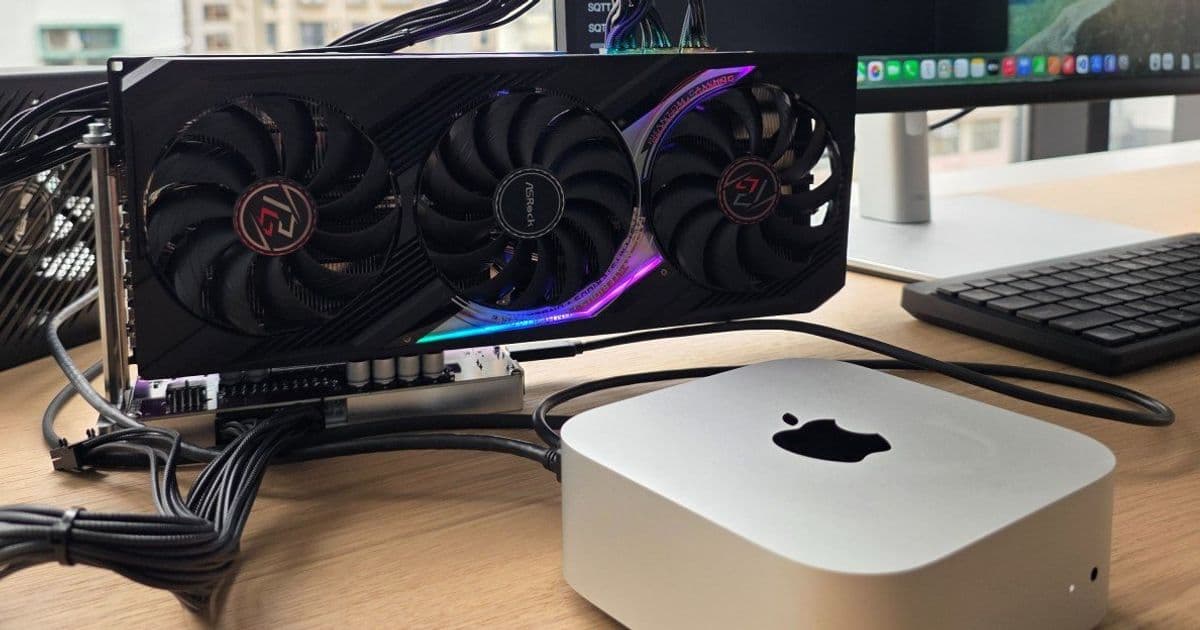
Tiny Corp's driver gets Apple approval for Nvidia eGPU support on Arm Macs, though it requires Docker compilation and targets LLM workloads specifically.
Apple has taken a surprising step toward expanding Mac hardware compatibility by approving a driver that enables Nvidia eGPUs to work with Arm-based Macs. The approval comes from Tiny Corp, not Nvidia directly, and comes with significant caveats that temper initial excitement.
The Breakthrough
The driver represents a notable shift in Apple's traditionally closed ecosystem approach. Previously, Mac users running Apple Silicon needed to disable System Integrity Protection (SIP) to use third-party GPU drivers - a security risk that deterred many potential users. Now, Tiny Corp's driver can be signed and approved by Apple, eliminating that vulnerability.
"Apple finally approved our driver for both AMD and NVIDIA," Tiny announced on their platform, marking what appears to be a strategic opening for external GPU support on Apple's Arm architecture.
The Limitations
Before enthusiasts rush to connect their RTX 4090s to their M4 MacBooks, several important constraints apply:
Docker Compilation Required Unlike traditional plug-and-play drivers, this solution requires users to compile the driver themselves using Docker containers. This technical barrier means the solution targets developers and power users rather than mainstream consumers.
LLM-Specific Design
The driver isn't designed for general graphics acceleration or gaming. Instead, it's optimized specifically for large language model workloads - a niche but growing use case as AI development becomes more accessible on personal hardware.
Not Official Nvidia Support
Despite enabling Nvidia hardware functionality, this isn't an official partnership or driver from Nvidia. The solution comes entirely from Tiny Corp, an independent developer in the AI hardware space.
Why This Matters
The approval signals Apple's recognition of external GPU demand, particularly for AI and machine learning workloads. As LLMs become more sophisticated and resource-intensive, the ability to leverage powerful external GPUs while maintaining Mac's security model represents a meaningful advancement.
For developers working with models like Llama, Mistral, or custom fine-tuned variants, this could provide a pathway to significantly enhanced performance without abandoning the Mac ecosystem entirely.
The Bigger Picture
This development reflects broader industry trends where traditional hardware boundaries are blurring. Apple's Arm transition, Nvidia's dominance in AI acceleration, and the democratization of LLM development are converging in ways that challenge established platform limitations.
The driver approval suggests Apple may be cautiously opening its ecosystem to external hardware partnerships, particularly in AI-focused use cases where performance demands often exceed integrated solutions.
What's Next?
While this represents progress, the Mac eGPU landscape remains fragmented. Users seeking general graphics acceleration or gaming support will still find limited options. The Docker compilation requirement and LLM-specific optimization mean this solution serves a particular developer niche rather than addressing broader eGPU demand.
However, Apple's willingness to sign and approve third-party GPU drivers - even with restrictions - could pave the way for more comprehensive solutions in the future. As AI workloads continue driving hardware innovation, expect to see more hybrid approaches that bridge platform ecosystems.
For now, Tiny Corp's driver offers a glimpse of what's possible when Apple's security-first approach meets the practical demands of modern AI development. It's not the plug-and-play revolution some hoped for, but it's a meaningful step toward a more flexible Mac hardware ecosystem.
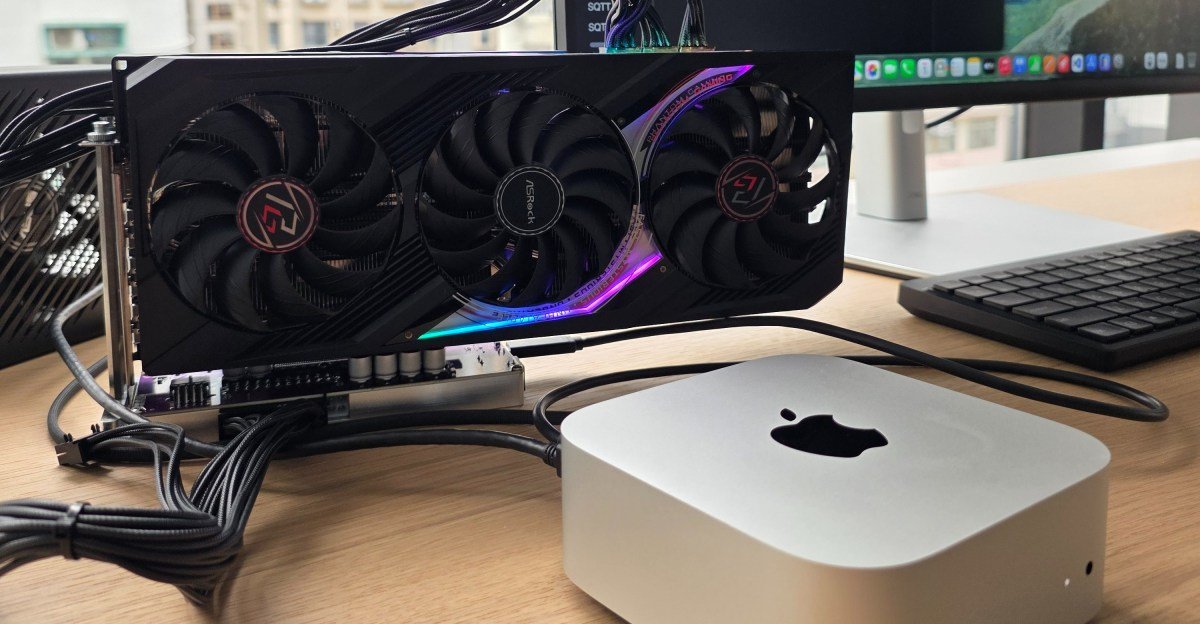
Featured image: Tiny Corp's announcement of Apple's driver approval marks a significant milestone for Arm Mac compatibility.
Comments
Please log in or register to join the discussion