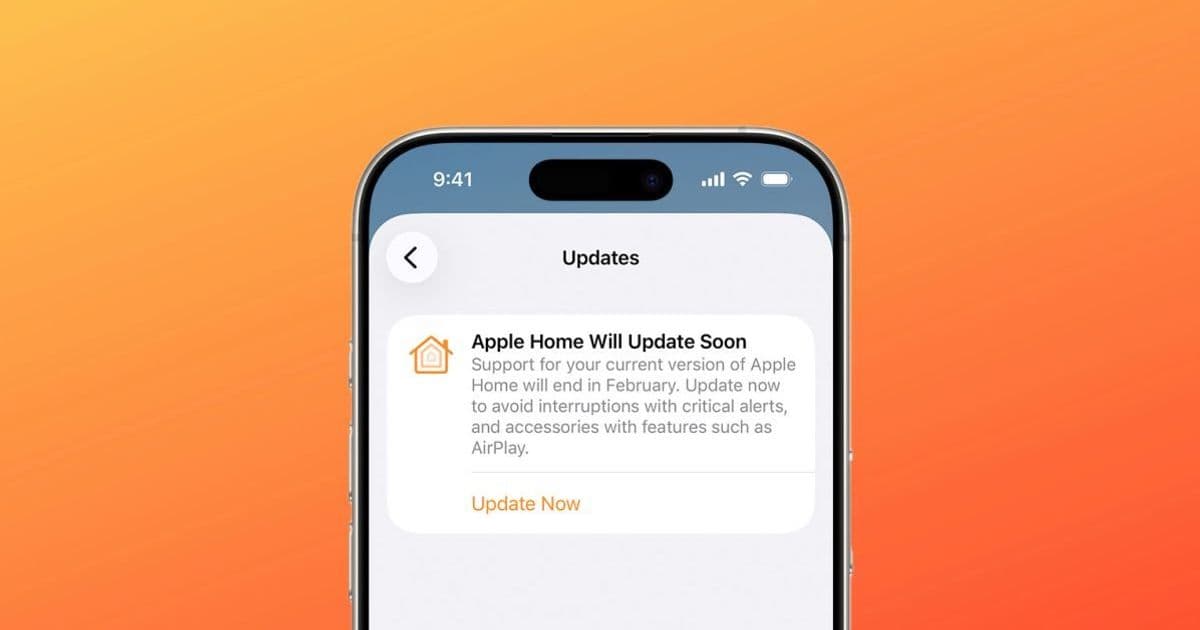
Apple's three-year transition to a new Home architecture is ending February 10th, 2026. Users still on the old system have less than a week to update before their smart home accessories stop working.
Apple's long transition to a new Home architecture is reaching its final deadline, with users who haven't yet updated their Apple Home systems facing the prospect of their smart home accessories ceasing to function in less than a week.
The Three-Year Transition to Modern HomeKit
The journey began over three years ago when Apple first announced significant changes to how the Home app works. Initially introduced with iOS 16.2 in 2022, the new architecture was designed to make HomeKit more reliable and to support the emerging Matter standard for smart home interoperability. However, early implementation issues led Apple to pull the changes and reintroduce them with iOS 16.4.
The core innovation of the new system was delegating more tasks to the HomeKit hub - which can be a HomePod, HomePod mini, or Apple TV. This architectural shift was particularly important for Thread-enabled Matter accessories, which require a Thread-enabled home hub such as the HomePod mini or Apple TV 4K (3rd generation), or compatible third-party border routers.
February 10th Deadline Looms
What was initially optional has now become mandatory. Apple last year announced that the old architecture would be withdrawn, with the original deadline set for fall 2025. The company subsequently extended this to February 10, 2026, giving users a final window to complete the transition.
For the estimated portion of users still running HomeKit on the old architecture, their smart home systems will simply stop working when the deadline passes. This affects all HomeKit accessories that rely on the outdated framework, potentially leaving lights, locks, thermostats, and other connected devices non-functional.
How to Check and Update Your System
Verifying your current status is straightforward:
- Open the Home app on your iPhone, iPad, or Mac
- Tap or click the More button
- Select Home Settings
- If you own multiple homes, choose one, then select Home Settings
- Select Software Update
If your system is already updated, you'll see a confirmation message stating "This home and all accessories are up to date." If not, you'll have the option to tap or click "Update Now" and follow the prompts.
Why This Matters for Smart Home Users
This transition represents more than just a routine software update. The new architecture fundamentally changes how HomeKit operates, moving critical processing tasks from individual devices to dedicated hubs. This centralization improves reliability, reduces latency, and enables more sophisticated automation scenarios.
The Matter support is particularly significant, as it allows HomeKit devices to work seamlessly with other smart home ecosystems like Google Home and Amazon Alexa. This cross-platform compatibility was a major limitation of the old system and represents Apple's commitment to making smart home technology more accessible and interoperable.
Technical Requirements and Considerations
Users need to ensure they have compatible hardware to support the new architecture. The HomePod mini and Apple TV 4K (3rd generation) are essential for Thread-enabled Matter accessories, while older Apple TV models may not provide full functionality. Third-party border routers can also serve as Thread border routers for Matter devices.
The update process itself is designed to be user-friendly, but it requires a stable internet connection and may take some time depending on the number and complexity of your HomeKit accessories. Apple recommends performing the update during a time when you won't need immediate access to your smart home controls.
Looking Ahead
As the February 10th deadline approaches, Apple appears to be taking a firm stance on the transition, similar to its approach with other major platform changes. The company has provided ample notice and straightforward update procedures, but the hard cutoff means there's no grace period beyond the stated date.
For users who have already updated, the transition has generally been smooth, with many reporting improved reliability and faster response times from their smart home accessories. The integration with Matter has also opened up new device compatibility options that weren't available under the old architecture.
Those who haven't yet updated should prioritize this task in the coming days to avoid disruption to their smart home systems. The process is free and, according to Apple's documentation, should preserve all existing automations and settings while upgrading the underlying architecture.
The transition marks the end of a significant chapter in HomeKit's evolution and paves the way for more robust, interoperable smart home experiences across Apple's ecosystem.
Comments
Please log in or register to join the discussion